Doberman Pinscher Dogs for Adoption in Omaha, NE

Your guide to finding and caring for a Doberman Pinscher in Omaha

A Doberman fits Omaha best in a household that likes being outside year-round. Zorinsky Lake's paved loops and the Keystone Trail give a fit Doberman room to stretch out, and a house near Elmwood Park or in Millard makes daily walks easy. Winter is the catch: with a short single coat, a Doberman wants a sweater on the coldest mornings and a warm spot indoors. Many Dobermans also dislike long days alone, so one suits people who are home a fair amount.

1101 Doberman Pinschers available in Omaha and nationwide

Fall for a Doberman Pinscher

While we don't have enough dogs near Omaha, keep in mind that many rescues may offer transport.

Doberman Pinschers Available for Adoption Near Omaha

About the Doberman Pinscher breed

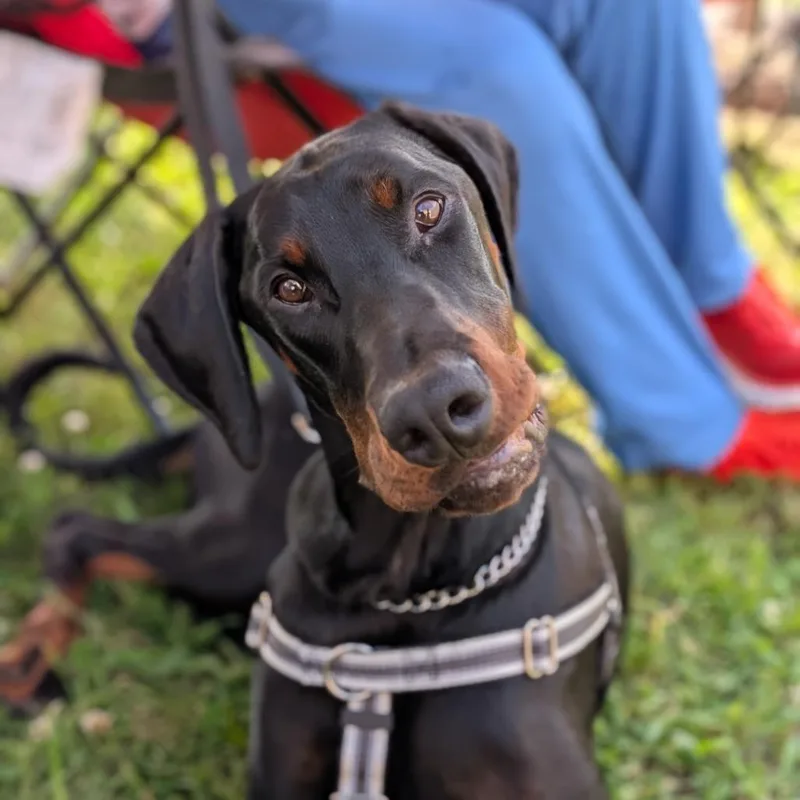
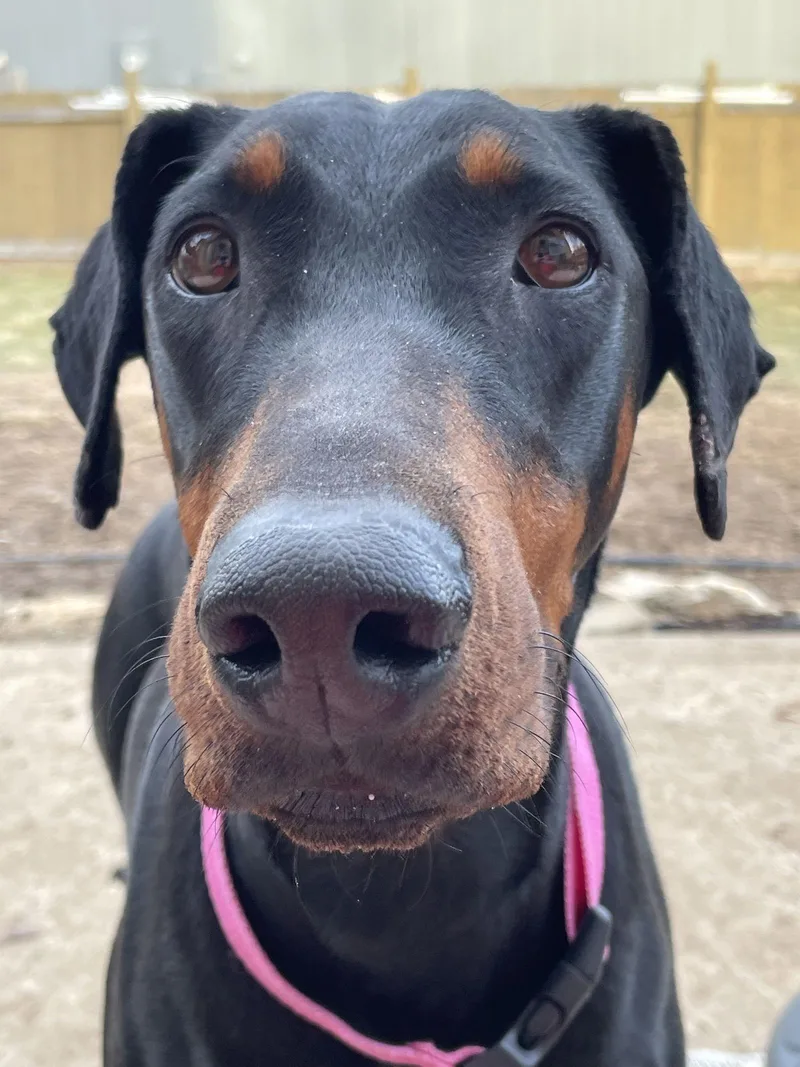
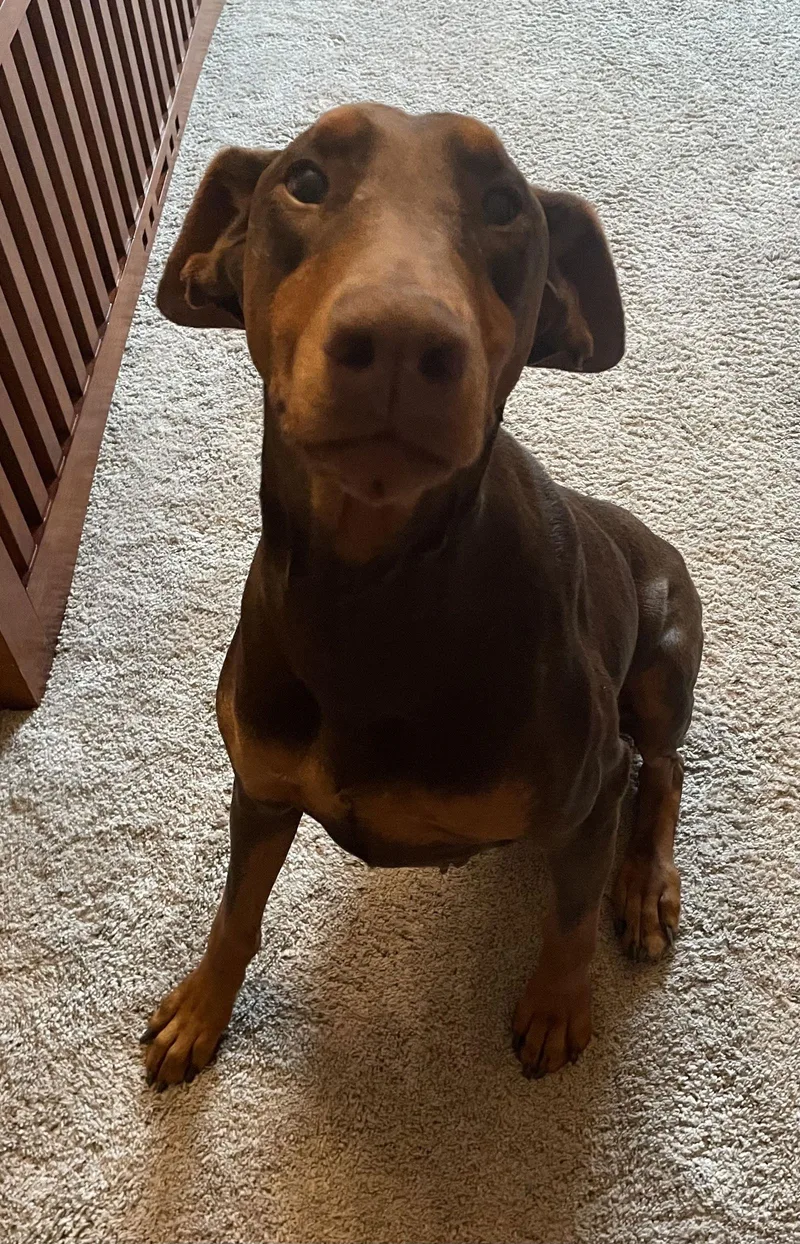
The Doberman Pinscher was developed in Germany in the 1880s by Louis Dobermann, a tax collector who wanted a dependable dog to travel with him on his rounds. The result is a sleek, muscular working dog with a short, glossy coat in black, red, blue or fawn with rust markings. In the US, many have cropped ears and docked tails, though natural ears and tails are increasingly common.

Many Dobermans are affectionate, sensitive dogs that stay close to their people, and they're often watchful with strangers. In Omaha, that means practicing calm greetings on neighborhood walks and at the dog parks, using reward-based training. Plan for daily exercise, mental work and regular veterinary attention to heart health, since dilated cardiomyopathy is a serious concern in the breed.

Weight
60–100 lbs
Height
24–28 in
Lifespan
10–12 yrs
Temperament
Loyal, Alert, Intelligent, Protective
Group
Working
Shedding
Moderate

Owning a Doberman Pinscher in Omaha

Having a Doberman Pinscher in Omaha

Dobermans combine athletic power with a real need for company. In Omaha, the practical questions are how much daily exercise you can offer, how you'll protect a thin-coated dog through cold winters, and whether your budget has room for heart screening.

Temperament

Dobermans are often loyal and sensitive, and many are reserved with strangers, so busy Omaha sidewalks and dog parks are best introduced gradually with treats and calm routines. Harsh correction tends to backfire. Temperament ranges from laid-back companions to intense, driven dogs, so judge the dog in front of you, not the breed label.

Exercise Needs

Most Dobermans need vigorous daily exercise: brisk walks, fetch, jogging once fully grown, and training games for the mind. Omaha's paved trail network, including the Big Papio and Keystone trails, suits leashed runs, and the fenced off-leash parks give room to play. Expect to adjust on icy or very hot days.

Health Considerations

Dilated cardiomyopathy is the breed's most serious concern, and many vets recommend regular heart screening. Von Willebrand disease, wobbler syndrome, hypothyroidism and bloat also occur. Have a veterinarian check the heart soon after adoption. Tick and heartworm prevention matter for dogs that spend time on Omaha's trails and in its parks.

Living Space

Dobermans can live in an Omaha apartment or a house in Millard if their exercise and company needs are met, though a fenced yard helps. They're indoor dogs: the short coat handles cold poorly, and they dislike isolation, so a yard doesn't replace time with the family.

What it costs to own a Doberman Pinscher in Omaha

ExpenseTypical costPer year
Food$55 to $110 per month$660 to $1,320
Pet insurance$65 to $130 per month$780 to $1,560
Routine vet care$250 to $500 per year$250 to $500
Other*$540 to $1,440 per year$540 to $1,440
Estimated yearly total (after year one)$2,230 to $4,820

Other costs are estimates and vary with size, age and health.

* The Omaha dog license, flea, tick and heartworm prevention, a dental cleaning allowance, toys and bedding, basic coat care, and a winter coat for a thin single coat.

Adopt a Doberman Pinscher in Omaha.

Now that you know more, let’s find you a new best friend. These rescues and shelters below currently have Doberman Pinschers available.

Frequently Asked Questions

Yes. Omaha's breed-specific ordinance names seven breeds, and Doberman Pinschers aren't among them. New residents must license their dog within 30 days, and dogs need a current rabies vaccination. Insurers and landlords set their own breed policies, so confirm both before you commit to a Doberman.

Yes, with some help. A Doberman's short single coat offers little insulation, so Omaha winters, with about 135 freezing nights a year and occasional sub-zero stretches, call for a coat and short outings on the coldest days. Keep the dog indoors, dry paws after salted sidewalks, and save long runs for milder afternoons.

Yes, if the dog gets enough exercise and company. Districts like Midtown Crossing, next to Dewey Dog Park, and Aksarben Village have plenty of apartments, but confirm the building accepts large dogs. Plan on several outings a day, since Omaha treats uninterrupted barking that disturbs neighbors as a violation, and a bored Doberman left alone is more likely to bark.

Large dogs use the all-dog sections of Omaha's fenced parks, such as Hanscom Dog Park in Midtown and Hefflinger in northwest Omaha, both of which also have small-dog areas. For leashed walks, try the boardwalk trail at Standing Bear Lake, the lagoon paths at Benson Park, or the Field Club Trail.

Only in a carrier. Metro buses, including ORBT, require pets to ride in a carrier unless they're service animals, and a full-grown Doberman won't fit in one. Omaha has no subway or rail, and the planned streetcar, expected around 2028, has no pet policy yet. For most Dobermans, getting around means walking or driving.

Sometimes, on patios only. In Omaha, dogs are allowed on a restaurant patio only where the venue has Douglas County Health Department approval, and they must stay leashed. Indoor dining rooms are off-limits. A Doberman should settle calmly beside the table first, since a large, alert dog can be a lot in tight spaces.

Very little. A Doberman's short, close coat needs a weekly brushing with a rubber mitt, an occasional bath and regular nail trims, so most owners skip professional grooming. In winter, salted sidewalks can irritate paws, so wipe them after walks. Basic coat care is part of the Other costs listed on this page and isn't a major expense.

Yes, Doberman Pinschers shed, though their short coat makes it less noticeable than in double-coated breeds. They lose small, fine hairs year-round, often with slightly heavier shedding in spring and fall. Weekly brushing with a rubber curry or grooming mitt keeps loose hair down and the coat glossy. Patchy hair loss is worth a vet check.

We have 2 rescues with Doberman Pinschers available: Doberman Rescue of Nebraska Inc. and Hands, Hearts and Paws. You can see every rescue with Doberman Pinschers available in the list above these questions, or scroll to the top to see the Doberman Pinschers near Omaha.

Budget roughly $55–$110 a month for food, $65–$130 a month for pet insurance, $250–$500 a year for routine vet care, and $540–$1,440 a year for other costs such as prevention, dental care, the license and a winter coat. Heart screening and illness aren't included, so a savings cushion helps.

Find Doberman Pinschers in Nearby Cities

Expand your search to find Doberman Pinschers available for adoption near Omaha.