Saint Bernard dog

Saint Bernard Dogs for Adoption in Blair, WI

Your guide to finding and caring for a Saint Bernard in Blair

170 Saint Bernards available in Blair and nationwide

Give a Saint Bernard a home

While we don't have enough dogs near Blair, keep in mind that many rescues may offer transport.

Saint Bernards Available for Adoption Near Blair

About the Saint Bernard breed

Monks at the Great St Bernard Hospice, high on a snowy Alpine pass between Switzerland and Italy, kept these dogs from the late 1600s to guard the hospice and find travelers lost in fog and snow. The original hospice dogs were about the size of a German Shepherd; later crosses and selection for size produced today's giant, massive-headed Saint in shorthaired and longhaired coats, always white with red or brindle markings.

Saint Bernards are famous for being calm, patient and kind, and many are notably gentle with children. Living with one still takes planning. An adult can weigh as much as a person, sheds heavily, drools freely and overheats easily. Their size makes early training essential, and their giant-breed health risks and shorter lifespan mean adopters should budget for food, joint care and veterinary attention.

Weight
120–180 lbs
Height
26–30 in
Lifespan
8–10 yrs
Temperament
Gentle, Patient, Calm, Friendly
Group
Working
Shedding
Moderate to High

Owning a Saint Bernard in Blair

Having a Saint Bernard in Blair

A Saint Bernard combines a famously gentle, patient nature with sheer giant size. Knowing how that size shapes training, exercise, heat tolerance, grooming and health care helps adopters decide whether a Saint's calm companionship fits their home and budget.

Temperament

Saint Bernards tend to be calm, patient and affectionate, and many are especially gentle with children. They are usually friendly rather than protective, though their bark and size deter strangers. Because they grow so large, early training and socialization are essential, since even a friendly Saint can drag a person or knock over a child. Individual dogs vary.

Exercise Needs

Most Saint Bernards need moderate daily exercise, such as steady walks and relaxed play, rather than intense running. Puppies should avoid long, forced exercise and jumping while their joints develop. Scent games and training provide mental work. Plan activity for cool parts of the day, because Saints overheat quickly and can struggle in warm weather.

Health Considerations

Saint Bernards are prone to hip and elbow dysplasia, cruciate ligament injuries, bone cancer and dilated cardiomyopathy, a heart disease. They are also at high risk of bloat, a stomach emergency common in deep-chested giants, and eyelid problems such as entropion. Keeping them lean protects their joints. Plan regular veterinary checkups.

Living Space

A Saint Bernard fits best in a home with room to move, cool indoor space and easy access to outdoors, though a calm adult can adapt to smaller homes with enough walks. Stairs, slippery floors and small cars become challenges with a giant dog. They need climate control in warm weather and should live indoors with their family.

What it costs to own a Saint Bernard

ExpenseTypical costPer year
Adoption fee$300, one time$300 in year one
Food$80 to $160 per month$960 to $1,920
Pet insurance$85 to $170 per month$1,020 to $2,040
Routine vet care$250 to $500 per year$250 to $500
Other*$690 to $1,890 per year$690 to $1,890
Estimated yearly total (after year one)$2,920 to $6,350
First-year total (with adoption fee)$3,220 to $6,650

Adoption fee is the fee on Saint Bernard listings in Blair on GetBuddy today. Other costs are national averages for Saint Bernards; we don't have costs specific to Blair yet.

* Flea, tick and heartworm prevention, a dental cleaning allowance, a dog license, large bedding and toys, brushing and baths for heavy shedding, and joint supplements for a giant breed; license fees vary by city.

Saint Bernard dog

Adopt a Saint Bernard in Blair.

Now that you know more, let’s find you a new best friend. These rescues and shelters below currently have Saint Bernards available.

Rescues in Blair with Saint Bernards Available

Here are the rescues & shelters in the Blair area where you can find Saint Bernards and other dogs available for adoption.

Frequently Asked Questions

Saint Bernards were kept by monks at the Great St Bernard Hospice in the Swiss Alps to help find and rescue travelers lost in snow and fog on the dangerous mountain pass. They also guarded the hospice and served as companions. Elsewhere in Switzerland, similar dogs worked on farms as watchdogs and draft dogs, pulling carts and guarding property.

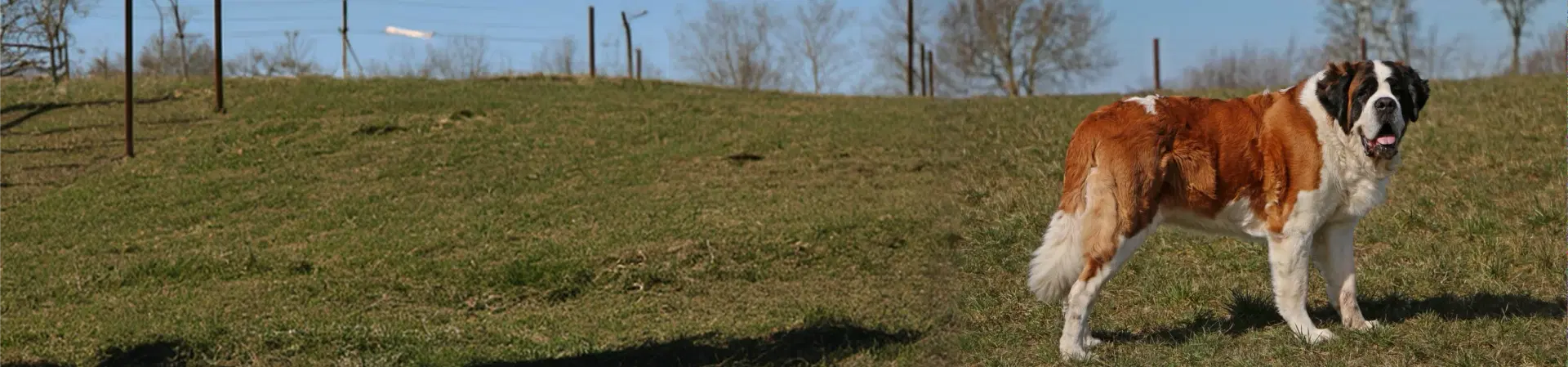
A Saint Bernard is a giant, powerful dog with a massive head, a short deep muzzle, a wrinkled brow, droopy lips and kind dark eyes. Its coat is either short and dense or medium length and slightly wavy, and it is white with red or brindle markings. White on the chest, feet, tail tip and muzzle is typical, often with a dark facial mask.

Saint Bernards typically live about 8 to 10 years, which is shorter than average because giant breeds age faster. A 2024 UK study put their life expectancy at about 9.3 years. Heart disease, bone cancer and bloat are among the conditions that can shorten their lives. Keeping a Saint lean, exercising it sensibly and seeing a veterinarian regularly all help.

Saint Bernards are among the largest dog breeds. Males usually stand about 28 to 30 inches at the shoulder and weigh around 140 to 180 pounds, while females stand roughly 26 to 28 inches and weigh about 120 to 140 pounds. Some Saint Bernards are bigger or smaller. On its hind legs, a large Saint can easily be as tall as an adult person.

A Saint Bernard is a giant working dog from the Swiss Alps, famous for its past as a mountain rescue dog at the Great St Bernard Hospice. It belongs to the AKC Working Group. Saints are known for their huge size, red-and-white coat, droopy face and calm, gentle personality, which has made them beloved family companions around the world.

Saint Bernards come from the Western Alps, specifically the Great St Bernard Pass on the border between Switzerland and Italy. Switzerland is recognized as the breed's country of origin, and the Saint Bernard is considered a Swiss national dog. The monks of the pass's hospice kept these dogs from around 1660 to 1670 onward, and the Swiss breed club was founded in 1884.

Saint Bernards are known for their heroic history as Alpine rescue dogs, their enormous size and their gentle, patient temperament. The most famous hospice dog, Barry, was credited with saving dozens of lives in the early 1800s. They are also known for drooling, and popular culture often shows them carrying brandy barrels, a myth the hospice monks say never happened.

Yes, Saint Bernards are intelligent dogs. Hospice dogs learned rescue work by following older dogs, and Saints still have good scenting ability for tracking. They can be slower to respond than eager-to-please breeds and sometimes stubborn, so patient, consistent, reward-based training works best. Starting training early is especially important because of their size.

Yes, Saint Bernards are often very good family dogs. Many are calm, patient and affectionate, and the AKC notes they are famously careful with children. Their size is the main challenge, since a playful Saint can knock over toddlers or older adults. Training, supervision and enough space make the difference, and an adult Saint with a known history can be an easy fit.

We have 1 rescue with Saint Bernards available: Trempealeau County Humane Society. You can see every rescue with Saint Bernards available in the list above these questions, or scroll to the top to see the Saint Bernards near Blair.

Find Saint Bernards in Nearby Cities

Expand your search to find Saint Bernards available for adoption near Blair.