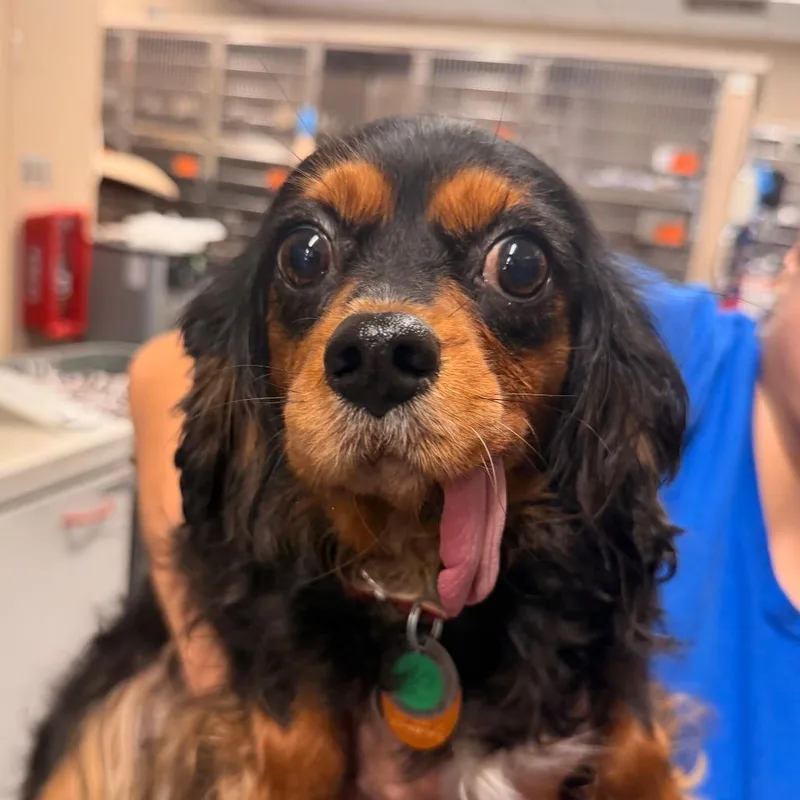
Cavalier King Charles Spaniel Dogs for Adoption in Century City, CA

Your guide to finding and caring for a Cavalier King Charles Spaniel in Century City

86 Cavalier King Charles Spaniels available in Century City and nationwide

Find your Cavalier King Charles Spaniel

While we don't have enough dogs near Century City, keep in mind that many rescues may offer transport.

Cavalier King Charles Spaniels Available for Adoption Near Century City

About the Cavalier King Charles Spaniel breed

Small toy spaniels like those in portraits of England's King Charles II inspired this breed's revival in the 1920s, when an American enthusiast offered a prize for dogs with the longer noses of that era rather than the flat faces then in fashion. Britain recognized the Cavalier as its own breed in 1944, and the American Kennel Club followed in 1995. Cavaliers weigh about 13 to 18 pounds, with large dark eyes, long feathered ears and a silky coat in Blenheim, tricolor, ruby or black and tan.

Many Cavaliers are gentle, affectionate and adaptable, equally happy on a lap or a long walk, and they often get along with children, other dogs and cats. Their sweetness comes with significant health concerns: nearly all develop mitral valve heart disease eventually, and many have a skull malformation linked to syringomyelia, so veterinary costs deserve careful planning.

Weight
13–18 lbs
Height
12–13 in
Lifespan
9–14 yrs
Temperament
Affectionate, Gentle, Friendly, Adaptable
Group
Toy
Shedding
Moderate

Owning a Cavalier King Charles Spaniel in Century City

Having a Cavalier King Charles Spaniel in Century City

A Cavalier's appeal lies in its easygoing affection and its comfort in almost any home. The traits that matter most for adopters are its need for company, moderate exercise, regular coat care and, above all, the breed's well-documented heart and neurological risks.

Temperament

Cavaliers tend to be sweet, sociable and eager to please, greeting strangers, children and other pets with interest rather than suspicion. Many are sensitive and dislike being left alone for long periods. They are poor guard dogs but loving companions. Some retain a spaniel's urge to chase birds or squirrels, and individual dogs vary with background and socialization.

Exercise Needs

Most Cavaliers are content with a couple of daily walks plus indoor play, but many enjoy longer hikes and canine sports like agility or rally. Sniffing games and short training sessions keep their minds busy. Because heart disease is common, watch for unusual fatigue or coughing, and adjust activity with veterinary guidance as dogs age.

Health Considerations

Mitral valve disease affects most Cavaliers as they age and is the leading cause of death in the breed. Many also have Chiari-like malformation, which can cause syringomyelia with neck pain and scratching. Eye problems, kneecap dislocation, ear infections and dental disease are common too. Regular heart checks and a veterinarian familiar with the breed are valuable.

Living Space

Cavaliers adapt well to apartments, condos and houses, since their small size and moderate energy fit most homes. They do best living indoors close to their people and may struggle with long hours alone. A secure yard or leash is essential, as many will follow a scent or chase a bird without thinking about traffic.

What it costs to own a Cavalier King Charles Spaniel

ExpenseTypical costPer year
Food$20 to $45 per month$240 to $540
Pet insurance$40 to $85 per month$480 to $1,020
Routine vet care$200 to $400 per year$200 to $400
Other*$590 to $1,440 per year$590 to $1,440
Estimated yearly total (after year one)$1,510 to $3,400

Other costs are national averages for Cavalier King Charles Spaniels; we don't have costs specific to Century City yet.

* Flea, tick and heartworm prevention, a higher dental care allowance for a small breed prone to dental disease, a dog license, toys and bedding, and brushing and regular baths for the silky coat; license fees vary by city.

Adopt a Cavalier King Charles Spaniel in Century City.

Now that you know more, let’s find you a new best friend. These rescues and shelters below currently have Cavalier King Charles Spaniels available.

Rescues in Century City with Cavalier King Charles Spaniels Available

Here are the rescues & shelters in the Century City area where you can find Cavalier King Charles Spaniels and other dogs available for adoption.

Frequently Asked Questions

Yes, Cavalier King Charles Spaniels shed a moderate amount. Their silky, moderately long coat with feathering on the ears, legs and tail drops hair year-round, with heavier shedding seasonally. Brushing a few times a week removes loose hair and prevents tangles in the feathering. Sudden thinning or patchy hair loss can signal a skin or hormone problem worth a veterinary visit.

Cavalier King Charles Spaniels typically live about 9 to 14 years. A 2024 UK study estimated an average life expectancy of about 11.8 years. Mitral valve heart disease is the leading cause of death in the breed and often shortens lives, so regular heart checks, early treatment when needed and a lean body weight make a meaningful difference.

No, Cavalier King Charles Spaniels are not hypoallergenic. They shed moderately, and like all dogs they carry allergens in dander, saliva and urine. Their small size means less total hair than a large dog, which helps some people with mild allergies. Anyone with dog allergies should spend extended time with a particular Cavalier before adopting.

Cavalier King Charles Spaniels are small dogs, standing about 12 to 13 inches at the shoulder and usually weighing about 13 to 18 pounds as adults. Some pet Cavaliers grow a little larger than the breed standard. Their long, feathered ears and coat make them look slightly bigger, but they remain easy to carry and fit comfortably on a lap.

A Cavalier King Charles Spaniel is a small toy spaniel developed in England as a companion dog, named for King Charles II, who was famously fond of little spaniels. Cavaliers are gentle, affectionate and adaptable, with silky coats in four colors and large, expressive eyes. The breed is popular as a family and therapy dog but has significant inherited health risks.

Cavalier King Charles Spaniels usually do not bark a lot. Most bark to announce visitors or unusual sounds and then settle, and they are rarely described as yappy. Barking can increase when a Cavalier is bored, anxious or left alone too long, since many are prone to separation stress. Company, exercise and training a quiet cue keep noise low.

Groom a Cavalier King Charles Spaniel by brushing several times a week with a pin or bristle brush and combing out the ear, chest, leg and tail feathering where tangles form. Bathe every two to four weeks and dry thoroughly. Check and clean ears weekly, trim nails, tidy the hair between foot pads and brush teeth often.

Cavalier King Charles Spaniels were bred as companion dogs. Their toy spaniel ancestors were lap and comfort dogs for European nobility, though they kept some instinct to flush birds. The modern Cavalier was developed in the 1920s to recreate the longer-nosed spaniels seen in paintings of the era of Charles II, and it has remained a devoted companion breed.

Yes, Cavalier King Charles Spaniels are generally smart dogs, especially in reading people and responding to them. They learn routines and cues readily with positive reinforcement and often do well in obedience, rally, agility and therapy work. They are not as driven as herding or working breeds, and their intelligence shows most in their social awareness.

We have 1 rescue with Cavalier King Charles Spaniels available: Used Pets. You can see every rescue with Cavalier King Charles Spaniels available in the list above these questions, or scroll to the top to see the Cavalier King Charles Spaniels near Century City.