Bernese Mountain Dogs for Adoption in Wichita, KS

Your guide to finding and caring for a Bernese Mountain Dog in Wichita

Bernese Mountain Dogs can do well in Wichita if they live indoors with their people. Their calm, family-centered nature suits the quiet streets of Riverside and the ranch-house blocks of Benjamin Hills, where a fenced yard gives a big dog room to stretch out. Early walks along the Arkansas River Path give a Berner a good place to burn energy. They shed heavily, so expect a house dog and a vacuum that works hard.

131 Bernese Mountain Dogs available in Wichita and nationwide

Adopt a Bernese Mountain Dog today

While we don't have enough dogs near Wichita, keep in mind that many rescues may offer transport.

Bernese Mountain Dogs Available for Adoption Near Wichita

About the Bernese Mountain Dog breed

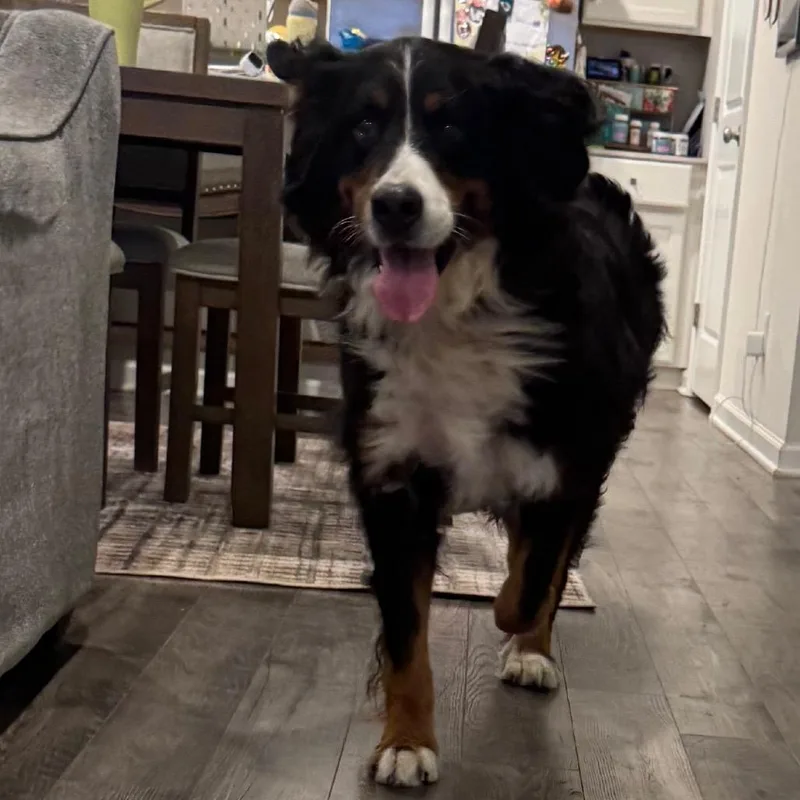
Bernese Mountain Dogs come from the farms of the Swiss canton of Bern, where they pulled carts of milk and cheese, drove cattle and watched over the yard. They're the only long-coated Swiss mountain dog, with a jet-black coat, rust markings and a white blaze and chest cross, and most weigh between 70 and 115 pounds.

Most Berners are gentle, affectionate and eager to please, calm indoors and a little goofy outside, though some are reserved with strangers. In Wichita, the thick double coat is the main thing to plan around, along with a lifespan of roughly 7 to 10 years that cancer often shortens. Early leash training matters, because a grown Berner that pulls is hard to hold.


Weight
70–115 lbs
Height
23–28 in
Lifespan
7–10 yrs
Temperament
Gentle, Affectionate, Calm
Group
Working
Shedding
High

Owning a Bernese Mountain Dog in Wichita

Having a Bernese Mountain Dog in Wichita

Berners are soft-natured, people-focused giants with a thick coat and a low tolerance for heat. In Wichita, summer comfort, steady exercise and health planning matter as much as personality when you're deciding whether one fits your household.

Temperament

Berners are usually gentle, patient and devoted to their families, and many are good with respectful kids and other pets. Some are shy or aloof with strangers and sensitive to harsh handling. Dogs vary, so spend time with the dog in front of you rather than relying on the breed label. Early manners matter for a dog this big.

Exercise Needs

Plan on one or two moderate walks a day plus play in a fenced yard. In Wichita that often means early mornings or evenings, and the Arkansas River Path is a leashed option. Training games and scent work add mental exercise. Skip long runs in warm weather, and keep puppies off repetitive jumping.

Health Considerations

Cancer, especially histiocytic sarcoma, is the biggest concern, along with hip and elbow dysplasia, kidney disease and bloat. Keeping a Berner lean protects its joints, and regular vet checkups catch problems early. Wichita's hot summers add heatstroke risk, so know the signs: heavy panting, a staggering gait and not responding to you.

Living Space

A Berner does best in a house with a secure yard, which fits much of Wichita's housing. Apartments can work with ground-floor access or an elevator, daily walks and patience with fur. Whichever home you choose, the dog should live indoors in cool air rather than outside.

What it costs to own a Bernese Mountain Dog in Wichita

ExpenseTypical costPer year
Food$80 to $160 per month$960 to $1,920
Pet insurance$85 to $170 per month$1,020 to $2,040
Routine vet care$250 to $500 per year$250 to $500
Other*$690 to $1,900 per year$690 to $1,900
Estimated yearly total (after year one)$2,920 to $6,360

Other costs are estimates and vary with size, age and health.

* The Wichita dog license ($15 a year if spayed or neutered, $50 if not), flea, tick and heartworm prevention, a dental cleaning allowance, toys and large bedding, coat care for heavy shedding, and joint supplements.

Adopt a Bernese Mountain Dog in Wichita.

Now that you know more, let’s find you a new best friend. These rescues and shelters below have dogs available in and near Wichita.

Rescues and Shelters in or near Wichita

Kansas Humane Society and other Wichita-area rescues help dogs find homes, and their listings change often. Here are the rescues & shelters in the Wichita area with dogs available for adoption, worth asking whether a Bernese Mountain Dog is coming in.

Frequently Asked Questions

They can with careful management, but summer is the hardest season. Wichita sees about 65 days a year at 90°F or higher, and Berners overheat easily. Keep your dog indoors with air conditioning, walk at dawn or after dark, and always provide water and shade. Heavy panting, a staggering gait or not responding to you are signs to cool the dog down and call a vet.

Yes. Wichita has no known breed-specific rule for Bernese Mountain Dogs. You'll need a dog license, a microchip and a rabies vaccine at least every three years, and households may keep up to three dogs without a permit. Dogs can't run at large, so a secure fence or a leash is essential for a dog this strong.

K-9 Rooster Dog Park, with 8.1 acres along the Arkansas River, is a good pick for off-leash time, and the roughly 10-mile Arkansas River Path suits leashed walks. Pawnee Prairie Park has five miles of marked trail loops. Off-leash parks require neutered dogs at least 5 months old, and a Berner overheats quickly in afternoon sun, so go early.

Probably not. Wichita Transit runs buses only, and pets that aren't service animals must ride in an approved carrier that fully contains them, which a 70-to-115-pound Berner won't fit. Service animals must be declared when boarding. For most outings, plan to drive, and bring a towel or seat cover for the fur.

It can be, for people who can keep a dog cool through long summers. Wichita's cold winters suit the thick coat, and many homes have yards. The trade-offs are heat, spring storms and heavy shedding. A Berner does best with a household that is home often and has air conditioning that runs reliably.

Sometimes, on patios. Kansas law lets restaurants admit leashed, well-behaved dogs to outdoor areas, and microbreweries can allow them indoors away from food prep, but each venue decides. A Berner takes up a lot of floor, so pick a roomy spot, bring your own water bowl, and go during cooler hours.

Plan on brushing once or twice a week, and daily during heavy shedding in spring and fall. Wichita's hot summers make a clean, well-brushed coat more comfortable, but don't shave a Berner, since the double coat helps insulate. Professional grooming or de-shedding sessions fall under the yearly Other budget along with prevention and dental care.

A Bernese Mountain Dog is a large to giant Swiss working breed originally used on farms to pull carts, drive cattle and guard property. It has a long, tricolored coat of black, rust and white and a sturdy, powerful build. Berners are known for their gentle, affectionate nature, though their lifespan is shorter than many breeds.

A Bernese Mountain Dog has a thick, moderately long coat that is jet black with rich rust markings over the eyes, on the cheeks, chest and legs, and white on the face, chest, feet and tail tip. The white chest marking often forms an inverted cross. They have a broad head, dark brown eyes and triangular drop ears.

Expect roughly $2,900 to $6,400 a year for a Berner in Wichita, covering food ($80 to $160 a month), pet insurance ($85 to $170 a month), routine vet care ($250 to $500 a year) and other costs ($690 to $1,900 a year). Giant-breed appetites and health risks push costs toward the higher end, so plan for insurance and a vet fund early.