White German Shepherd Dogs for Adoption in Anchorage, AK

Your guide to finding and caring for a White German Shepherd in Anchorage

A White German Shepherd suits Anchorage's trail-heavy life, as long as you're ready for a lot of daily walking. These dogs like a job, so a loop around Kincaid Park's ski trails or the Coastal Trail from Turnagain keeps them happy. Eagle River and Chugiak are suburban, with more room than a small downtown apartment, which a big shepherd appreciates. Expect white fur on every dark winter coat you own, and plan walks around the early December dark.

97 White German Shepherds available in Anchorage and nationwide

Give a White German Shepherd a home

While we don't have enough dogs near Anchorage, keep in mind that many rescues may offer transport.

White German Shepherds Available for Adoption Near Anchorage

About the White German Shepherd breed

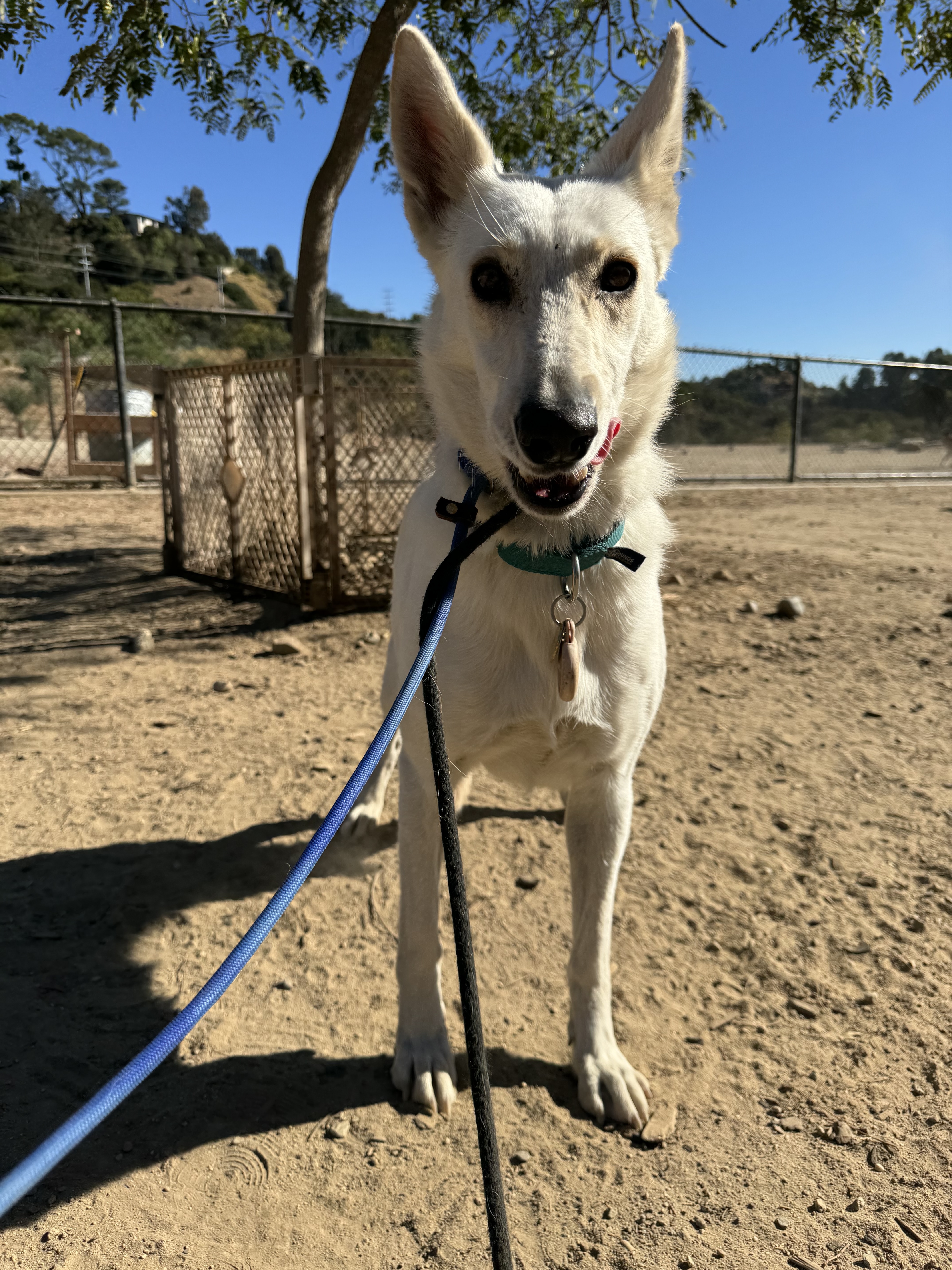
A White German Shepherd is a German Shepherd with a recessive white coat gene, not albinism, so the nose, eye rims and eyes stay dark. White dogs go back to the breed's early days, though Germany barred them in 1933 and the AKC show standard still disqualifies the color. The United Kennel Club recognizes the White Shepherd as a separate breed.

Underneath, these are large, athletic herding dogs, usually 60 to 85 pounds, that bond closely with their families and are often reserved with strangers. They need daily exercise, training and a job for their minds, and the double coat sheds heavily year-round with bigger seasonal blows. In Anchorage, a household that's outdoors in all seasons fits them best, though temperament and energy vary from dog to dog.


Weight
60–85 lbs
Height
22–26 in
Lifespan
9–13 yrs
Temperament
Loyal, Intelligent, Alert
Group
Herding
Shedding
High

Owning a White German Shepherd in Anchorage

Having a White German Shepherd in Anchorage

Beyond the white coat, a White German Shepherd is a big, smart working dog. In Anchorage, the main things to plan for are daily exercise, heavy shedding, joint health, and keeping the dog under control around moose.

Temperament

Loyal, alert and often reserved with strangers, White German Shepherds usually bond closely with their people. Early socialization and reward-based training help in a city where trails, bikes, skiers and moose are part of daily walks. How a dog was raised and socialized shapes its behavior more than coat color does.

Exercise Needs

Plan on vigorous daily exercise plus mental work like training games or scent games. Anchorage's leashed trails, such as the Tony Knowles Coastal Trail, give long, steady walks, and off-leash areas like Russian Jack Springs Park allow room to run. Keep a leash handy elsewhere, since moose and bears use the same green spaces.

Health Considerations

Hip and elbow dysplasia, degenerative myelopathy, bloat, allergies and digestive problems like exocrine pancreatic insufficiency can affect shepherds. Coat color itself isn't linked to deafness. A veterinarian can check hips and elbows, and a lean weight protects joints, which matters on icy winter walks where slips are common.

Living Space

Anchorage housing ranges from apartments to suburban homes, and a White German Shepherd does best with room to move and ideally a fenced yard. A well-exercised dog can manage in an apartment, but plan for white hair everywhere and a dog that wants to live indoors with its family through the long winters.

What it costs to own a White German Shepherd in Anchorage

ExpenseTypical costPer year
Food$55 to $110 per month$660 to $1,320
Pet insurance$65 to $130 per month$780 to $1,560
Routine vet care$250 to $500 per year$250 to $500
Other*$590 to $1,473 per year$590 to $1,473
Estimated yearly total (after year one)$2,280 to $4,853

Other costs are estimates and vary with size, age and health.

* The Anchorage dog license ($15 a year if spayed or neutered, $23 if not), a dental cleaning allowance, flea, tick and heartworm prevention, toys and bedding, and brushing and baths for the double coat.

Adopt a White German Shepherd in Anchorage.

Now that you know more, let’s find you a new best friend. These rescues and shelters below have dogs available in and near Anchorage.

Rescues and Shelters in or near Anchorage

Anchorage has a municipal shelter and foster-based rescues, and the ones listed below help dogs find homes. Here are the rescues & shelters in the Anchorage area with dogs available for adoption, worth asking whether a White German Shepherd is coming in.

Frequently Asked Questions

Yes, you can own a White German Shepherd in Anchorage, since the city's dangerous-dog rules look at a dog's behavior rather than its breed. Dogs four months and older need a license and a current rabies shot, and anyone keeping four or more dogs needs a multi-animal facility license. Training and supervision matter, because bites can lead to a dangerous-animal classification.

Yes, most White German Shepherds handle Anchorage winters well, because the double coat insulates against days that often stay below freezing. The real challenges are ice, snow-packed paths and sub-zero nights, when older or thin dogs may need shorter outings. Ice-melt can irritate paws, so wipe them after walks, and keep the dog leashed because deep snow draws moose into neighborhoods.

Connors Bog and Russian Jack Springs Park offer off-leash time, and University Lake Park has an off-leash trail shared with other users. For leashed miles, try the Tony Knowles Coastal Trail or Kincaid Park. Dogs in off-leash areas must be licensed and vaccinated for rabies, and moose and bears make solid recall and trail closures worth heeding.

Yes, a White German Shepherd can live in an Anchorage apartment if it gets enough exercise, though its size and shedding are real factors. Confirm any dog size or weight limits in the lease before applying. Long walks and puzzle toys help prevent boredom barking, which matters because neighbors can complain if barking runs more than a few minutes.

Mostly no. People Mover buses allow pets only in a closed carrier, and a 60- to 85-pound shepherd won't fit in one. Larger dogs generally can't board unless they're service animals. Anchorage has no subway or rail. Check current rules with People Mover, but for trailheads and parks a car is the practical choice for a big dog.

Usually not indoors. Alaska's food code bars pet dogs from food establishments, with exceptions for service animals. Patio policies vary by restaurant, so confirm before you go rather than assuming. Trails and parks are easier outings for a leashed White German Shepherd, and you can keep a long afternoon of walking and a quiet evening at home.

Plan on brushing a couple of times a week, and daily during the spring and fall coat blows. Anchorage's cold doesn't reduce shedding, and mud and ice-melt can dirty white fur, so baths are occasional rather than constant. Brushes and baths fit within the roughly $590 to $1,473 a year the Other costs line covers; professional grooming is optional.

Yes, German Shepherds can be white. A recessive gene that masks the usual coat pigment produces an all-white or cream coat, and white puppies have appeared since the breed's early history. The AKC still registers white German Shepherds but disqualifies them in conformation shows, while the United Kennel Club recognizes them as a separate breed, the White Shepherd.

White German Shepherds are uncommon but not extremely rare. Because the white gene is recessive and the color is disqualified in AKC and German breed shows, white puppies appear only occasionally among German Shepherds. The separately recognized White Shepherd is always white. They do turn up in shelters and shepherd rescues, so adopters patient enough to watch listings can find one.

A White German Shepherd typically costs $55 to $110 a month for food and $65 to $130 a month for pet insurance. Routine vet care runs about $250 to $500 a year. Other yearly costs, including the Anchorage license, prevention, dental care and grooming supplies for the heavy-shedding coat, run about $590 to $1,473.