Norwegian Forest Cats for Adoption in Maryville, TN

Your guide to finding and caring for a Norwegian Forest Cat in Maryville

38 Norwegian Forest Cats available in Maryville and nationwide

Bring home a Norwegian Forest Cat

While we don't have enough cats near Maryville, keep in mind that many rescues may offer transport.

Norwegian Forest Cats Available for Adoption Near Maryville

About the Norwegian Forest Cat breed

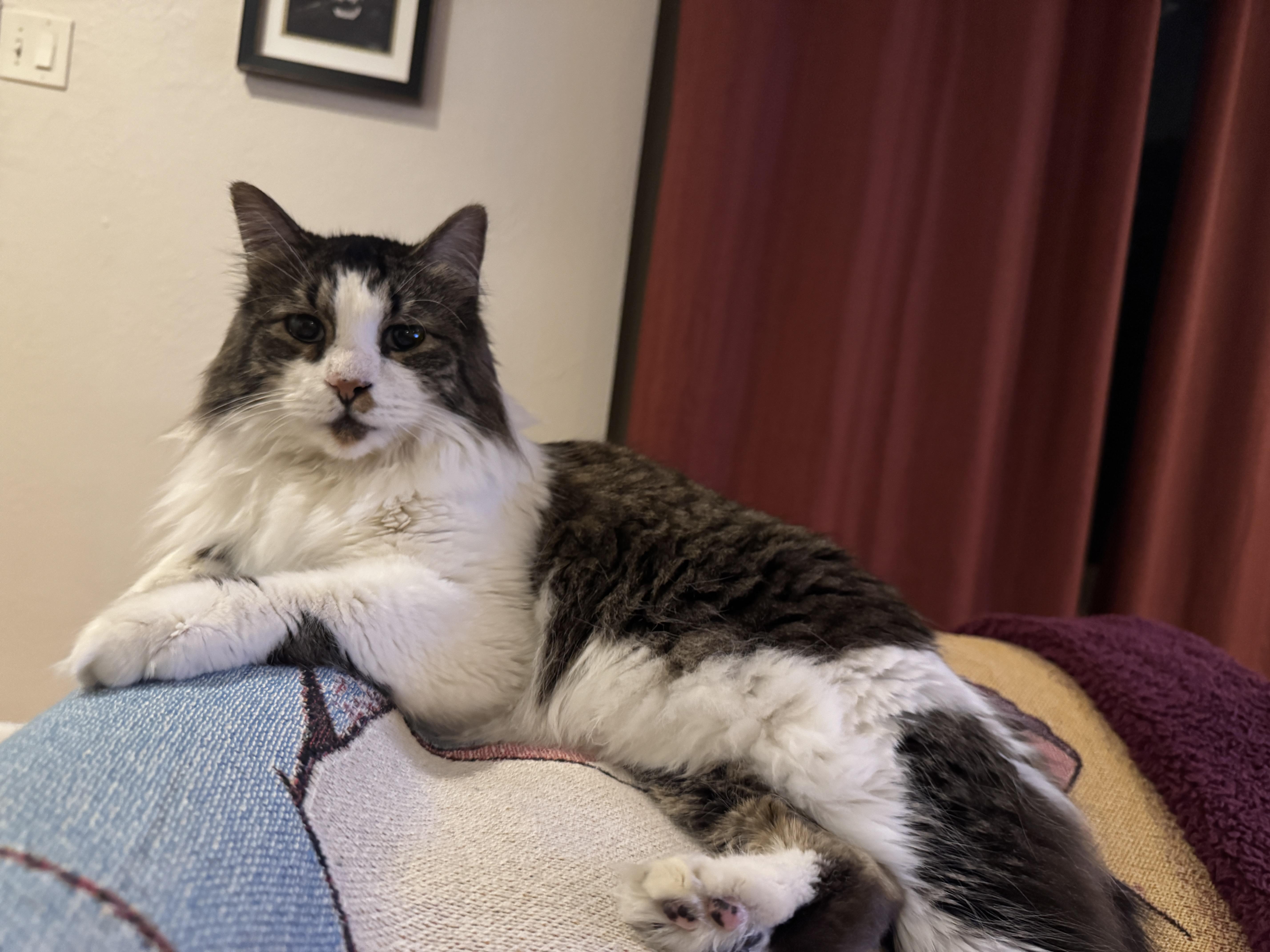
Norwegian Forest Cats are a natural breed from Scandinavia, shaped by long, cold winters into big, strong climbers with a weatherproof coat. Known at home as skogkatt, the breed was nearly lost in the mid-twentieth century before Norwegian enthusiasts revived it, and it reached North America in the late 1970s. A dense woolly undercoat, glossy water-resistant guard hairs, a full neck ruff, tufted paws and a long bushy tail give it a wild, rugged look.

Many Norwegians are sweet, easygoing and sociable while still making their own decisions about when to sit on a lap. They love heights and often chirp more than they meow. The breed matures slowly, sometimes taking up to five years to fill out, and sheds heavily each spring. Adopters who enjoy a confident, relaxed cat and can keep up with brushing tend to do well.

Weight
9–18 lbs
Height
9–12 in
Lifespan
12–16 yrs
Temperament
Gentle, Independent, Intelligent
Shedding
High

Owning a Norwegian Forest Cat in Maryville

Having a Norwegian Forest Cat in Maryville

Norwegian Forest Cats combine a sturdy outdoor heritage with a relaxed, people-friendly personality. Their size, love of climbing and heavy seasonal coat shape how they fit into a home, so understanding these traits helps adopters plan space, time and grooming.

Temperament

Norwegian Forest Cats are often calm, friendly and self-assured, enjoying company without constant attention. Many follow people around but prefer sitting beside you to being held. They usually get along with respectful children, other cats and calm dogs after gradual introductions. Some are reserved with strangers, and each cat's background affects how quickly it settles.

Exercise Needs

Norwegians are moderately active and especially enjoy climbing, so tall, sturdy cat trees and shelves are valuable. Interactive play with wand toys taps into their strong hunting instincts, and puzzle feeders add mental challenge. Young cats tend to be energetic, while mature adults often play in short bursts before settling into a favorite high perch.

Health Considerations

Norwegian Forest Cats are generally robust, but hypertrophic cardiomyopathy and glycogen storage disease type IV, a rare inherited disorder that affects kittens, are documented in the breed. Large cats can also develop joint problems and gain weight easily. Regular veterinary exams, weight control and dental care help, and a veterinarian can screen for common problems.

Living Space

A Norwegian Forest Cat can live comfortably in an apartment or a house if it has vertical space to climb and room for a large cat tree. Sturdy furniture and wide perches suit its size. Indoor living or a secure catio keeps it safe. Plan for shed fur, especially in spring, and a cool resting spot in warm weather.

What it costs to own a Norwegian Forest Cat

ExpenseTypical costPer year
Adoption fee$75, one time$75 in year one
Food$30 to $60 per month$360 to $720
Pet insurance$25 to $55 per month$300 to $660
Routine vet care$150 to $350 per year$150 to $350
Other*$500 to $1,250 per year$500 to $1,250
Estimated yearly total (after year one)$1,310 to $2,980
First-year total (with adoption fee)$1,385 to $3,055

Adoption fee is the fee on Norwegian Forest Cat listings in Maryville on GetBuddy today. Other costs are national averages for Norwegian Forest Cats; we don't have costs specific to Maryville yet.

* Litter, flea prevention, a dental cleaning allowance, sturdy cat trees and supplies, and regular brushing for the heavy double coat.

Adopt a Norwegian Forest Cat in Maryville.

Now that you know more, let’s find you a new best friend. These rescues and shelters below currently have Norwegian Forest Cats available.

Frequently Asked Questions

At one year old, many Norwegian Forest Cats look nearly adult in height but are still noticeably leaner than they will become. Weights vary widely, often somewhere around 7 to 12 pounds, with males typically heavier. The breed can keep adding muscle, bone and coat until about five years old, so a yearling is still growing into its frame.

No, Norwegian Forest Cats are not hypoallergenic. They produce the Fel d 1 allergen like other cats, and their thick double coat sheds heavily, especially in spring, spreading allergen-coated hair around the home. People with allergies may struggle with this breed. Spending extended time with the specific cat before adopting is the best way to judge your own reaction.

Norwegian Forest Cats are large cats, with most adults weighing about 9 to 18 pounds; males are usually 12 pounds or more, while females are commonly 9 to 12. They stand roughly 9 to 12 inches at the shoulder, and their long coat and bushy tail make them look even bigger. Healthy weight depends on frame, so judge body condition with a vet.

Norwegian Forest Cats commonly live about 12 to 16 years, and some reach their late teens or beyond. Lifespan depends on genetics, indoor living, weight, dental health and routine veterinary care. Because heart disease occurs in the breed and large cats are prone to obesity, regular checkups and keeping a Norwegian lean help support a long, comfortable life.

Norwegian Forest Cats are not extremely rare, but they are much less common than domestic longhairs in American homes and shelters. Many big, fluffy cats in rescues look similar but are mixed-breed domestic longhairs. Breed-specific and longhaired cat rescues sometimes list Norwegians, and saved searches on adoption sites help when few are available nearby.

Yes, Norwegian Forest Cats shed quite a lot, particularly during their seasonal molt. Each spring, many drop so much undercoat that they look noticeably slimmer, and a smaller shed often follows in autumn. Brushing two or three times a week, and daily during heavy shedding, controls loose hair and prevents mats around the neck, belly and hind legs.

A Norwegian Forest Cat is a large, longhaired natural breed from Norway, developed by nature to survive harsh Scandinavian winters. It has a water-resistant double coat, a full ruff, tufted ears and paws, a long bushy tail and a triangular face. Many are friendly, calm and independent, with a strong love of climbing and a soft chirping voice.

Some Norwegian Forest Cats are curious about water and will paw at taps or play near bowls, and their water-resistant coat handles damp conditions well. That does not mean most enjoy baths or swimming. Comfort with water varies by cat. If a bath is needed, keep it short and calm, and dry the dense undercoat thoroughly.

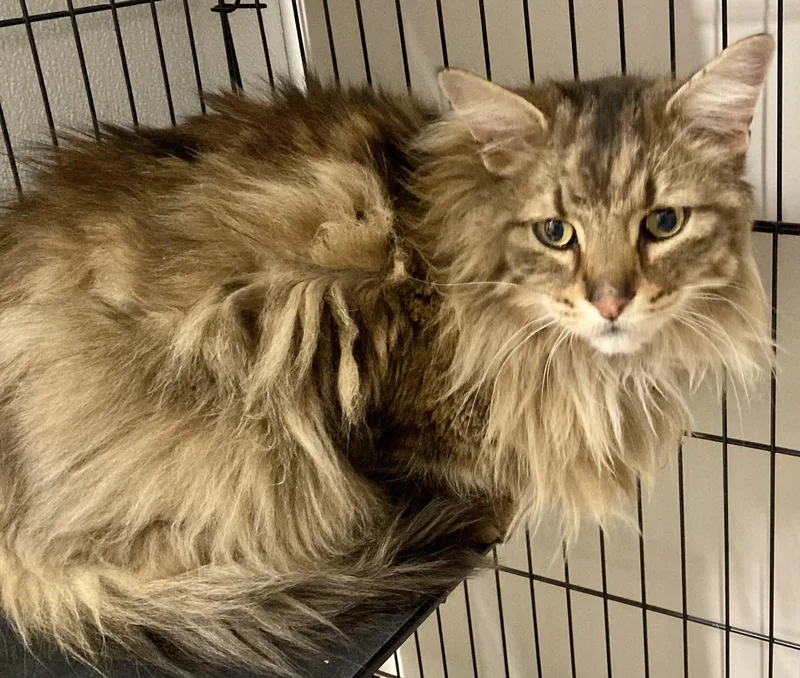
A Norwegian Forest Cat looks like a big, rugged wilderness cat. It has a triangular head with a straight profile, large almond eyes, tufted ears, a thick ruff around the neck and chest, fluffy britches and a long, bushy tail. Its hind legs are longer than its front legs. Colors include solids, tabbies, bicolors, smokes and calicos.

We have 1 rescue with Norwegian Forest Cats available: Blount County Humane Society. You can see every rescue with Norwegian Forest Cats available in the list above these questions, or scroll to the top to see the Norwegian Forest Cats near Maryville.