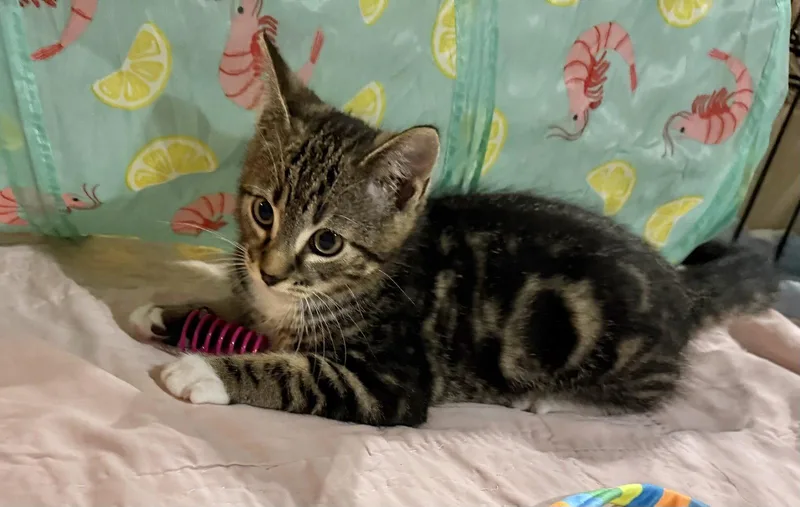
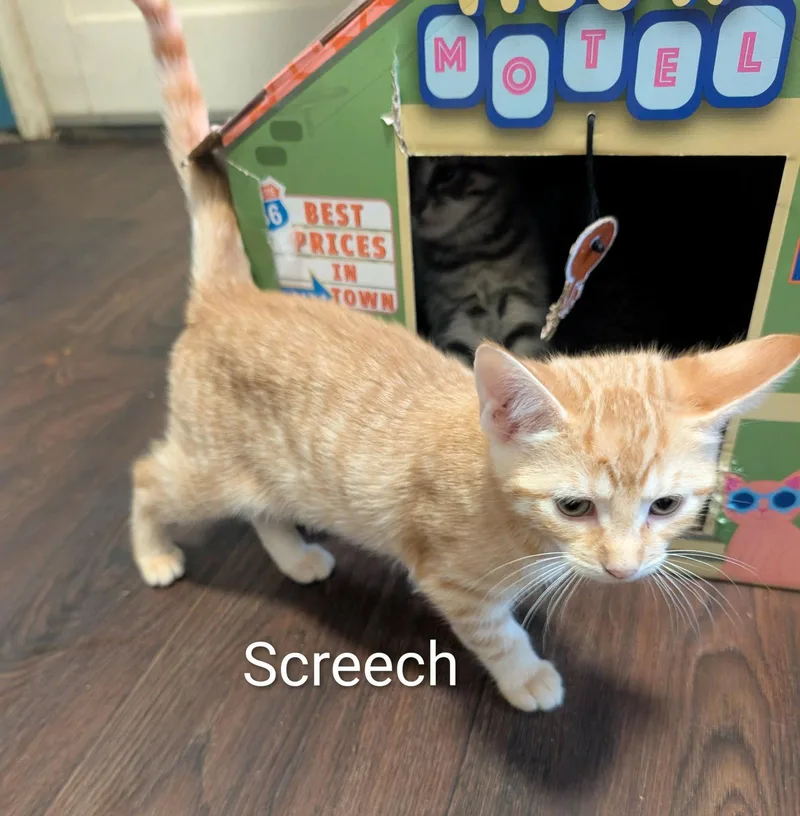
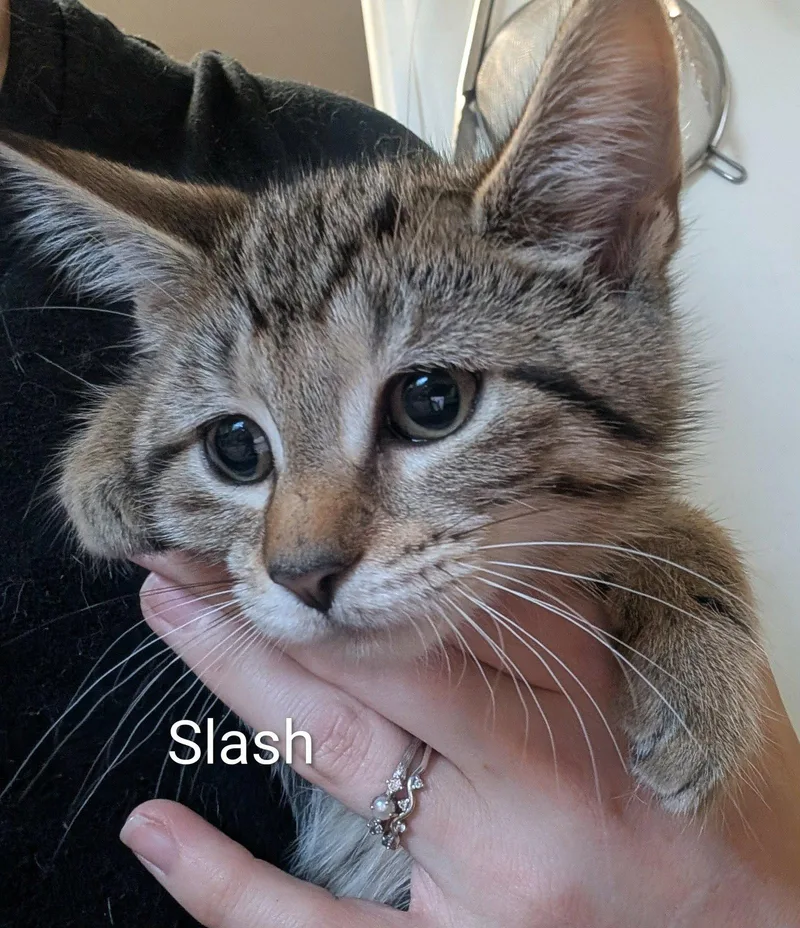
Tabby Cats for Adoption in Trenton, NJ

Your guide to finding and caring for a Tabby in Trenton

Tabby cats in Trenton mostly live in rowhouses, twins and small apartments, and most adapt well to them. Tabby is a coat pattern rather than a breed, so personality varies from cat to cat. A sunny front window in Chambersburg or a stair-climbing route through a Mill Hill rowhouse gives a curious cat plenty to watch. Shared walls mean a lively kitten's late-night zoomies can reach the neighbors, so evening play helps. When you browse the tabbies here, look at age and energy as much as stripes.

7500 Tabbies available in Trenton and nationwide

Find your Tabby

Tabbies Available for Adoption Near Trenton

About the Tabby breed

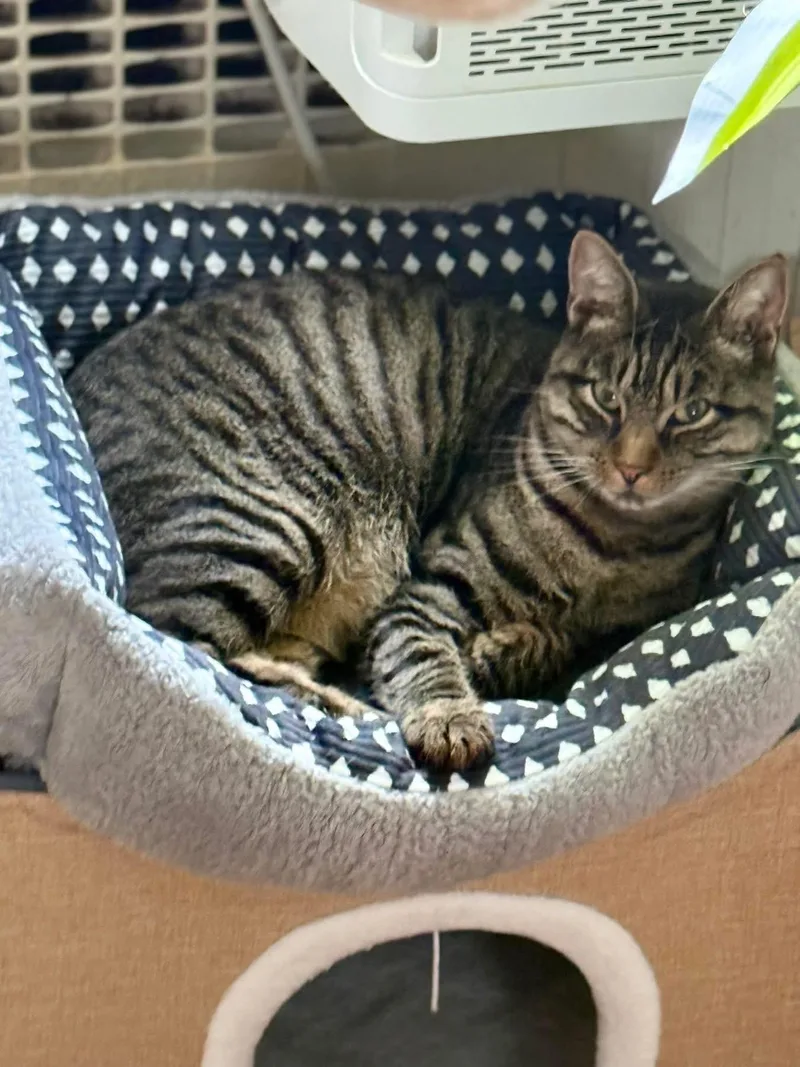
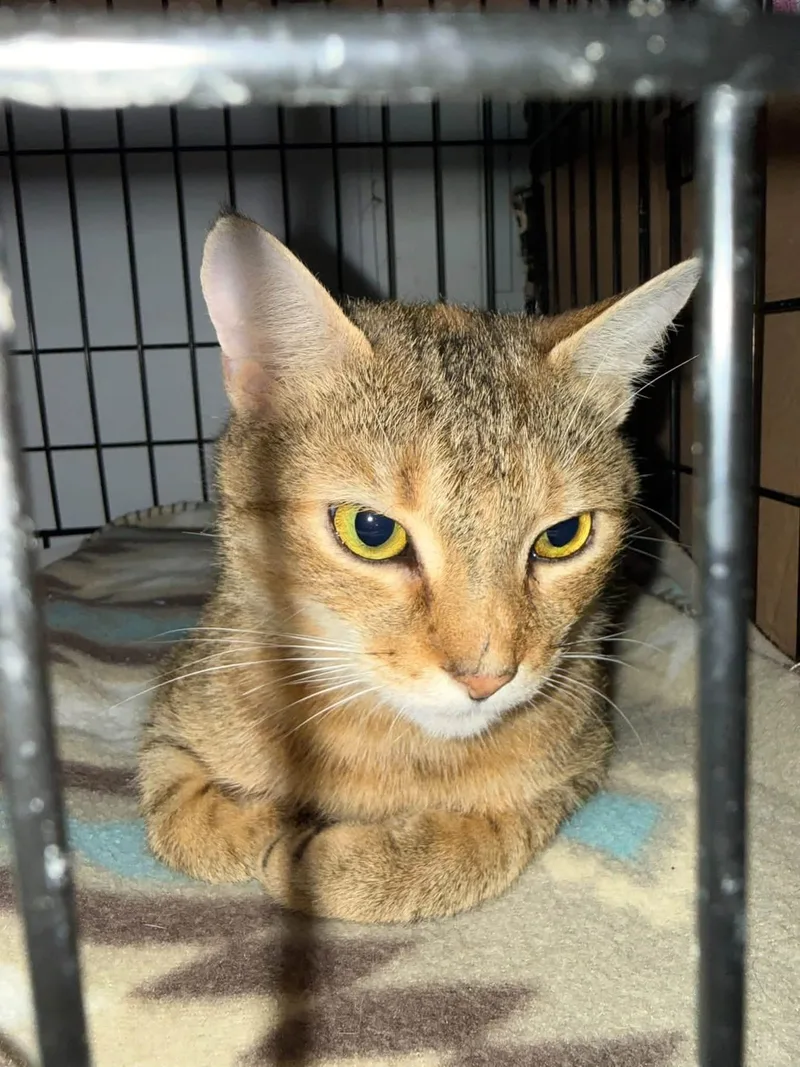
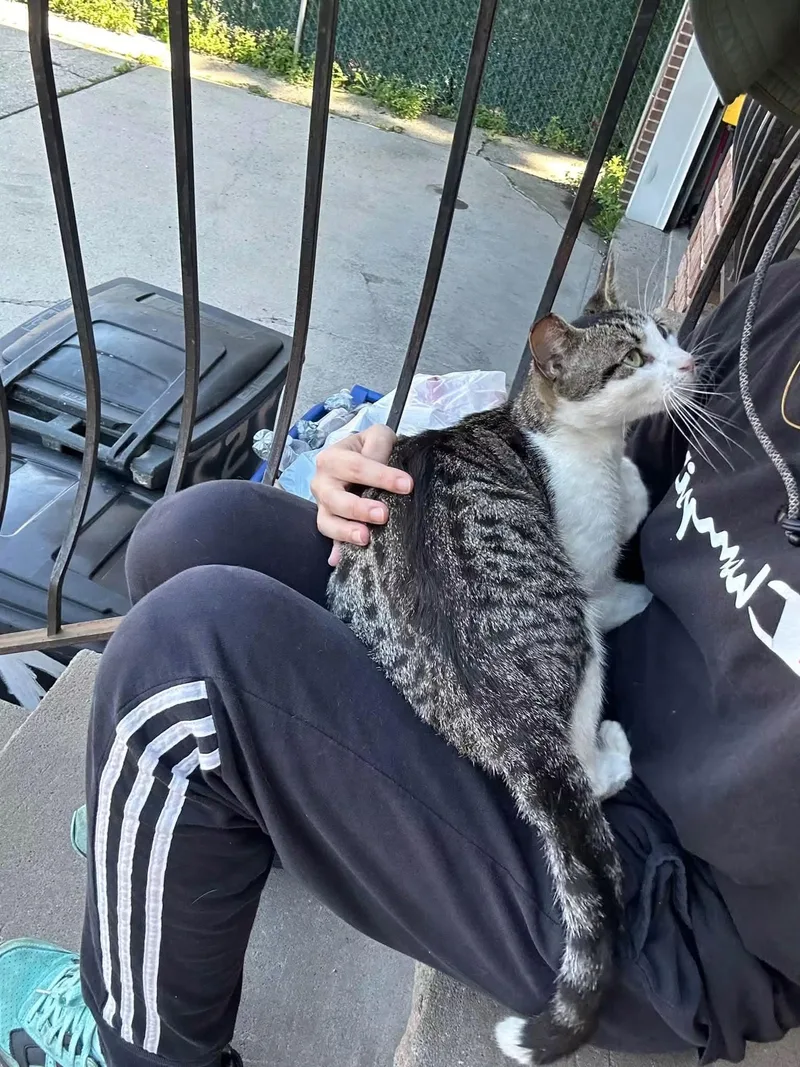
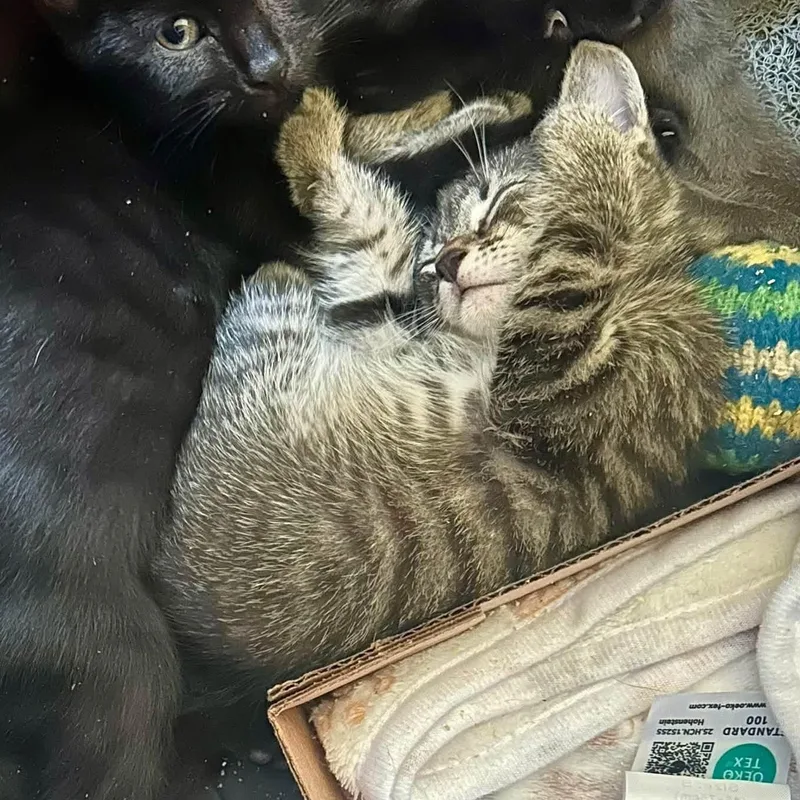
Tabby describes a coat pattern, not a breed: an M-shaped mark on the forehead plus stripes, swirls, spots or ticked hairs. It appears on domestic shorthairs, Maine Coons, American Shorthairs and many mixes, in brown, orange, gray, silver and cream. Most tabbies you'll meet in Trenton are medium-sized domestic shorthairs, roughly 6 to 14 pounds, and many live 12 to 18 years.

Because the pattern says nothing about personality, tabbies range from lap-seeking to shy and independent. Orange tabbies are often described as outgoing, but most orange cats are male, so that reputation partly reflects sex rather than stripes. Shedding is moderate for shorthairs and heavier for long-haired tabbies. In a compact city of rowhouses, a cat's age, energy and coat length will matter more to daily life than its pattern.

Weight
6–14 lbs
Height
8–10 in
Lifespan
12–18 yrs
Temperament
Curious, Adaptable, Affectionate
Shedding
Moderate

Owning a Tabby in Trenton

Having a Tabby in Trenton

A tabby's traits come from the cat's breed or mix, age and history, not its stripes. In Trenton, energy level, coat length and comfort with noise and shared walls are the details that best predict how well a cat fits a rowhouse or apartment.

Temperament

Expect the full range of feline personalities: many shelter tabbies are curious and affectionate, while others are shy or prefer their own space. In busy Trenton buildings with thin walls and street noise, a cat that stays calm around footsteps and doorbells tends to settle in faster. Watch how the cat reacts to handling and sounds.

Exercise Needs

Daily play that mimics hunting, like wand toys and chasing games, keeps most tabbies fit. Kittens and young adults often want several short sessions a day, while older cats prefer gentler ones. In a rowhouse, a cat tree by a front window and the climb up and down the stairs add exercise, and indoor play beats roaming near busy streets.

Health Considerations

Stripes don't affect health; a tabby's risks follow its breed or mix, age and lifestyle. Common feline concerns include obesity, dental disease, urinary problems, and kidney disease or hyperthyroidism in seniors. A veterinarian can check weight, teeth and parasite protection at the first visit, and annual exams catch problems early. Fleas and ticks are active in New Jersey's warm months.

Living Space

Tabbies adapt well to Trenton's rowhouses, twins and apartments when they have places to climb, scratch, hide and watch the street. Vertical space matters where yards are small or absent. Put a litter box on each floor of a multi-level home, and expect a long-haired tabby to need more brushing time than a shorthair.

What it costs to own a Tabby in Trenton

ExpenseTypical costPer year
Food$25 to $50 per month$300 to $600
Pet insurance$20 to $45 per month$240 to $540
Routine vet care$150 to $350 per year$150 to $350
Other*$450 to $1,150 per year$450 to $1,150
Estimated yearly total (after year one)$1,140 to $2,640

Other costs are estimates and vary with size, age and health.

* Litter, flea and tick prevention, a dental cleaning allowance, toys, scratchers and bedding, and occasional grooming.

Adopt a Tabby in Trenton.

Now that you know more, let’s find you a new best friend. These rescues and shelters below currently have Tabbies available.

Rescues in Trenton with Tabbies Available

Trenton's city shelter is small and often at capacity, and rescue groups in the area help cats find homes. Here are the rescues & shelters in the Trenton area where you can find Tabbies and other cats available for adoption.

Frequently Asked Questions

Only in a carrier. NJ Transit trains, the River LINE and buses allow small pets in carry-on travel cages, and SEPTA's Trenton Line requires a sturdy carrier too. Most tabbies, at roughly 6 to 14 pounds, fit a standard carrier. Amtrak accepts cats up to 20 pounds including the carrier, with a reservation and a fee. Keep the carrier closed for the whole trip.

Yes, as indoor cats. Trenton sees about 97 freezing nights and roughly 27 inches of snow a year, but a tabby with a warm, draft-free bed and a sunny window is comfortable. Short-coated cats feel the cold quickly, so outdoor time is best avoided in January and February. Keep ID tags current in case a cat slips out during a storm.

Yes. Tabby is a coat pattern, and no known Trenton rule treats cats differently by pattern. Cats over six months old must be spayed or neutered unless a breeding permit or exemption applies, and landlords set their own pet terms. Browse the tabbies on this page, and save a search to hear about new ones.

Yes. Most tabbies do well in apartments and rowhouses, which make up much of Trenton's rental housing. Give the cat a window perch, a scratching post, daily play and a litter box away from its food. Because walls are often shared, an evening play session burns off energy before bedtime. Get the landlord's pet terms in writing before adopting.

A short-haired tabby needs a brush about once a week, and more often in spring and fall when shedding picks up. Long-haired tabbies need brushing several times a week to prevent mats. Most grooming happens at home; occasional professional grooming, if you want it, is counted in the yearly Other cost range of $450 to $1,150.

A tabby cat is any cat with a tabby coat pattern, meaning stripes, swirls, spots or ticked hairs plus a distinctive M-shaped marking on the forehead. Tabby is not a breed. The pattern appears in domestic shorthairs and longhairs as well as many pedigreed breeds, such as the American Shorthair, Maine Coon and Abyssinian, and it is one of the most common cat patterns.

A tabby cat isn't any one breed, because tabby is a coat pattern. Cats with the pattern include shelter domestic shorthairs and longhairs as well as breeds such as the American Shorthair, Maine Coon, Bengal and Abyssinian. Most tabbies available for adoption are mixed-breed domestic cats, so browse the cats listed here and look at each one's age and personality.

A tabby cat has an M-shaped mark on its forehead, thin lines running from the outer corners of the eyes, and striped or spotted markings on the body, legs and tail. Mackerel tabbies have narrow parallel stripes, classic tabbies have bold swirls with a bullseye on each side, spotted tabbies have spots, and ticked tabbies show flecked hairs with few stripes.

We have 1 rescue with Tabbies available: Trenton Cats Rescue. You can see every rescue with Tabbies available in the list above these questions, or scroll to the top to see the Tabbies near Trenton.

A tabby typically costs about $1,140 to $2,640 a year. That covers food at $25 to $50 a month, insurance at $20 to $45 a month, routine vet care at $150 to $350 a year, and $450 to $1,150 a year for litter, parasite prevention, dental care, supplies and grooming. Emergencies and illness are extra.

Explore Other Breeds in Trenton

Looking for a different breed? Browse other cats available for adoption in Trenton.