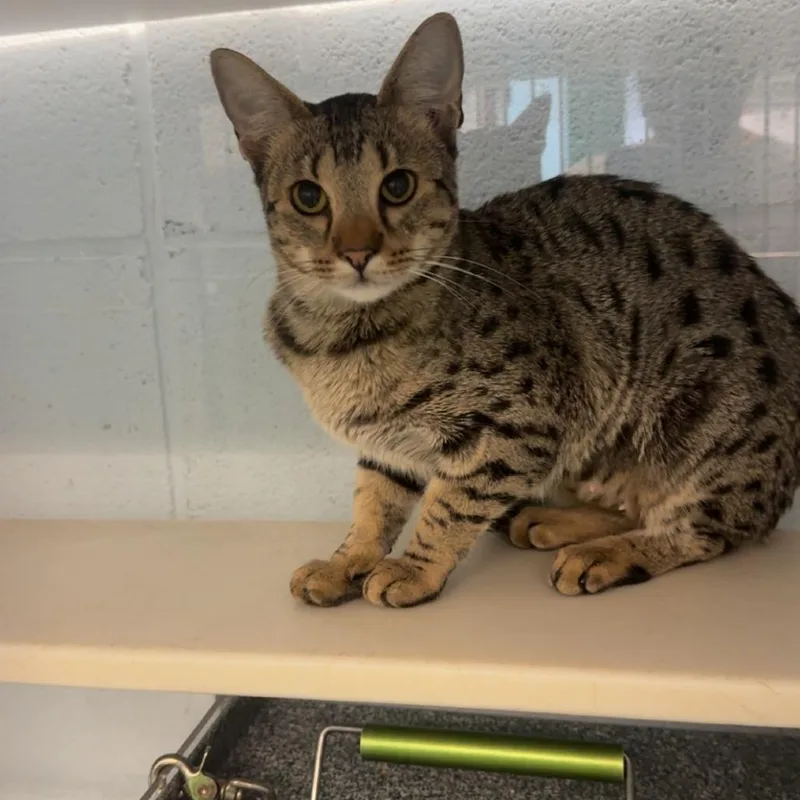
Ocicat Cats for Adoption in Manchester, NH

Your guide to finding and caring for an Ocicat in Manchester

Ocicats fit Manchester's apartment buildings well, as long as someone's around to play. An apartment in Rimmon Heights or a converted downtown mill condo gives them what they need: a window to watch from, a tall cat tree and a person who'll toss a toy down the hallway. They're social, athletic and quick to learn fetch, so evenings on the couch often turn into games. Most don't love long days alone, which matters if you're away at work all day.

18 Ocicats available in Manchester and nationwide

Say hello to your Ocicat

While we don't have enough cats near Manchester, keep in mind that many rescues may offer transport.

Ocicats Available for Adoption Near Manchester

About the Ocicat breed

The Ocicat began by accident in 1964, when Virginia Daly of Michigan crossed an Abyssinian with a Siamese and got a spotted kitten her daughter said looked like an ocelot. American Shorthairs were added later for size and silver coloring. Despite the wild look, it's entirely domestic. Expect a muscular cat, often heavier than it looks at 6 to 15 pounds, with a short, satiny coat of thumbprint spots in twelve colors.

Ocicats are often called dog-like. They tend to bond closely with their people, welcome visitors and learn games like fetch, leash walking and simple cues. That intelligence needs an outlet, especially through a long New England winter indoors. The coat is easy, usually just a weekly brushing, but the cat's attention needs are not. Each cat's personality varies.


Weight
6–15 lbs
Height
9–11 in
Lifespan
12–18 yrs
Temperament
Social, Active, Intelligent, Devoted
Shedding
Low to Moderate

Owning an Ocicat in Manchester

Having an Ocicat in Manchester

Ocicats combine athletic bodies, quick minds and a strong need for company. In Manchester, where winter keeps indoor cats inside for months, play space and daily attention matter more than the spotted coat. Here's how the breed's main traits play out locally.

Temperament

Ocicats tend to be outgoing and attached to their people, often greeting visitors instead of hiding. That works well in a busy apartment building, but many dislike long days alone and may get vocal or anxious. Each cat's history and socialization shape how it handles strangers, other pets and change.

Exercise Needs

Plan on daily interactive play: wand toys, fetch, puzzle feeders and climbing. Long Manchester winters keep cats indoors, so tall cat trees and wall shelves help burn energy. Many Ocicats learn harness walking, which allows supervised outdoor time in milder months. Without enough activity, some get restless and invent games with household objects.

Health Considerations

Ocicats can inherit conditions from their Abyssinian and Siamese ancestry, including renal amyloidosis, pyruvate kinase deficiency, progressive retinal atrophy and hypertrophic cardiomyopathy. Not every cat is affected, so have a veterinarian review health records and keep up regular exams and dental care. Hillsborough County is a heavy tick area, so ask about prevention for any cat that goes outdoors.

Living Space

Ocicats do well in apartments and houses when they have vertical space, toys and company. That suits much of Manchester's housing, from city apartments to single-family homes. A window perch and a tall tree matter more than square footage. Indoor living, or supervised time on a harness or in an enclosure, keeps them safe.

What it costs to own an Ocicat in Manchester

ExpenseTypical costPer year
Food$25 to $50 per month$300 to $600
Pet insurance$30 to $60 per month$360 to $720
Routine vet care$150 to $350 per year$150 to $350
Other*$450 to $1,150 per year$450 to $1,150
Estimated yearly total (after year one)$1,260 to $2,820

Other costs are estimates and vary with size, age and health.

* Litter, flea prevention, a dental cleaning allowance, toys, scratchers and climbing furniture, and minimal home grooming.

Adopt an Ocicat in Manchester.

Now that you know more, let’s find you a new best friend. These rescues and shelters below have cats available in and near Manchester.

Rescues and Shelters in or near Manchester

Manchester's animal shelter and nearby rescues care for cats of all ages, from kittens to seniors, and are listed below. Here are the rescues & shelters in the Manchester area with cats available for adoption, worth asking whether an Ocicat is coming in.

Frequently Asked Questions

Yes. No known breed rules in Manchester apply to Ocicats, which are fully domestic cats. New Hampshire requires rabies vaccination for cats three months and older, and the city doesn't license cats. Some landlords set their own pet terms, so read your lease before you adopt.

Yes, as indoor cats. Manchester has roughly 130 to 160 freezing nights a year and about 4 to 5 feet of snow, and an Ocicat's short coat gives little insulation, so keep the cat inside with warm bedding. Plan for outages with blankets and water, and add extra play on housebound days.

Yes, in a carrier. Manchester Transit Authority buses allow pets only when the animal is fully contained in a pet carrier and under control at all times. An Ocicat, at roughly 6 to 15 pounds, usually fits a standard carrier. Manchester has no subway or rail service, and service animals are welcome aboard.

Yes, if the cat has outlets for its energy. Ocicats need tall cat trees, wall shelves, a window perch and daily play more than square footage. Because they can be vocal and dislike long days alone, consider your neighbors: the city's noise rule covers animals whose frequent noise disturbs others. A playful second pet or someone home often helps.

It can be, especially for people who are home often or already have a playful pet. Ocicats are social and athletic, so long winters indoors call for daily wand play, puzzle feeders and climbing space. A cat left alone through long workdays may get bored or vocal, and each cat's temperament varies.

Very little. A weekly brushing, regular nail trims and dental care cover most needs, and an Ocicat never needs shaving. Dry indoor winter air may add some loose hair, so brush a bit more often then. Grooming costs stay small and fall within the roughly $450 to $1,150 yearly Other budget.

An Ocicat is a domestic cat breed with a spotted coat that resembles a wild ocelot, though it has no wild ancestry. It was developed in the 1960s from Abyssinian, Siamese and American Shorthair cats. Ocicats are muscular, medium to large and come in twelve colors. Many are social, trainable and often called dog-like in personality.

No, Ocicats are not hypoallergenic. Their short, close-lying coat sheds lightly, but cat allergies are triggered mainly by proteins in saliva and skin that all cats produce. Some allergic people tolerate low-shedding cats better than others, but there is no guarantee. Spend extended time with the specific cat, and talk with your doctor, before adopting.

The name Ocicat blends ocelot and cat. When the first spotted kitten appeared in 1964, a young girl in the household said he looked like an ocelot, a wild spotted cat of the Americas, and the name stuck. It describes only the look; the Ocicat is fully domestic and descends from Abyssinian, Siamese and American Shorthair cats.

Expect roughly $25 to $50 a month for food and $30 to $60 for pet insurance, plus $150 to $350 a year for routine vet care. Other yearly costs, including litter, flea prevention and dental care, run about $450 to $1,150. Altogether that's roughly $1,260 to $2,820 a year, with no city cat license.

Explore Other Breeds in Manchester

Looking for a different breed? Browse other cats available for adoption in Manchester.