Bengal Cats for Adoption in Charlotte, NC

Your guide to finding and caring for a Bengal in Charlotte

Bengals can do well in Charlotte apartments as long as there's something tall to climb. Whether home is a Fourth Ward flat or a University City complex near the Blue Line, a Bengal will treat every windowsill and bookshelf like a racetrack. They're smart, chatty and busiest around dawn and dusk, so they suit people who enjoy playing with their cat every day. A tall cat tree beside a window is the first thing to buy.

211 Bengals available in Charlotte and nationwide

A Bengal is ready for you

While we don't have enough cats near Charlotte, keep in mind that many rescues may offer transport.

Bengals Available for Adoption Near Charlotte

About the Bengal breed

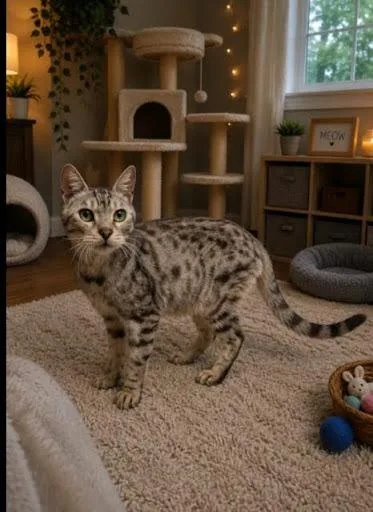
The Bengal grew out of crosses between domestic cats and the Asian leopard cat in the United States in the 1960s and 1970s. Today's pet Bengals are many generations removed from that ancestor and fully domestic, but they keep the lean, muscular build and the spotted, rosetted or marbled coat, often with a glittery sheen. Most weigh between 8 and 15 pounds, with males on the larger side.

That athletic body comes with an athletic mind. Bengals tend to fetch, open cabinets and play in running water, and they stay playful well into adulthood. Their short coat sheds little and needs only a weekly brush, though they aren't hypoallergenic. Cats vary, so one Bengal may be a lap cat, another a nonstop climber, and some are shyer than the stereotype suggests.

Weight
8–15 lbs
Height
9–11 in
Lifespan
10–15 yrs
Temperament
Energetic, Curious, Intelligent
Shedding
Low to Moderate

Owning a Bengal in Charlotte

Having a Bengal in Charlotte

Bengals pair a showy coat with a restless, problem-solving mind. In Charlotte, the big questions are whether you can give one daily play and climbing room, and whether you're comfortable with a few inherited health risks that a veterinarian can screen for.

Temperament

Bengals are confident, curious and closely attached to their people, often trailing them from room to room. Many are vocal, which matters in a Charlotte apartment with shared walls, and a bored Bengal can get loud or mischievous. Some enjoy cat-savvy dogs and playful cats, while others turn bossy, so personalities vary from cat to cat.

Exercise Needs

Plan on several active play sessions a day: wand toys, fetch and chase games, plus tall trees and wall shelves to climb. Food puzzles and clicker training add mental work, and many Bengals learn to walk on a harness. A window perch overlooking trees and birds gives an indoor Bengal something to watch between sessions.

Health Considerations

Bengals can inherit hypertrophic cardiomyopathy, a heart condition, as well as progressive retinal atrophy and pyruvate kinase deficiency, a type of anemia. Genetic tests exist for some of these. Annual veterinary checkups, with heart screening if the veterinarian recommends it, catch problems early. Keep rabies vaccination current, since North Carolina requires it.

Living Space

Bengals handle apartments and houses equally well when there's vertical space and daily interaction. Charlotte has plenty of apartments, townhomes and houses, and any of them can work with a tall tree, wall shelves and secure window screens. Keep a Bengal indoors or in an enclosed patio, since coyotes and traffic are real hazards.

What it costs to own a Bengal in Charlotte

ExpenseTypical costPer year
Food$25 to $50 per month$300 to $600
Pet insurance$30 to $60 per month$360 to $720
Routine vet care$150 to $350 per year$150 to $350
Other*$510 to $1,360 per year$510 to $1,360
Estimated yearly total (after year one)$1,320 to $3,030

Other costs are estimates and vary with size, age and health.

* The $10 Charlotte pet license for a spayed or neutered cat, litter, flea prevention, a dental cleaning allowance, toys and bedding, light brushing, and extra climbing and puzzle enrichment for a very active cat.

Adopt a Bengal in Charlotte.

Now that you know more, let’s find you a new best friend. These rescues and shelters below have cats available in and near Charlotte.

Frequently Asked Questions

Yes, a Bengal can live happily in a Charlotte apartment if it has room to climb and gets daily play. Tall cat trees, wall shelves and a window perch matter more than square footage. Many buildings charge pet fees and cap pets at two, so confirm the terms in your lease, and make sure upper-floor window screens are secure.

Yes. Charlotte's animal ordinance has no breed-specific rules for Bengals or other cats. You'll need rabies vaccination once a cat is four months old, plus a city pet license, which costs $10 a year for a spayed or neutered cat. Landlords can set their own pet rules, so confirm your lease allows cats.

It can be, if you're home enough to play with a Bengal daily and want an active, talkative cat. Charlotte's mild winters and long, comfortable springs and falls suit harness outings, while indoor living keeps the cat safe from coyotes and traffic. A Bengal is a tougher match if you're away long hours or want a quiet lap cat.

Yes, as indoor cats. Charlotte summers average about 89°F, with roughly 49 days a year reaching 90°F, and humidity adds to the heat. A Bengal living with air conditioning is comfortable. Keep water in several spots, shade sunny windows and never leave a cat in a parked car. Heavy panting or lethargy calls for a veterinarian.

No. CATS rules allow only service animals and animals in training on its vehicles, including buses and LYNX light rail, and violations can bring a $50 civil penalty. The rules list no carrier exception for pets. Plan veterinary visits and moves around a car or a ride from someone you know, and get your Bengal used to a carrier early.

Very little. A Bengal's short, close-lying coat needs a brush about once a week, and shedding is low to moderate. Charlotte's humid summers don't call for clipping or special coat care. Add regular nail trims and tooth care. Most owners skip a professional groomer, so grooming adds little to the yearly budget.

A Bengal is a domestic cat breed developed from crosses between house cats and the small Asian leopard cat, then bred for generations with domestic cats. Bengals have short, sleek coats with spots, rosettes or marbling, muscular builds and lively, curious personalities. Pet Bengals are domestic cats, though their energy and intelligence often feel a little wilder.

Bengal kittens look like tiny spotted or marbled wild cats, with large eyes, rounded ears and bold markings visible from birth. Many go through a fuzzy stage at a few weeks old, when longer guard hairs make the pattern look muddy or faded. The coat usually clears and sharpens over the first several months as the kitten matures.

Bengal cats are medium-sized, muscular cats that usually weigh about 8 to 15 pounds as adults. Males are typically larger and heavier than females, and some big males exceed that range. Their long, athletic bodies and powerful hindquarters can make them look larger than they are. Weight depends on build and activity, so body condition matters more than the number.

Plan on roughly $1,300 to $3,000 a year for a Bengal in Charlotte. That covers food at $25 to $50 a month, insurance at $30 to $60 a month, routine vet care at $150 to $350 a year, and other costs of $510 to $1,360 a year, including litter, the city license and climbing and puzzle enrichment.

Find Bengals in Nearby Cities

Expand your search to find Bengals available for adoption near Charlotte.