Bernese Mountain Dogs for Adoption in Cheyenne, WY

Your guide to finding and caring for a Bernese Mountain Dog in Cheyenne

Bernese Mountain Dogs are well matched to Cheyenne's cold, windy winters. The thick coat that struggles in hot places is an asset here, and the older neighborhoods north of the Capitol, with their big yards and carriage barns, give a Berner room to spread out. Daily leashed walks around Sloans Lake at Lions Park or along the Greenway cover the exercise. Shedding is the daily cost, so a good vacuum matters.

131 Bernese Mountain Dogs available in Cheyenne and nationwide

Adopt a Bernese Mountain Dog today

While we don't have enough dogs near Cheyenne, keep in mind that many rescues may offer transport.

Bernese Mountain Dogs Available for Adoption Near Cheyenne

About the Bernese Mountain Dog breed

The Bernese Mountain Dog comes from the Swiss canton of Bern, where farm dogs pulled milk and cheese carts, drove cattle and guarded the yard. It's the only long-coated Swiss mountain dog, with a black coat, rust markings and a white blaze and chest cross. Most adults weigh 70 to 115 pounds.

Berners tend to be gentle, affectionate and eager to please, often reserved with strangers but devoted at home. In Cheyenne, the thick double coat handles snow and sub-zero nights, though it sheds heavily year-round and needs regular brushing. Training early matters, because a pulling adult is hard to manage. Lifespans average roughly 7 to 10 years, partly because of high cancer rates, so adopters should go in prepared for that reality.

Weight
70–115 lbs
Height
23–28 in
Lifespan
7–10 yrs
Temperament
Gentle, Affectionate, Calm
Group
Working
Shedding
High

Owning a Bernese Mountain Dog in Cheyenne

Having a Bernese Mountain Dog in Cheyenne

In Cheyenne, a Berner's coat is a good match for the climate, while its size, shedding and health risks drive most of the planning. Think room to stretch out, steady brushing and routine vet care more than intense exercise.

Temperament

Berners are usually gentle, patient and attached to their people, though some are aloof with strangers. Dogs vary, so the dog in front of you matters more than the breed label. Early training and polite greetings are important at this size, especially on the Greenway, where walkers, runners and cyclists share the trail.

Exercise Needs

Plan on one or two good walks a day plus some play. Dogs must be leashed in Cheyenne's parks and on the Greenway, and no off-leash dog park is open, so a securely fenced yard is valuable for stretching out. Skip hard runs for puppies and hot afternoons. Training games and scent work add mental exercise.

Health Considerations

Cancer, especially histiocytic sarcoma, is the leading concern, along with hip and elbow dysplasia, kidney disease and bloat. Keeping a Berner lean protects the joints, and a veterinarian can screen for problems at regular checkups. In winter, check paws for ice-melt and packed snow, and watch for slipping on icy ground.

Living Space

Cheyenne's single-family homes with yards suit a giant dog well. Apartments can work with daily walks, easy access and tolerance for constant shedding, but a Berner needs room to stretch out on a cool floor. Berners do best living indoors with the family rather than out in the yard.

What it costs to own a Bernese Mountain Dog in Cheyenne

ExpenseTypical costPer year
Food$80 to $160 per month$960 to $1,920
Pet insurance$85 to $170 per month$1,020 to $2,040
Routine vet care$250 to $500 per year$250 to $500
Other*$675 to $1,850 per year$675 to $1,850
Estimated yearly total (after year one)$2,905 to $6,310

Other costs are estimates and vary with size, age and health.

* Flea, tick and heartworm prevention, a dental cleaning allowance, toys and large bedding, coat care for heavy shedding, and joint supplements; Cheyenne has no separate dog license.

Adopt a Bernese Mountain Dog in Cheyenne.

Now that you know more, let’s find you a new best friend. These rescues and shelters below have dogs available in and near Cheyenne.

Rescues and Shelters in or near Cheyenne

Cheyenne's rescue community includes a large nonprofit shelter and foster-based groups working to place dogs of every size. Here are the rescues & shelters in the Cheyenne area with dogs available for adoption, worth asking whether a Bernese Mountain Dog is coming in.

Frequently Asked Questions

Yes, for adopters with space and a car. Cheyenne's cold, dry climate, mild summers and houses with yards suit a Berner. The trade-offs are wind, heavy shedding, no open off-leash dog park and the breed's shorter lifespan. Berners do best with people home often, and each dog varies, so judge the dog in front of you, not the breed label.

Yes, most Bernese Mountain Dogs handle Cheyenne winters well. Their thick coats cope with roughly 170 freezing nights and about 63 inches of snow a year. The harder parts are wind, which sharpens the cold, and ice-melt on paws. Shorten walks on bitter windy days, dry the coat after snow, and keep the dog inside overnight.

Lions Park around Sloans Lake, Holliday Park and North Cheyenne Community Park offer room for leashed strolls, and the Greater Cheyenne Greenway adds nearly 50 miles of paved trail. Dogs must be leashed, and Cheyenne has no open off-leash dog park, so a Berner's romps happen in a fenced yard. Go early on warm July days.

Yes. No known breed ban or breed-specific rule applies in Cheyenne, and dangerous-animal rules are based on a dog's behavior, requiring a secured, muzzled dog after a threat or unprovoked bite. A home can have up to four dogs. Dogs adopted from a shelter must be spayed or neutered, and a second at-large offense brings mandatory microchipping.

Plan on brushing at least once or twice a week, and daily during heavy shedding, which peaks in spring as the winter coat blows out. Cheyenne's dry air and wind can add tangles behind the ears and legs, and snow clumps in the feathering, so dry and check the coat after winter walks. An occasional professional groom fits within the Other costs listed on this page.

No. Cheyenne Transit Program buses allow only service animals, so pet dogs can't ride, and the city has no rail or subway. Fares are free, but a 70-to-115-pound Berner needs a car for vet visits and trips to the Greenway or parks. Buses also don't run on Sundays, so plan on driving.

Sometimes outdoors, but patio policies are up to each restaurant, so access isn't guaranteed. Indoor dining rooms generally don't allow pet dogs, only service animals. A Berner takes up a lot of patio space, so pick a quiet corner, bring water and a mat, and keep the leash short. Skip hot midday patios in July.

A Bernese Mountain Dog is a large to giant Swiss working breed originally used on farms to pull carts, drive cattle and guard property. It has a long, tricolored coat of black, rust and white and a sturdy, powerful build. Berners are known for their gentle, affectionate nature, though their lifespan is shorter than many breeds.

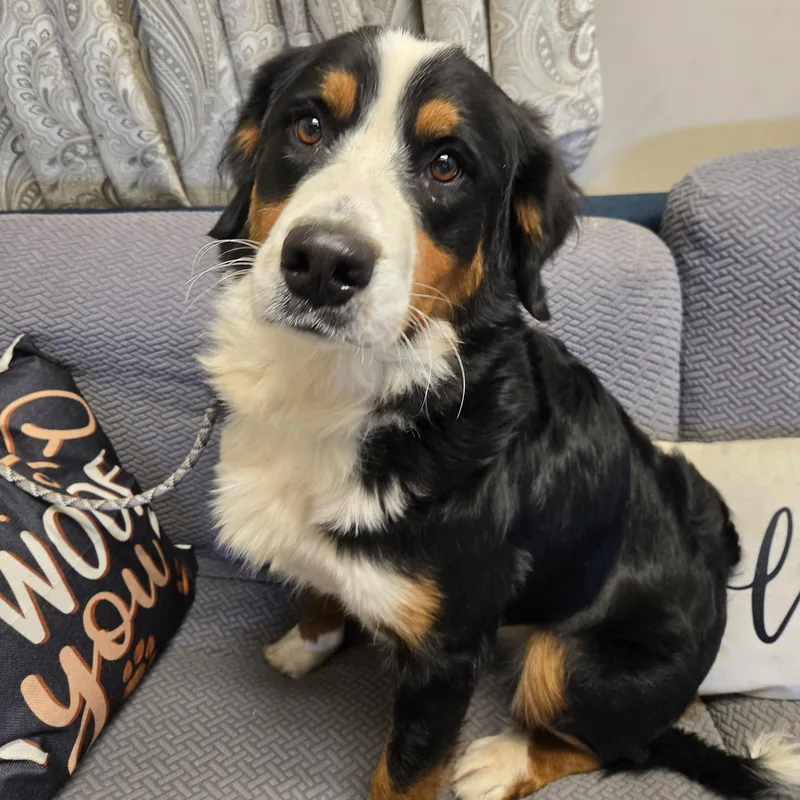
A Bernese Mountain Dog has a thick, moderately long coat that is jet black with rich rust markings over the eyes, on the cheeks, chest and legs, and white on the face, chest, feet and tail tip. The white chest marking often forms an inverted cross. They have a broad head, dark brown eyes and triangular drop ears.

Expect roughly $80–$160 a month for food, $85–$170 a month for insurance, $250–$500 a year for routine vet care and $675–$1,850 a year for everything else, including prevention, dental care, coat care and joint support. A giant breed's appetite and cancer risk push Berners toward the higher end of each range.

Find Bernese Mountain Dogs in Nearby Cities

Expand your search to find Bernese Mountain Dogs available for adoption near Cheyenne.

Explore Other Breeds in Cheyenne

Looking for a different breed? Browse other dogs available for adoption in Cheyenne.