Siberian Husky Dogs for Adoption in Knoxville, TN

Your guide to finding and caring for a Siberian Husky in Knoxville

A Siberian Husky fits Knoxville best when home is close to the South Knoxville trails. The Urban Wilderness has over 60 miles of trails and greenways, plenty of room for the long leashed runs a Husky needs, and a bungalow in Island Home Park or Lindbergh Forest puts you near them. Huskies are friendly and sociable, so they'll want company on every outing. Summers get humid, so save the hard exercise for early morning.

2429 Siberian Huskies available in Knoxville and nationwide

Open your home to a Siberian Husky

While we don't have enough dogs near Knoxville, keep in mind that many rescues may offer transport.

Siberian Huskies Available for Adoption Near Knoxville

About the Siberian Husky breed

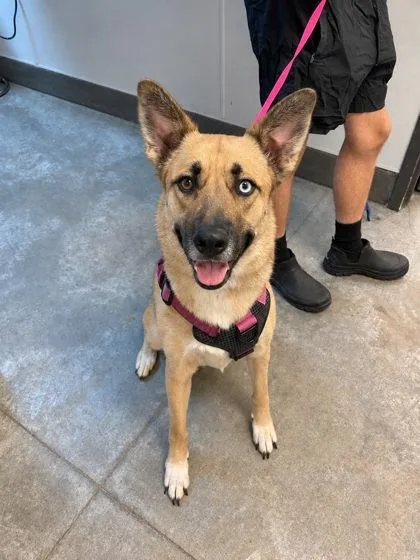
Siberian Huskies were developed by the Chukchi people of northeastern Siberia as sled and companion dogs, and became famous through the 1925 serum run to Nome. They're medium-sized, usually 35 to 60 pounds, with erect ears, a brush tail, a thick double coat and eyes that can be brown, blue or one of each.

Most Huskies are friendly and playful with nearly everyone, which makes them poor guard dogs. They were built to run, they howl more than they bark, and many dig or climb fences. In Knoxville's humid climate, expect heavy coat shedding twice a year. Dogs vary, and age and background shape how these traits show up.

Weight
35–60 lbs
Height
20–24 in
Lifespan
11–14 yrs
Temperament
Friendly, Energetic, Independent
Group
Working
Shedding
High

Owning a Siberian Husky in Knoxville

Having a Siberian Husky in Knoxville

Huskies pair sled-dog stamina with a free-thinking streak. In Knoxville, the big questions are whether you can give a Husky daily running time, keep your home and yard escape-proof, and handle heavy shedding and muggy summers.

Temperament

Huskies are usually outgoing and gentle, greeting neighbors and strangers on Knoxville greenways like friends. Many enjoy other dogs, but a strong prey drive can put cats and small pets at risk. Independence can look like stubbornness, so patient, reward-based training helps. Each Husky differs, and age and past experience shape how these traits show up.

Exercise Needs

Plan on vigorous exercise every day, such as jogging, hiking or canicross. Leashed dogs are welcome at Ijams Nature Center and on city greenways, and Knoxville's dog parks give room to stretch out. Few Huskies have reliable recall, so keep them leashed outside fenced areas, and run them early or late in summer.

Health Considerations

Huskies are generally robust, but eye conditions such as juvenile cataracts and progressive retinal atrophy occur, and some develop a zinc-responsive skin problem. The thick coat raises heatstroke risk in Knoxville summers. Copperheads live in East Tennessee and usually bite dogs on the face and legs, so stay on trails. A veterinarian can check eyes, hips and skin.

Living Space

A Husky can manage in a Knoxville apartment or bungalow if daily exercise is guaranteed, but a securely fenced yard helps. Many dig under or climb over short fences, so tall or buried fencing is common advice. Huskies do best indoors with company, and air conditioning makes Knoxville's muggy summers safer.

What it costs to own a Siberian Husky in Knoxville

ExpenseTypical costPer year
Adoption fee$100, one time$100 in year one
Food$35 to $70 per month$420 to $840
Pet insurance$45 to $85 per month$540 to $1,020
Routine vet care$225 to $450 per year$225 to $450
Other*$530 to $1,355 per year$530 to $1,355
Estimated yearly total (after year one)$1,715 to $3,665
First-year total (with adoption fee)$1,815 to $3,765

Adoption fee is the fee on Siberian Husky listings in Knoxville on GetBuddy today. Other costs are estimates and vary with size, age and health.

* The $5 Knoxville city dog license, flea, tick and heartworm prevention, a dental cleaning allowance, toys and bedding, and brushing tools and baths for twice-yearly coat blowouts.

Adopt a Siberian Husky in Knoxville.

Now that you know more, let’s find you a new best friend. These rescues and shelters below currently have Siberian Huskies available.

Frequently Asked Questions

Yes, with some planning. Knoxville summers are humid, so a Husky's thick coat is the issue, not the cold. Run at dawn or after dark, leave the AC on when you're out, and never leave a dog in a parked car, even with a window cracked. Winters are mild enough that most Huskies enjoy them.

Victor Ashe Park's Dogwood dog park in northwest Knoxville has hill structures and a paved greenway loop for leashed dogs, so a Husky can burn energy both ways. Plumb Creek in far west Knox County has a 7-acre large-dog area, and the Emma Jane Walker dog park has a pond with a dock. Elsewhere in city parks, keep a Husky leashed.

Yes, if the exercise happens daily. A Husky's size is manageable, but howling and boredom can bother neighbors, and Knoxville's code addresses animals whose frequent noise disturbs the peace. Look for a ground-floor or quiet unit, schedule runs before work, and don't leave the dog alone all day. Confirm the building's pet and weight rules before signing.

Brush a Husky once or twice a week most of the year, and daily during the two heavy sheds, usually spring and fall. Knoxville's humid summers and year-round rain mean drying the dense coat fully after baths and swims. Never shave it, since the double coat helps regulate heat. Brushing tools and baths for coat blowouts are counted in the Other cost line.

Sometimes, on patios only. Knoxville restaurants can get a City permit to welcome pet dogs outdoors, but not every patio has one. Your Husky must stay leashed, off chairs and tables, and out of the indoor dining room. Huskies are friendly, but a dog still learning manners around strangers and other dogs may be better off at home.

Don't plan on it. Knoxville's KAT runs buses only, with no rail. Service animals are allowed, and KAT's FAQ mentions pets in a standard carrier, but its ride guide lists only service animals, so check KAT's current rule. A 35 to 60 pound Husky won't fit in a carrier anyway, so a car or a walk is the practical option.

A Siberian Husky is a medium-sized working dog developed as a sled dog in northeastern Siberia. Huskies weigh about 35 to 60 pounds and have a thick double coat, erect ears and often striking blue or mismatched eyes. They are known for endurance, friendliness and independence, and they need plenty of exercise, secure fencing and company to thrive.

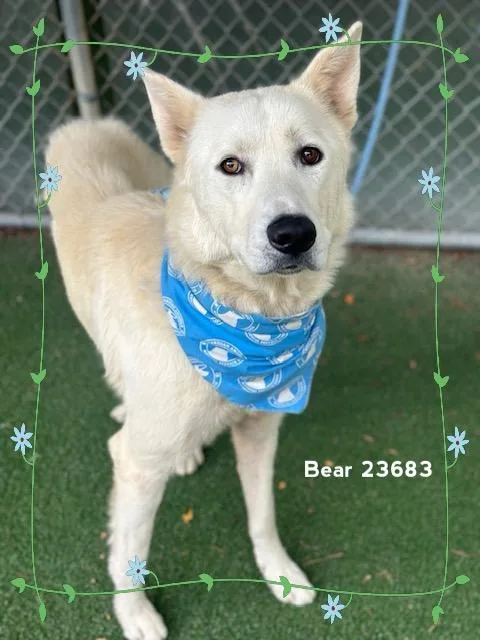
A Siberian Husky looks like a compact, athletic sled dog with a thick medium-length coat, triangular upright ears and a bushy tail often carried in a curve over the back. Coats range from black, gray, red and sable to pure white, often with a facial mask. Their almond-shaped eyes can be brown, blue, one of each or partly both.

We have 1 rescue with Siberian Huskies available: Knox Vintage Pet Project. You can see every rescue with Siberian Huskies available in the list above these questions, or scroll to the top to see the Siberian Huskies near Knoxville.

Expect roughly $35 to $70 a month for food, $45 to $85 a month for insurance, $225 to $450 a year for routine vet care, and $530 to $1,355 a year for other costs such as prevention, dental care and coat-blowout grooming. That's about $1,715 to $3,665 a year, before any emergencies.