Bernese Mountain Dogs for Adoption in Charleston, SC

Your guide to finding and caring for a Bernese Mountain Dog in Charleston

A Bernese Mountain Dog suits West Ashley's slower pace, with five dog parks and off-leash areas spread across the area. Berners are often happy with a steady walk, a stop at Ackerman Park or Lenevar Park, and a long nap beside the family afterward. The thick coat is the catch, because Charleston's humid summers are hard on them and air conditioning matters. A Berner fits a household that's home a lot and likes a slow evening loop around the neighborhood.

131 Bernese Mountain Dogs available in Charleston and nationwide

Adopt a Bernese Mountain Dog today

While we don't have enough dogs near Charleston, keep in mind that many rescues may offer transport.

Bernese Mountain Dogs Available for Adoption Near Charleston

About the Bernese Mountain Dog breed

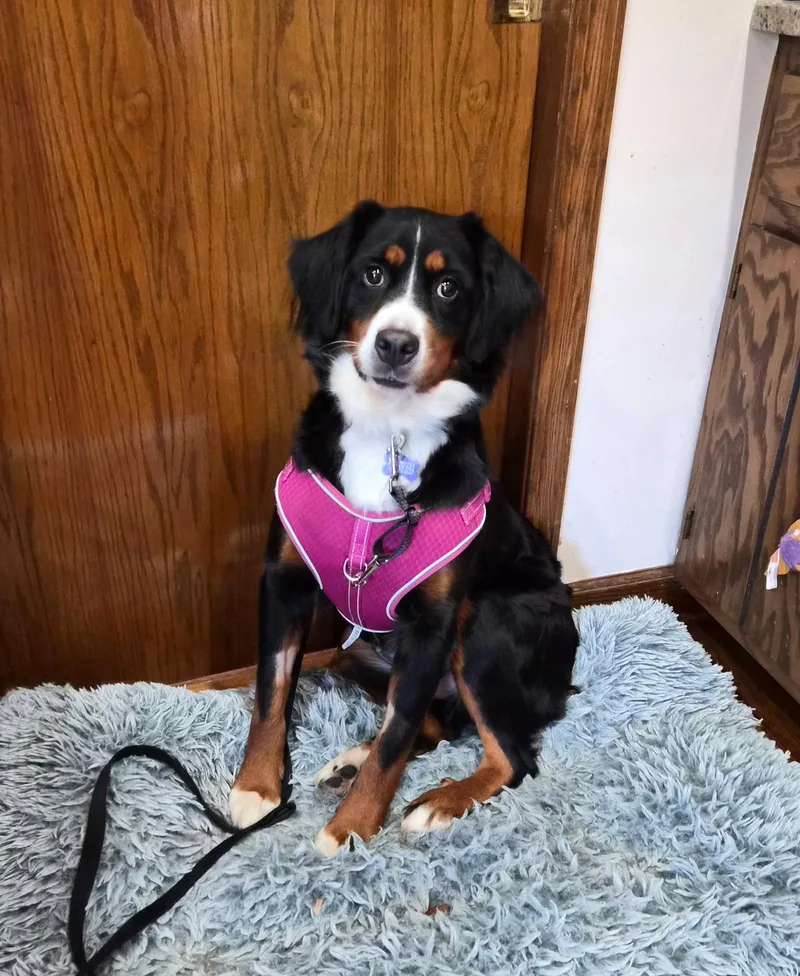
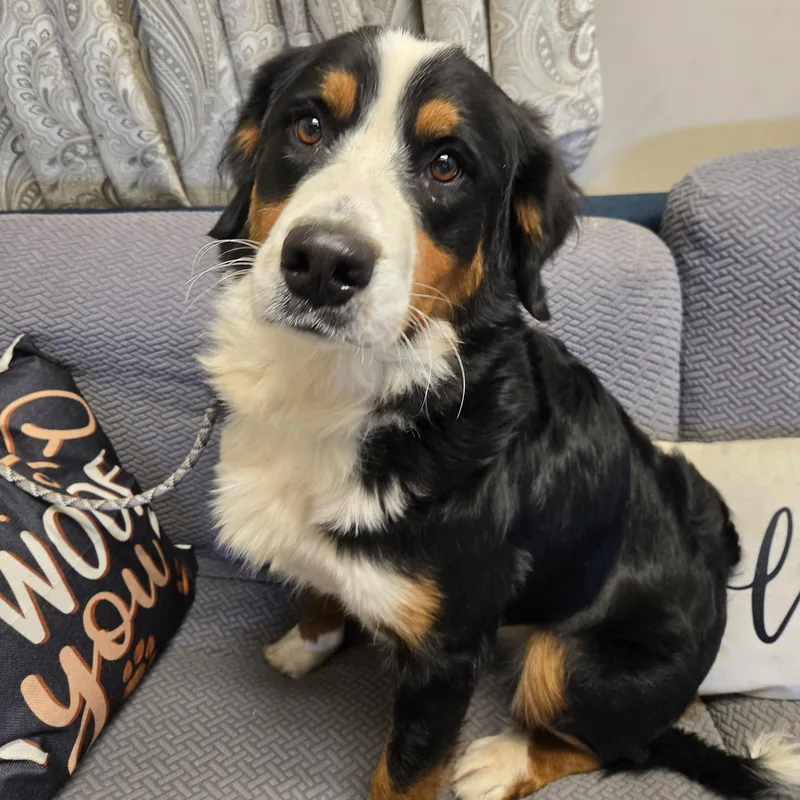
Bernese Mountain Dogs come from the canton of Bern in Switzerland, where they pulled carts of milk and cheese and drove cattle. They're the only long-coated Swiss mountain breed, recognizable by a jet-black coat, rust markings, a white blaze and a chest cross. Most weigh 70 to 115 pounds. Berners are usually gentle and eager to please, though many are reserved with strangers at first.

In Charleston, the size and the coat shape daily life. A Berner sheds heavily all year, so expect brushing a couple of times a week and more during heavy sheds. Lifespan is shorter than average, commonly seven to ten years, largely because of cancer. Early training matters, since a pulling adult is hard to manage on a busy sidewalk. Dogs vary, so judge each one by its own behavior.

Weight
70–115 lbs
Height
23–28 in
Lifespan
7–10 yrs
Temperament
Gentle, Affectionate, Calm
Group
Working
Shedding
High

Owning a Bernese Mountain Dog in Charleston

Having a Bernese Mountain Dog in Charleston

Berners combine a soft nature with draft-dog size and strength. In Charleston, their heavy coat, heat sensitivity and serious health risks shape daily care as much as personality does, so planning for humid summers and long-term vet costs is part of adopting one.

Temperament

Berners are often gentle, patient and devoted to their families, and many get along with respectful children and other pets. Some are shy or aloof with strangers. In a walkable city with plenty of passersby, early manners and calm greetings matter for a dog this big. Behavior varies from dog to dog, so watch how a Berner handles new people and places.

Exercise Needs

Most Berners need one or two moderate walks a day plus some play. In Charleston's warm months, walk at dawn or after dark. Leashed loops, fenced dog parks and a swim at a dog park lake all work well. Skip long runs, and keep puppies off hard exercise and repetitive jumping while their joints develop.

Health Considerations

Berners face high rates of cancer, especially histiocytic sarcoma, along with hip and elbow dysplasia, kidney disease and bloat. Keeping a Berner lean protects its joints, and regular checkups help catch problems early. Charleston's warm, humid weather adds heat-stress risk, and mild winters make year-round parasite prevention worth discussing with a veterinarian.

Living Space

A Berner needs room to stretch out. A house with a secure yard fits best, and a cool indoor space matters more here than square footage. Apartments can work with an elevator or ground-floor unit, daily walks and air conditioning that runs all summer. Plan for shedding on furniture and floors.

What it costs to own a Bernese Mountain Dog in Charleston

ExpenseTypical costPer year
Food$80 to $160 per month$960 to $1,920
Pet insurance$85 to $170 per month$1,020 to $2,040
Routine vet care$250 to $500 per year$250 to $500
Other*$690 to $1,890 per year$690 to $1,890
Estimated yearly total (after year one)$2,920 to $6,350

Other costs are estimates and vary with size, age and health.

* Flea, tick and heartworm prevention, a dental cleaning allowance, the dog license, toys and large bedding, coat care for heavy shedding, and joint supplements.

Adopt a Bernese Mountain Dog in Charleston.

Now that you know more, let’s find you a new best friend. These rescues and shelters below have dogs available in and near Charleston.

Rescues and Shelters in or near Charleston

Charleston-area shelters and rescues care for thousands of animals every year, and the groups below list their adoptable dogs here. Here are the rescues & shelters in the Charleston area with dogs available for adoption, worth asking whether a Bernese Mountain Dog is coming in.

Frequently Asked Questions

Yes, Bernese Mountain Dogs can live in Charleston if the household keeps them cool. Winters are mild, but summer highs reach the mid-80s downtown with nights near 76 degrees, which is hard on a heavy-coated breed. Plan on air conditioning, dawn and evening walks, shade and water, and keep outdoor time short from June through September. Heat tolerance varies from dog to dog.

It can be, for a household that's home often, has air conditioning and enjoys short, cool walks. The city has plenty of dog parks and mild winters. It's a weaker fit for people who are away all day, can't manage summer heat, or want a running partner. Budget for giant-breed vet costs and a shorter-than-average lifespan.

Yes. No breed-specific rule is known for Charleston, and state law says a dog isn't dangerous solely because of its breed. The same dog rules apply to every breed: a city license, rabies tag, microchip or ID collar, and a leash in public. The bigger hurdle is usually housing, since some leases cap pet weight.

Fenced city dog parks such as Ackerman Park in West Ashley, Grove Street beside Hampton Park and Governor's Park on Daniel Island give a Berner room to move. The West Ashley Greenway suits long leashed walks. The dog park at James Island County Park has a lake and separate large-dog sections. Go early in summer.

Probably not practically. CARTA says riders with service animals are always accommodated, but pets aren't addressed, so confirm CARTA's current pet rules before planning a ride. A Berner weighing 70 to 115 pounds can't be carried or tucked into a carrier, so walking or driving is the realistic way to get around.

Sometimes, on patios only. South Carolina lets restaurants allow dogs in outdoor table-service areas, but each restaurant decides, and pets can't enter the building. Dogs must be restrained and kept off tables and seats. A Berner takes up a lot of floor space, so choose a roomy patio and go in the cooler evening.

Plan on brushing at least once or twice a week, and daily during heavy sheds. In Charleston's humid summers, keep the coat clean and fully dry to prevent skin trouble, and rinse off floodwater after walks. Avoid shaving the coat; ask a groomer about trimming instead. Professional grooming and shedding tools fall within the Other costs listed above.

A Bernese Mountain Dog is a large to giant Swiss working breed originally used on farms to pull carts, drive cattle and guard property. It has a long, tricolored coat of black, rust and white and a sturdy, powerful build. Berners are known for their gentle, affectionate nature, though their lifespan is shorter than many breeds.

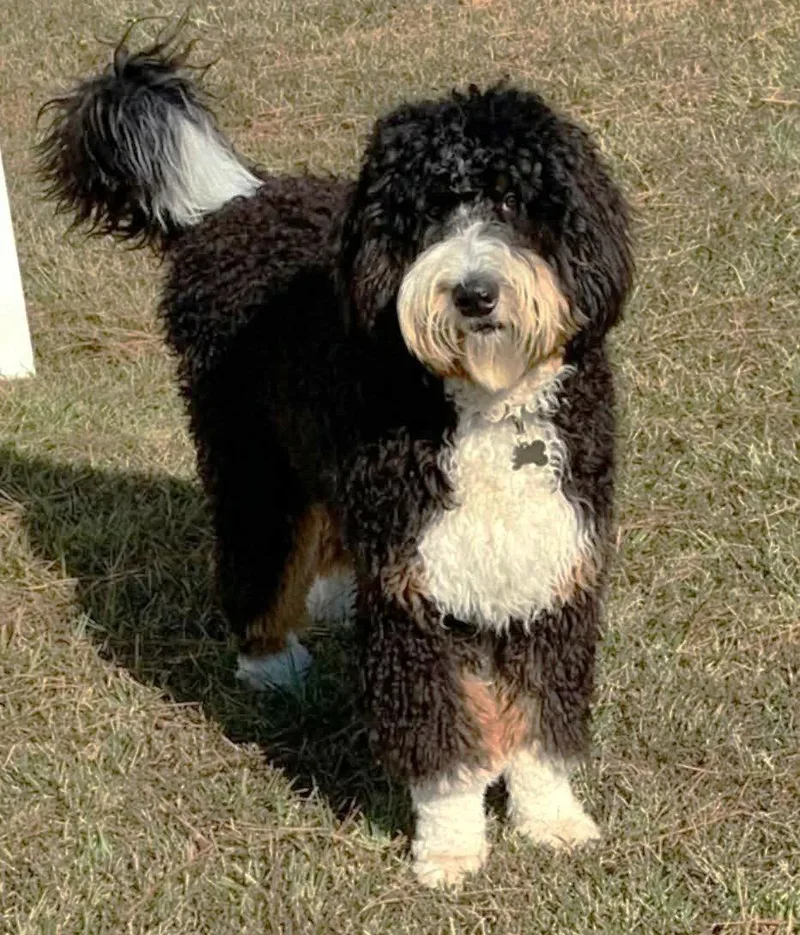
A Bernese Mountain Dog has a thick, moderately long coat that is jet black with rich rust markings over the eyes, on the cheeks, chest and legs, and white on the face, chest, feet and tail tip. The white chest marking often forms an inverted cross. They have a broad head, dark brown eyes and triangular drop ears.

Plan on roughly $2,920 to $6,350 a year for a Berner. Food runs $80 to $160 a month, pet insurance $85 to $170 a month, routine vet care $250 to $500 a year, and other costs such as prevention, grooming and supplements $690 to $1,890 a year. Cancer risk makes pricing insurance early worthwhile.

Find Bernese Mountain Dogs in Nearby Cities

Expand your search to find Bernese Mountain Dogs available for adoption near Charleston.