Japanese Spitz Dogs for Adoption in Toledo, OH

Your guide to finding and caring for a Japanese Spitz in Toledo

A Japanese Spitz fits Toledo's mix of loft apartments and tree-lined neighborhoods well. At 11 to 20 pounds, it's small enough for a Warehouse District loft or a rental near the University of Toledo, yet it still enjoys a long loop along the curved streets of Glendale-Heatherdowns. Expect an alert little dog that announces visitors and wants to stay close, so it suits people who are home a fair amount. That white coat picks up winter slush, so keep a towel by the door.

48 dogs similar to Japanese Spitz available in Toledo and nationwide

Meet your next Japanese Spitz

While we don't have enough dogs near Toledo, keep in mind that many rescues may offer transport.

Japanese Spitzs and Similar Breeds Available for Adoption Near Toledo

About the Japanese Spitz breed

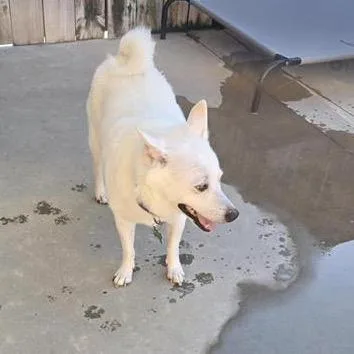
The Japanese Spitz was developed in Japan in the 1920s and 1930s from white spitz dogs, descended from German Spitz stock, brought in from several countries, and it was standardized after World War II as a companion dog. It stands 12 to 15 inches tall, with a pure white stand-off coat, a pointed muzzle, small upright ears and a plumed tail curled over the back. It looks like a small Samoyed but is a separate breed.

Many Japanese Spitz are cheerful, affectionate and closely tied to their people, with a playful streak that lasts into adulthood. They're usually alert to visitors and may bark to announce them, which is worth knowing in Toledo's shared-wall apartments and close-set older streets. The coat sheds dirt well but blows out heavily once or twice a year, and these dogs do best when someone is home much of the day. Each dog varies.


Weight
11–20 lbs
Height
12–15 in
Lifespan
12–14 yrs
Temperament
Cheerful, Affectionate, Alert, Playful
Shedding
Moderate to High

Owning a Japanese Spitz in Toledo

Having a Japanese Spitz in Toledo

Alert barking, moderate energy, seasonal shedding and a need for company shape daily life with a Japanese Spitz more than its looks do. In Toledo, winter slush and shared walls add a few practical things to plan for.

Temperament

Japanese Spitz tend to be cheerful and affectionate, though each dog varies. Many are reserved with strangers at first and will bark to announce a knock at the door, which carries through apartment walls. Reward-based training helps. Long stretches alone can bring on anxiety or noise, so a Toledo schedule with midday breaks suits them.

Exercise Needs

Plan on 30 to 60 minutes a day: a couple of brisk walks plus play or trick training. Toledo offers leashed trails at Wildwood Preserve and Glass City Metropark, and the free Middlegrounds off-leash area downtown once a dog meets its rules. Mental games count too, since a bored Spitz may bark or chew.

Health Considerations

Patellar luxation, where the kneecap slips, is the main concern, and runny eyes with tear staining are common. A late-onset form of progressive retinal atrophy has been identified, and skin allergies occur. A veterinarian can check knees and eyes at a first visit. Keep rabies vaccination current, since a rabid bat was confirmed in Lucas County in 2025.

Living Space

At 11 to 20 pounds, a Japanese Spitz suits Toledo apartments and houses alike, with moderate exercise needs. The catch is voice: alert barking can bother close neighbors, and Toledo treats barking that carries beyond your property for 15 continuous minutes as a nuisance. Early training helps. Expect white hair on dark furniture during shedding season.

What it costs to own a Japanese Spitz in Toledo

ExpenseTypical costPer year
Food$20 to $45 per month$240 to $540
Pet insurance$35 to $70 per month$420 to $840
Routine vet care$200 to $400 per year$200 to $400
Other*$490 to $1,290 per year$490 to $1,290
Estimated yearly total (after year one)$1,350 to $3,070

Other costs are estimates and vary with size, age and health.

* The $25 Lucas County dog license, flea, tick and heartworm prevention, a dental cleaning allowance, toys and bedding, and grooming for a heavy-shedding white double coat.

Adopt a Japanese Spitz in Toledo.

Now that you know more, let’s find you a new best friend. These rescues and shelters below currently have Japanese Spitzs available.

Frequently Asked Questions

Yes, you can own a Japanese Spitz in Toledo. The city's dog code has no breed-specific rules; it relies on behavior-based nuisance, dangerous and vicious designations. Your dog needs a Lucas County license from three months old, a tag worn at all times, and reasonable control in public. Your lease may add its own limits.

Start with Middlegrounds Metropark's free off-leash area downtown, which has a separate fenced area for small dogs. For leashed walks, Wildwood Preserve offers about 9.4 miles of trails, and Glass City Metropark has three miles along the river. Skip Toledo Botanical Garden, where dogs aren't allowed. Dogs at Middlegrounds must be licensed, vaccinated, spayed or neutered, and four months or older.

No, not as pets. TARTA's rules allow service animals only, on buses, at the TARTA Hub and on Flex vans, with no exception for carriers. Toledo has no subway or rail, so a car or a walkable route is the practical way to get your Spitz to a park.

Usually yes. The thick double coat suits Toledo's cold, snowy winters. The challenges are small legs in deep snow, road salt and ice on paws, and slush clinging to a white coat. Keep walks short on the coldest days, wipe paws and legs afterward, and keep the dog indoors with the family.

Sometimes, on patios. Ohio law lets restaurants allow dogs outdoors, but each restaurant decides, and dogs must enter through an outdoor entrance, stay leashed, and stay off chairs and tables. Indoor dining isn't open to pet dogs. A Spitz that settles quietly at your feet makes patio visits easier, so look for posted signs at the entrance.

Plan on brushing a few times a week, daily during the once- or twice-yearly coat blowouts, and a bath every month or two or when dirty. Toledo's wet spring and salty, slushy winter mean extra towel-offs and paw wipes. Grooming falls within the roughly $490 to $1,290 a year of other costs shown above, along with prevention and dental care.

A Japanese Spitz is a small companion dog developed in Japan, standing about 12 to 15 inches tall and weighing roughly 11 to 20 pounds. It is known for its pure white stand-off coat, pointed muzzle, upright ears and curled tail. Many are cheerful, affectionate and closely bonded to their people, with an alert, playful nature that lasts well into adulthood.

The Japanese Spitz comes from Japan. It descends from white German Spitz-type dogs that reached Japan in the 1920s, with more white spitz dogs brought in from Canada, the United States, Australia and China over the following decade. Crossing these dogs produced the breed, which was standardized in Japan after World War II, around 1948.

We have 1 rescue with Japanese Spitzs available: Planned Pethood Inc.. You can see every rescue with Japanese Spitzs available in the list above these questions.

Expect roughly $1,350 to $3,070 a year for a Japanese Spitz in Toledo. That covers food at $20 to $45 a month, insurance at $35 to $70 a month, routine vet care at $200 to $400 a year, and $490 to $1,290 in other costs such as grooming, prevention and dental care.