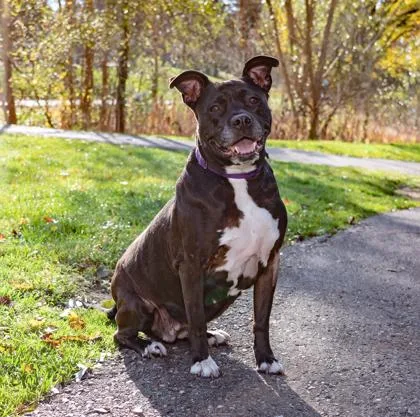
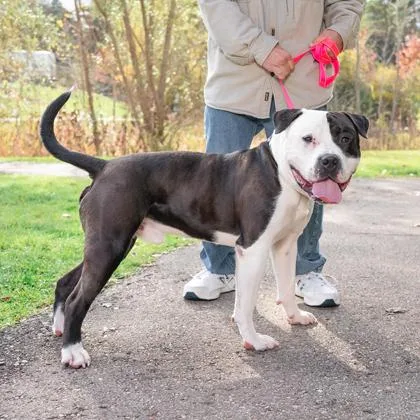
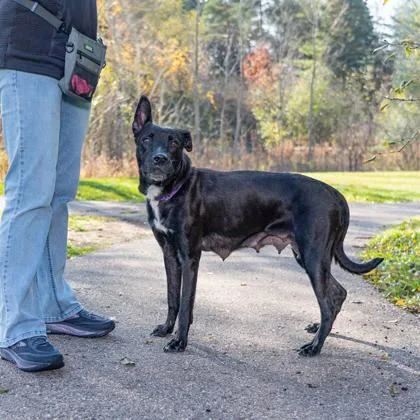
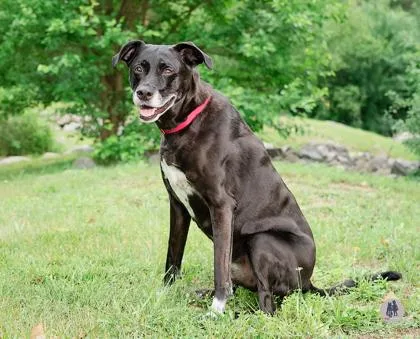
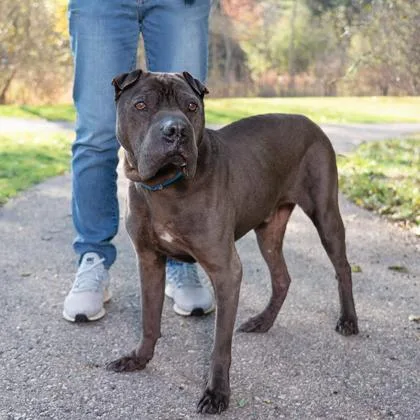
Rottweiler dog

Rottweiler Dogs for Adoption in Ann Arbor, MI

Your guide to finding and caring for a Rottweiler in Ann Arbor

Rottweilers fit Ann Arbor best in a house or roomy apartment with a routine of long, leashed walks. A loop along the Argo Pond boardwalk in Northside or the trails at Bird Hills gives a Rottie the steady exercise and sniffing it needs. Most are reserved with strangers, so a quieter street suits them better than a packed student block downtown. Winter ice and road salt come with the territory here, so expect to wipe paws often.

1428 Rottweilers available in Ann Arbor and nationwide

Give a Rottweiler a home

Rottweilers Available for Adoption Near Ann Arbor

About the Rottweiler breed

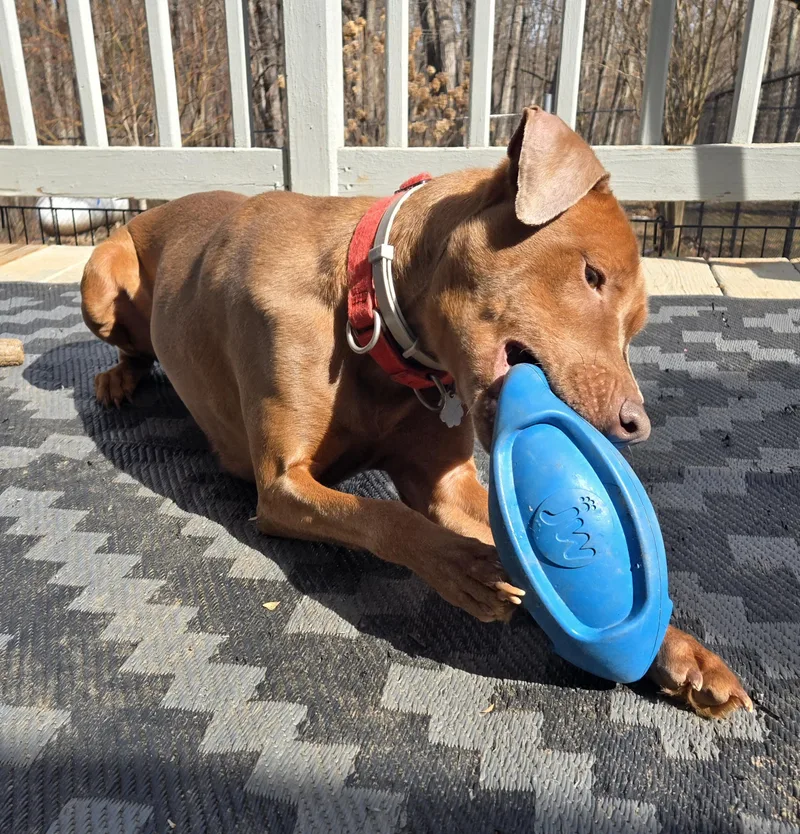
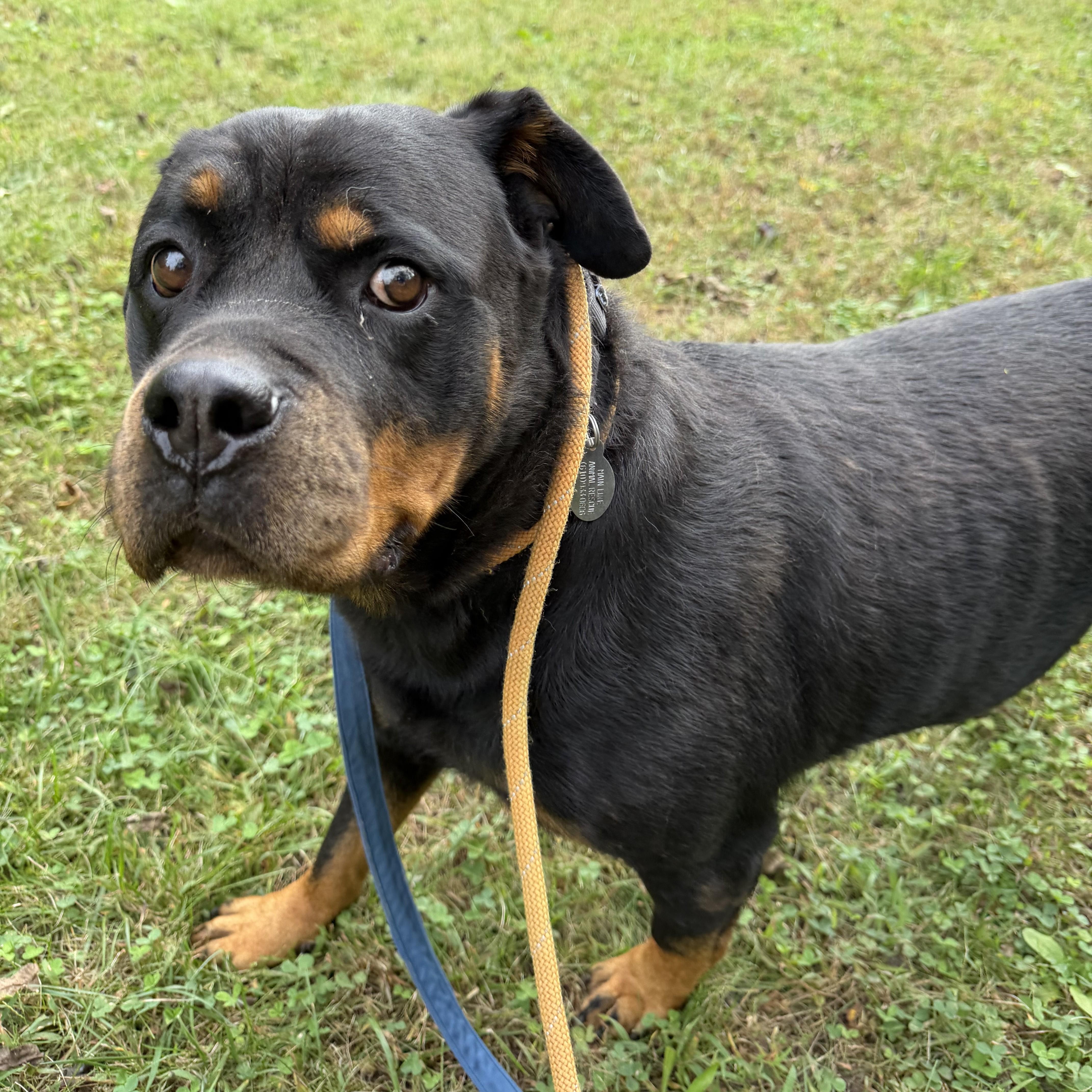
Rottweilers take their name from the German market town of Rottweil, where drover dogs moved cattle and pulled butchers' carts before the breed moved into police, guard and search work. The modern Rottie is a compact, powerful dog, commonly 75 to 135 pounds, with a short black coat and rust markings.

At home, many are affectionate, playful and fond of leaning on their people, while staying reserved with strangers and a little protective. Early socialization and consistent, reward-based training matter, and Rottweilers vary a lot from dog to dog. In Ann Arbor, where city parks require leashes and sidewalks fill with students and other dogs, good manners get used every day. Adult Rotties often show their personalities more clearly than puppies do.


Weight
75–135 lbs
Height
22–27 in
Lifespan
8–11 yrs
Temperament
Confident, Loyal, Protective, Calm
Group
Working
Shedding
Moderate

Owning a Rottweiler in Ann Arbor

Having a Rottweiler in Ann Arbor

Steady confidence, real strength and a need for daily work define the breed. In Ann Arbor, that translates into leash manners on busy campus-area sidewalks, joint care for a heavy dog, and a plan for icy winters.

Temperament

Rottweilers are typically calm and self-assured, wary of strangers but devoted at home. In Ann Arbor, where sidewalks and parks are shared with students, joggers and other dogs, a Rottie benefits from early socialization and steady training. Temperament varies from dog to dog, and breed reputation says little about any one Rottweiler.

Exercise Needs

Plan on at least an hour of daily activity: brisk leashed walks plus training games or scent work. Dogs must be leashed in city parks outside the fenced off-leash dog parks, so a sturdy harness and good recall practice help. Black coats warm up fast, so shift exercise to mornings and evenings in July.

Health Considerations

Hip and elbow dysplasia, cruciate ligament tears and several cancers are the main concerns, and the breed's lifespan is relatively short. Heart and eye conditions also appear. A veterinarian can check hips, elbows and heart early. Keeping a Rottie lean eases the joints, which matters on icy Ann Arbor sidewalks where heavy dogs can slip.

Living Space

A Rottweiler does well in a house or a roomy apartment when daily exercise and training happen. A fenced yard helps a young dog but doesn't replace family time, and a Rottie should live indoors, especially through Michigan winters. Stairs and slick entryways are harder on a heavy dog's joints, so ground-floor or elevator access is a plus.

What it costs to own a Rottweiler in Ann Arbor

ExpenseTypical costPer year
Food$55 to $110 per month$660 to $1,320
Pet insurance$65 to $130 per month$780 to $1,560
Routine vet care$250 to $500 per year$250 to $500
Other*$481 to $1,262 per year$481 to $1,262
Estimated yearly total (after year one)$2,171 to $4,642

Other costs are estimates and vary with size, age and health.

* The Ann Arbor dog license ($6 to $12 a year), flea, tick and heartworm prevention, a dental cleaning allowance, toys and bedding, and basic brushing supplies.

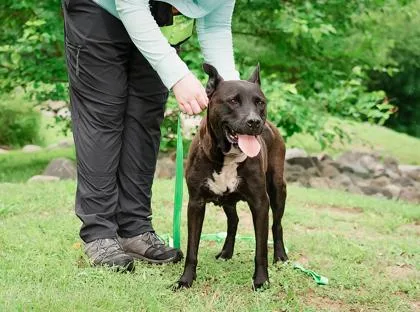
Rottweiler dog

Adopt a Rottweiler in Ann Arbor.

Now that you know more, let’s find you a new best friend. These rescues and shelters below currently have Rottweilers available.

Rescues in Ann Arbor with Rottweilers Available

Ann Arbor's Humane Society of Huron Valley houses the city's strays and includes spay/neuter and a microchip with adoptions. Here are the rescues & shelters in the Ann Arbor area where you can find Rottweilers and other dogs available for adoption.

Frequently Asked Questions

Yes. Ann Arbor has no breed ban, and its animal code says a dog can't be labeled dangerous because of its breed or perceived breed. Behavior is what counts. Pet stores can't sell dogs, which makes adoption the main route to a Rottweiler. Landlords set their own rules, so lease terms matter more than city law.

Yes, most Rottweilers handle Ann Arbor winters well, since the breed tolerates cold better than heat. Roughly 45 days a year never get above freezing, and a few nights drop to 0°F, so shorten walks then and keep the dog indoors. Dry paws after salted sidewalks, and don't let a heavy dog charge across ice.

Swift Run Dog Park is the best fit for a big dog, with 10 fenced acres. A permit and current dog license are required, and the all-parks permit is $60 for the first dog, or $45 if spayed or neutered. Dogs must stay under voice command, so practice recall first. For walks, Bird Hills and Nichols Arboretum take leashed dogs.

Rarely. TheRide buses carry pets free, but only in a well-secured cage or travel container, which a full-grown Rottweiler almost never fits in. Service animals are the exception and ride under control without a carrier. For most outings, plan on walking or driving, and crate-train early so car trips stay calm.

Yes, if the lease allows it and the dog gets daily exercise. Many Rotties settle well in roomy apartments, but ground-floor or elevator access eases strain on big joints. Barking is presumed a nuisance from 10 p.m. to 7 a.m., so teach a calm settle routine and choose a building with quick outdoor access.

It can be, if you can give daily walks, training and time at home. Leashed trails, fenced dog parks and the breed's tolerance for cold all work in its favor, while busy, student-filled sidewalks call for good leash manners. Long days alone or a lease that excludes large dogs are the usual dealbreakers.

Only where the restaurant has health department permission for dogs. Michigan's food code bars dogs other than service animals from food establishments, patios included, unless a variance is granted, and few Washtenaw County restaurants have one. Ann Arbor also bars leaving a dog tied outside a restaurant or store while you're inside.

Very little. Brush a Rottweiler weekly, and more often in spring and fall when the undercoat sheds. Bathe only when needed, trim nails regularly and wipe paws after winter salt. Most owners do this at home, so grooming adds little beyond brushing supplies and an occasional professional nail trim.

We have 1 rescue with Rottweilers available: Humane Society of Huron Valley. You can see every rescue with Rottweilers available in the list above these questions, or scroll to the top to see the Rottweilers near Ann Arbor.

Expect roughly $2,200 to $4,600 a year for a Rottweiler in Ann Arbor. That covers food at $55 to $110 a month, insurance at $65 to $130 a month, routine vet care of $250 to $500 a year, and other costs of $481 to $1,262 a year. Emergency care and joint treatment can add more.