Greyhound Dogs for Adoption in Topeka, KS

Your guide to finding and caring for a Greyhound in Topeka

Greyhounds suit Topeka better than their racing reputation suggests. A dog that naps most of the day does fine in a College Hill bungalow or a Westboro house, and the paved Shunga Trail gives it a long, flat leashed walk close to home. Sprints are easy to plan for, too, with fenced off-leash areas at Lake Shawnee and Gage Park. Winter takes some preparation, since a thin-coated Greyhound wants a jacket when January lows sit near 20°F.

265 Greyhounds available in Topeka and nationwide

Bring home a Greyhound

While we don't have enough dogs near Topeka, keep in mind that many rescues may offer transport.

Greyhounds Available for Adoption Near Topeka

About the Greyhound breed

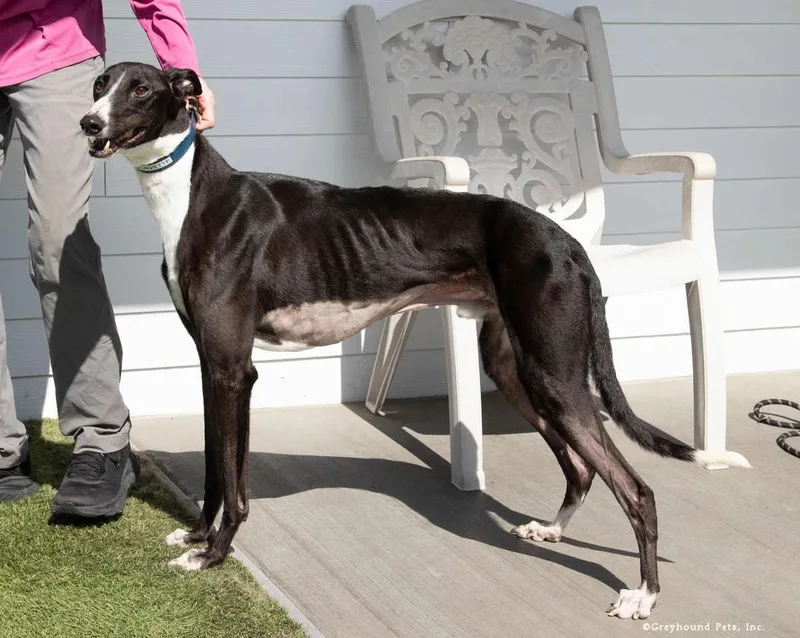
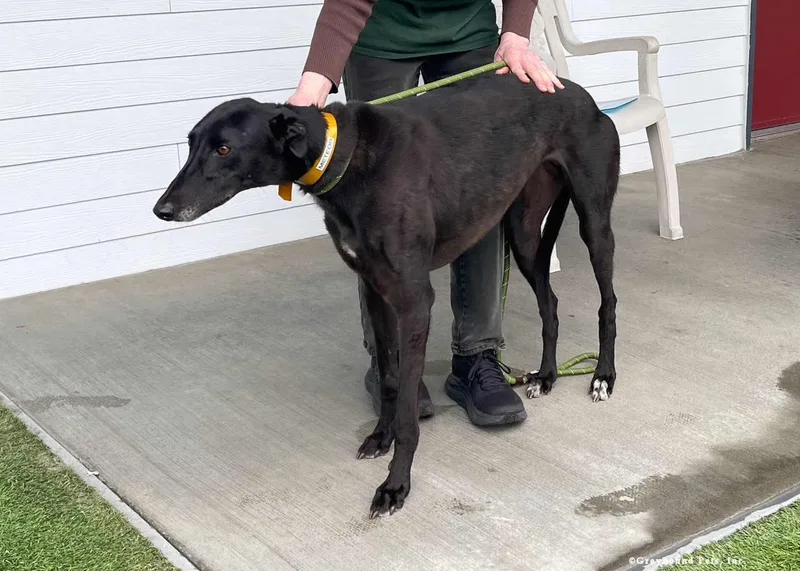
The Greyhound is an ancient sighthound type refined in England to chase game by sight. A deep chest, long legs and a flexible back let it top 40 miles per hour, yet the same lean frame is why it rests so much. Most Greyhounds in the U.S. are retired racers, usually two to five years old, so many have never lived in a house.

A new arrival may need time with stairs, glass doors and the sounds of a Topeka neighborhood. Thin skin and a short coat make cold and hard floors uncomfortable, so soft bedding matters. The chase instinct is strong in many Greyhounds, so a squirrel or rabbit along a trail can trigger a sudden bolt on leash. Dogs vary, and some are relaxed with cats and small pets while others aren't.

Weight
55–85 lbs
Height
25–30 in
Lifespan
10–14 yrs
Temperament
Gentle, Quiet, Affectionate
Group
Hound
Shedding
Low to Moderate

Owning a Greyhound in Topeka

Having a Greyhound in Topeka

Greyhounds combine a sprinter's build with a calm home life, so the details that matter most are cold tolerance, chase instinct, anesthesia sensitivity and how a former racer adjusts to house living. Each dog differs, but these themes shape daily care.

Temperament

Greyhounds are usually gentle, quiet and affectionate, which suits Topeka's single-family neighborhoods and apartments alike. Many are polite with visitors, though some former racers start out shy. Prey drive varies from dog to dog, so introductions to cats or small pets should be gradual and supervised.

Exercise Needs

Plan on daily leashed walks, such as the paved Shunga Trail, plus a chance to sprint in a fenced area like Lake Shawnee's off-leash space or Hill's Bark Park. Then expect long naps. Because of their speed and chase instinct, open parks and unfenced yards are risky without a leash.

Health Considerations

Greyhounds are sensitive to some anesthetics, bleed more after surgery and have bloodwork values that differ from other breeds, so a veterinarian familiar with sighthounds helps. Dental disease, paw-pad corns, bloat and bone cancer also occur. A thorough first exam and dental assessment is wise for a newly adopted racer.

Living Space

Greyhounds often do well in apartments and houses alike, since they're quiet and spend much of the day resting. Give them a cushioned bed for bony joints, a warm coat for winter and cool shade in summer. A secure yard helps but isn't required when walks and safe sprint time are reliable.

What it costs to own a Greyhound in Topeka

ExpenseTypical costPer year
Food$55 to $110 per month$660 to $1,320
Pet insurance$55 to $110 per month$660 to $1,320
Routine vet care$250 to $500 per year$250 to $500
Other*$533 to $1,570 per year$533 to $1,570
Estimated yearly total (after year one)$2,103 to $4,710

Other costs are estimates and vary with size, age and health.

* The Topeka dog license ($8 sterilized, $20 unsterilized), flea, tick and heartworm prevention, a dental cleaning allowance, toys and padded bedding, light home grooming, and a winter coat.

Adopt a Greyhound in Topeka.

Now that you know more, let’s find you a new best friend. These rescues and shelters below currently have Greyhounds available.

Rescues in Topeka with Greyhounds Available

Topeka's shelters and rescues care for dogs of every size, and the groups listed here show who is currently adoptable. Here are the rescues & shelters in the Topeka area where you can find Greyhounds and other dogs available for adoption.

Frequently Asked Questions

Yes. Topeka has no known breed-specific rule for Greyhounds; dangerous dogs are designated by the court based on behavior, not breed. Dogs six months and older need a city license with current rabies vaccination, $8 a year if spayed or neutered and $20 if not. Keep a Greyhound leashed in public, since county parks require it outside fenced dog areas.

Yes, many Greyhounds do well in apartments because they're quiet and sleep much of the day. Plan on several leashed potty walks, since Topeka bars tethering a dog unsupervised for more than 15 minutes. A former racer may need practice with stairs, so a ground-floor unit can help. Confirm any size limits before applying.

Yes, as indoor dogs with the right gear. Greyhounds have thin skin and little body fat, so they need a coat on walks, a warm bed and short outings during cold snaps. Topeka has dropped to about −21°F, as in February 2021. City rules require insulated shelter for tethered dogs below 40°F, but a Greyhound belongs inside.

For sprinting, use the fenced off-leash areas at Hill's Bark Park and Lake Shawnee. For walks, Soldier Creek Trail in North Topeka, Deer Creek Trail on the east side and the wooded Dornwood Park trails are good leashed options. Dogs must be leashed in county parks and trails outside fenced dog parks, which suits a Greyhound's chase instinct.

Often, yes, for households that can give daily leashed walks, a warm indoor spot and a plan for spring storms and July fireworks, since some dogs are noise-sensitive. Greyhounds are calm at home but fast outdoors, so a secure sprint area helps. Homes with cats or small pets need careful, gradual introductions.

Generally no. Topeka Metro runs buses only, and pets must be fully contained in a latched carrier, which a 55-to-85-pound Greyhound can't fit. Only service animals ride on the floor out of the aisle, and emotional support animals get no exception. For vet visits and trail trips, plan on a car.

Sometimes, on patios. Kansas law lets restaurants admit dogs to outdoor areas, but each restaurant decides. Dogs must stay leashed and under control, off tables and counters, and can't be fed from the restaurant's dishes. A calm Greyhound often settles under a table, so bring a mat and your own water bowl.

Very little. The short, smooth coat needs a weekly rubdown with a rubber mitt or soft brush, plus nail trims, ear checks and regular tooth brushing, since dental disease is common. Winter is the bigger task, with coats and paw wipes after icy or muddy walks. Grooming costs are small and fall within the $533–$1,570 yearly Other budget.

We have 1 rescue with Greyhounds available: Helping Hands Humane Society. You can see every rescue with Greyhounds available in the list above these questions, or scroll to the top to see the Greyhounds near Topeka.

Food runs about $55–$110 a month and pet insurance $55–$110 a month. Routine vet care is roughly $250–$500 a year, and other costs such as prevention, dental cleanings, a coat and padded bedding add about $533–$1,570. Together that comes to roughly $2,100–$4,700 a year.

Find Greyhounds in Nearby Cities

Expand your search to find Greyhounds available for adoption near Topeka.