Bernese Mountain Dogs for Adoption in Boise, ID

Your guide to finding and caring for a Bernese Mountain Dog in Boise

Bernese Mountain Dogs fit Boise's North End better than you might expect for a thick-coated giant. Tree-lined streets around Harrison Boulevard give a big dog shade on slow evening walks, and the Hulls Gulch trails off Camel's Back Park are close enough for a cool morning hike. The catch is July and August, when afternoons regularly top 90°F and a Berner wants to be indoors. If you're thinking of adopting one in Boise, plan your days around early mornings and a cool house.

131 Bernese Mountain Dogs available in Boise and nationwide

Adopt a Bernese Mountain Dog today

While we don't have enough dogs near Boise, keep in mind that many rescues may offer transport.

Bernese Mountain Dogs Available for Adoption Near Boise

About the Bernese Mountain Dog breed

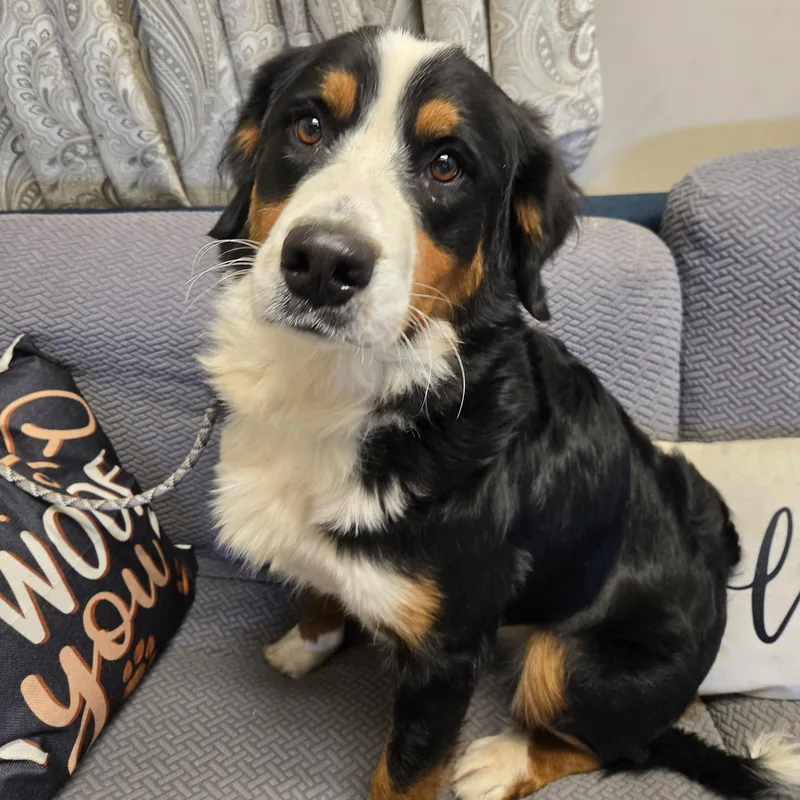
The Bernese Mountain Dog comes from farms in the Swiss canton of Bern, where it pulled milk carts, drove cattle and guarded the farmyard. It's the only long-coated Swiss mountain dog, with a black coat, rust markings, a white blaze and a white chest cross. Most adults weigh 70 to 115 pounds.

Berners are usually gentle, affectionate and eager to please, though some are reserved with strangers. For Boise adopters, the thick double coat is the everyday question: it sheds heavily year-round, and a dog built for Alpine cold has little patience for dry 90-degree afternoons. Lifespans are shorter than for most breeds, commonly 7 to 10 years, so be ready for vet bills and for losing the dog sooner than you'd like.

Weight
70–115 lbs
Height
23–28 in
Lifespan
7–10 yrs
Temperament
Gentle, Affectionate, Calm
Group
Working
Shedding
High

Owning a Bernese Mountain Dog in Boise

Having a Bernese Mountain Dog in Boise

Berners combine a gentle, people-loving nature with a giant frame and a coat built for cold. In Boise, that means planning around hot summer afternoons, regular brushing and health costs, while taking advantage of the cool mornings and moderate winters that suit them well.

Temperament

Berners tend to be calm, affectionate and devoted to their families, with a goofy streak outdoors. Some are reserved with strangers and sensitive to harsh handling. Because a Berner can top 100 pounds, polite leash manners matter on busy Boise paths. Spend time with the dog you're considering rather than relying on the breed label.

Exercise Needs

Plan on one or two moderate walks a day plus relaxed play. Boise's Foothills trails and the Greenbelt work well in cool months, and most Ridge to Rivers trails allow controlled off-leash dogs within 30 feet. In summer, stick to early mornings or evenings and skip hard runs. Puppies shouldn't do long hikes or repetitive jumping.

Health Considerations

Cancer, especially histiocytic sarcoma, is the breed's biggest concern, along with hip and elbow dysplasia, kidney disease and bloat. Keeping a Berner lean helps its joints. In Boise, check ears and between toes after Foothills hikes for cheatgrass seeds, which can lodge in paws and ears. A veterinarian can screen joints and set a checkup schedule.

Living Space

A Berner needs room to stretch out, so Boise's single-family neighborhoods with fenced yards, such as Barber Valley or Southwest Boise, are a natural fit. Apartments downtown or on the Bench can work with elevator access and reliable cooling, but a giant dog and heavy shedding make small units feel crowded fast.

What it costs to own a Bernese Mountain Dog in Boise

ExpenseTypical costPer year
Food$80 to $160 per month$960 to $1,920
Pet insurance$85 to $170 per month$1,020 to $2,040
Routine vet care$250 to $500 per year$250 to $500
Other*$690 to $1,890 per year$690 to $1,890
Estimated yearly total (after year one)$2,920 to $6,350

Other costs are estimates and vary with size, age and health.

* The Boise dog license, flea, tick and heartworm prevention, a dental cleaning allowance, coat care for heavy shedding, joint supplements, toys and large bedding.

Adopt a Bernese Mountain Dog in Boise.

Now that you know more, let’s find you a new best friend. These rescues and shelters below have dogs available in and near Boise.

Rescues and Shelters in or near Boise

Boise's shelter and rescue community cares for dogs of every size, including big, fluffy mountain-dog types. Here are the rescues & shelters in the Boise area with dogs available for adoption, worth asking whether a Bernese Mountain Dog is coming in.

Frequently Asked Questions

Yes, with planning. Boise summers are hot and dry, with about 55 days a year at 90°F or higher, mostly in July and August, which is hard on a thick-coated Berner. Nights cool to around 62°F in July, so schedule walks at sunrise or after dark, provide indoor cooling and water, and skip midday hikes. Late-summer wildfire smoke can also limit outdoor time.

Generally no. Valley Regional Transit buses only allow pets in a carrier small enough to rest on your lap or fit under the seat, and a 70-to-115-pound Berner won't fit. Only service animals are exempt. Boise has buses but no subway or rail, so plan on driving for vet visits and trips to the park.

Dog Island at Ann Morrison Park is the standout, with a pond where a Berner can cool off. Military Reserve Dog Park opens onto Foothills trails, and Hulls Gulch and Polecat Gulch are Foothills trail areas. Go early, since heat builds fast, and carry a leash because off-leash trails require close voice control.

Yes. Boise has no known breed-specific rules, and dangerous-dog designations are based on a dog's behavior, not its breed. In practice, size matters more: some leases cap pet weight, and a household can have up to four dogs without a noncommercial kennel license. Choose housing that comfortably fits a dog over 70 pounds.

It can be, for adopters who stay active outdoors and keep the dog cool. Boise's cool mornings, moderate winters, off-leash trails and fenced dog parks suit a Berner's easygoing nature. The weak spots are hot July and August afternoons and the cost of a giant dog's health care, so it works best for people home enough to manage routines.

Sometimes, but not reliably. Patio policies vary by restaurant, and dogs generally aren't allowed inside dining rooms. A Berner takes up a lot of floor space and patios get hot in summer, so a shaded evening patio is the better bet. Look for a posted dog-friendly policy rather than assuming one.

Plan on brushing once or twice a week, and several times a week during heavy sheds in spring and fall. Shaving a double coat usually isn't advised, even in Boise's dry heat, so focus on keeping it clean and mat-free. Check ears and between toes after Foothills hikes. Professional grooming falls within the $690–$1,890 yearly Other costs.

A Bernese Mountain Dog is a large to giant Swiss working breed originally used on farms to pull carts, drive cattle and guard property. It has a long, tricolored coat of black, rust and white and a sturdy, powerful build. Berners are known for their gentle, affectionate nature, though their lifespan is shorter than many breeds.

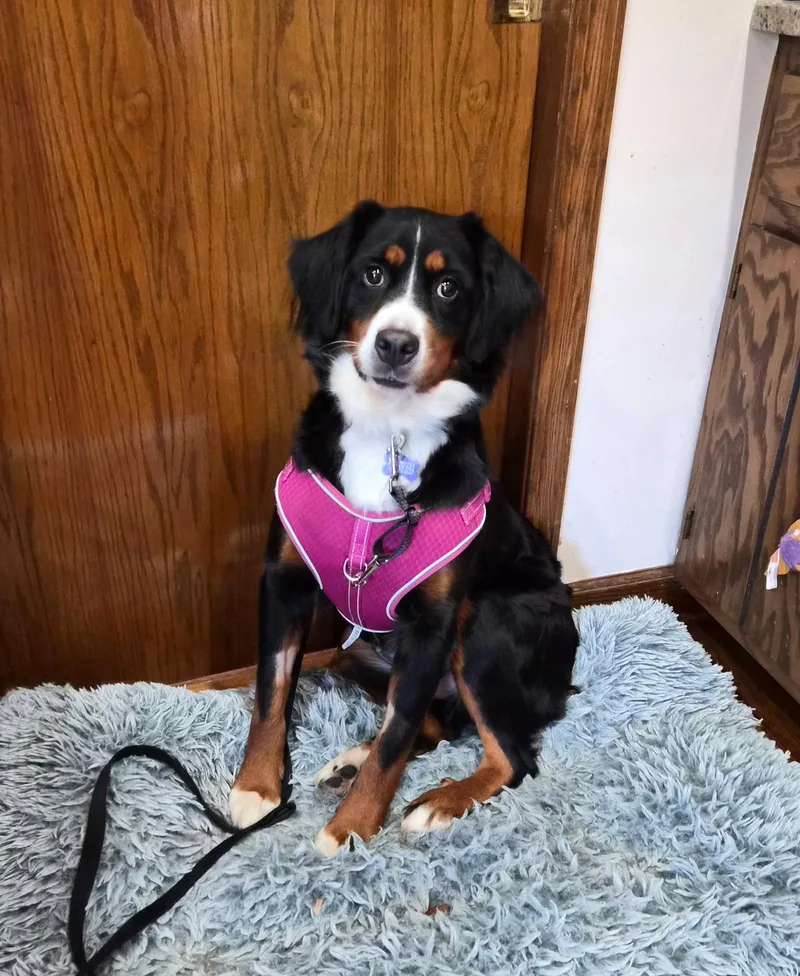
A Bernese Mountain Dog has a thick, moderately long coat that is jet black with rich rust markings over the eyes, on the cheeks, chest and legs, and white on the face, chest, feet and tail tip. The white chest marking often forms an inverted cross. They have a broad head, dark brown eyes and triangular drop ears.

Expect roughly $80–$160 a month for food, $85–$170 a month for pet insurance, $250–$500 a year for routine vet care, and $690–$1,890 a year for other costs such as grooming, dental care and joint supplements. Giant dogs sit at the higher end of most of these, and a Berner's health risks make insurance worth pricing.