Extra-Toes Cat / Hemingway Polydactyls for Adoption in Seattle, WA

Your guide to finding and caring for an Extra-Toes Cat / Hemingway Polydactyl in Seattle

Extra-toed cats do well in Seattle's apartment neighborhoods, since a window, a tall scratching post and daily play go a long way. In a Belltown high-rise or a Wallingford apartment building, a cat with big mitten paws cares more about vertical space than square footage. Seattle's long rainy stretches make indoor play part of the routine anyway. Most of these cats are domestic shorthairs or longhairs, so coats and personalities vary a lot, and a quiet Columbia City bungalow suits them just as well.

194 Extra-Toes Cat / Hemingway Polydactyls available in Seattle and nationwide

Adopt a Polydactyl cat today

While we don't have enough cats near Seattle, keep in mind that many rescues may offer transport.

Extra-Toes Cat / Hemingway Polydactyls Available for Adoption Near Seattle

About the Extra-Toes Cat / Hemingway Polydactyl breed

An extra-toes cat isn't a breed. It's any cat born with polydactyly, a harmless genetic variation that adds toes to one or more paws. Most are domestic shorthairs or longhairs, so coats, sizes and personalities cover the whole range, and weight usually falls between 6 and 15 pounds. Many have a mitten-like front paw, and some use it to bat toys or scoop up treats.

The Hemingway nickname comes from the writer Ernest Hemingway, whose six-toed cat started a line that still lives at his Key West home. For Seattle adopters, the practical difference is claw care: extra claws can curl into the paw pads, so plan on regular trims. With good care these cats typically live 12 to 18 years, a long commitment worth planning around if you rent.

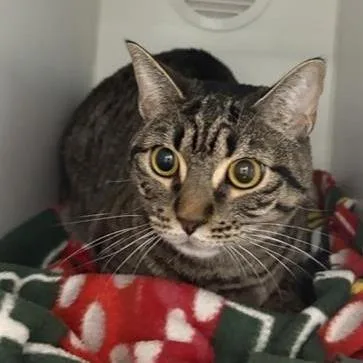
Weight
6–15 lbs
Height
8–10 in
Lifespan
12–18 yrs
Temperament
Adaptable, Curious, Affectionate
Shedding
Moderate

Owning an Extra-Toes Cat / Hemingway Polydactyl in Seattle

Having an Extra-Toes Cat / Hemingway Polydactyl in Seattle

Extra toes don't predict personality or health. What matters most for a Seattle household is each cat's age, coat and background, plus steady claw care and enough indoor play to keep up with the city's wet months.

Temperament

Polydactyl cats range from bold and chatty to shy and slow to warm up, like any domestic cat. In a Seattle apartment, a curious, adaptable cat usually settles in well with window perches and a steady routine. Claims that extra toes make cats friendlier are unproven, so watch how a cat actually behaves rather than assuming.

Exercise Needs

Plan on daily interactive play with wand toys, balls and puzzle feeders, ideally in two or three short sessions. Seattle's rainy days keep many cats indoors, so cat trees, shelves and window perches add climbing. Kittens and young adults want more activity than seniors, and a bored or overfed cat can gain weight quickly.

Health Considerations

The common form of polydactyly rarely causes problems, but extra claws can grow into the paw pads, so check the paws often and trim regularly. A rare limb condition is sometimes mistaken for polydactyly, so a veterinarian should look over a new cat's legs. Dental disease, obesity and kidney disease are the usual feline concerns.

Living Space

These cats adapt to Seattle's apartments, townhomes and older houses alike. Give them vertical space, sturdy scratching posts that help keep extra claws in shape, hiding spots and clean litter boxes. Keeping them indoors, or in a secure enclosure, also protects them from traffic and from the coyotes reported in several Seattle neighborhoods.

What it costs to own an Extra-Toes Cat / Hemingway Polydactyl in Seattle

ExpenseTypical costPer year
Food$25 to $50 per month$300 to $600
Pet insurance$20 to $45 per month$240 to $540
Routine vet care$150 to $350 per year$150 to $350
Other*$480 to $1,180 per year$480 to $1,180
Estimated yearly total (after year one)$1,170 to $2,670

Other costs are estimates and vary with size, age and health.

* Litter, the $30 Seattle cat license for a spayed or neutered cat, flea prevention, a dental cleaning allowance, toys and scratching posts, and home grooming and claw trims.

Adopt an Extra-Toes Cat / Hemingway Polydactyl in Seattle.

Now that you know more, let’s find you a new best friend. These rescues and shelters below have cats available in and near Seattle.

Rescues and Shelters in or near Seattle

Seattle's rescue community includes a city shelter and nonprofit groups, and the ones listed here place cats of all ages. Here are the rescues & shelters in the Seattle area with cats available for adoption, worth asking whether an Extra-Toes Cat / Hemingway Polydactyl is coming in.

Frequently Asked Questions

Yes. Seattle has no breed bans, and extra toes don't raise any legal issue. You'll need a city license for the cat and a rabies vaccination under state rules. Households can keep up to three dogs and cats combined on a typical city lot, so count your current pets before you adopt.

Yes, they usually do well in apartments, and plenty of Seattle cats live in them. Look for a unit with a window perch, then add a cat tree and sturdy scratching posts. Confirm the building's pet policy first: landlords may charge pet rent and limit the number of pets, but can't charge nonrefundable pet fees. Secure the window screens too.

Yes, if they're in a carrier. Sound Transit allows pets in small containers on Link light rail and buses, and Metro requires cats and other non-dog pets to be carried in a carrier, with no fare. Sound Transit is piloting leashed dogs through spring 2027, but that doesn't change the carrier rule for cats.

Yes, indoor cats handle Seattle winters comfortably. Highs stay in the 40s and freezing days are rare, so the real issues are dark, wet weeks with less play and the occasional snowstorm or windstorm. Keep a few days of food, water and litter on hand, and dry a longer-haired cat's coat if it has outdoor access.

Often, yes, if you can offer daily play and an indoor-focused home. Extra-toed cats are as varied as any domestic cats, so the better question is whether a particular cat's age, energy and temperament match your routine. Long workdays are easier with a window perch, a cat tree and, for some cats, a bonded companion.

Check the paws weekly and trim claws every few weeks, since extra claws can curl into the pads. Short coats need a weekly brush, and longer coats several times a week. Seattle's damp weather mostly matters for cats with outdoor access, whose paws and coats need drying. Home grooming fits within the yearly Other costs, so it adds no separate bill.

A cat normally has 18 toes: five on each front paw and four on each back paw. The fifth front toe is the dewclaw, set higher on the inside of the leg like a thumb, so it doesn't touch the ground when the cat walks. Polydactyl cats have more than 18, most often an extra one or two per front paw.

Cats don't have true thumbs. The dewclaw on each front paw sits in a similar position to a human thumb and helps a cat grip prey and climb, but it isn't opposable. Some polydactyl cats have extra toes on the inner side of the paw that look like a thumb, which is where the nickname thumb cat comes from.

A polydactyl cat is a cat born with more than the usual number of toes on one or more paws. It is a genetic trait, not a breed, and it can appear in any cat, though most are domestic shorthairs or longhairs. The common form is harmless and is passed down by a dominant gene.

Expect roughly $25 to $50 a month for food and $20 to $45 for insurance, plus $150 to $350 a year for routine vet care and $480 to $1,180 a year for litter, parasite prevention, dental care, supplies and the Seattle license. That adds up to about $1,170 to $2,670 a year, before one-off costs like a carrier or emergency care.

Explore Other Breeds in Seattle

Looking for a different breed? Browse other cats available for adoption in Seattle.