Ocicat Cats for Adoption in Virginia Beach, VA

Your guide to finding and caring for an Ocicat in Virginia Beach

Ocicats fit Virginia Beach apartment and townhouse life well, as long as someone's home to play with them. They're social, athletic cats, so a tall cat tree by the window of a Town Center high-rise gives them somewhere to climb and watch the street below. In a Green Run townhouse, the stairs turn into a racetrack. Ocicats don't love long, empty days, which is worth weighing if your work hours run long. Plan on a play session morning and evening.

18 Ocicats available in Virginia Beach and nationwide

Say hello to your Ocicat

While we don't have enough cats near Virginia Beach, keep in mind that many rescues may offer transport.

Ocicats Available for Adoption Near Virginia Beach

About the Ocicat breed

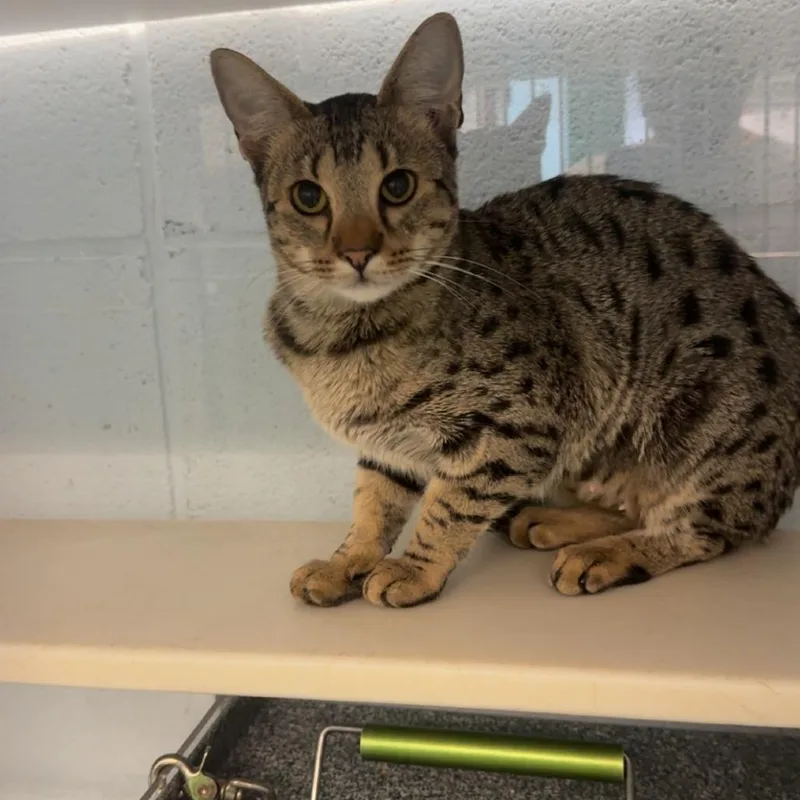
Despite its wildcat look, the Ocicat is entirely domestic. A cross between Abyssinian and Siamese cats in Michigan in 1964 produced a spotted kitten that a young girl thought looked like an ocelot, and American Shorthairs were added later for size and silver coloring. Ocicats are muscular and heavier than they appear, usually 6 to 15 pounds, with a short, satiny coat covered in thumbprint spots.

Ocicats are often called dog-like. They bond closely with their people, greet visitors and pick up fetch, harness walking and simple cues quickly. Many struggle with long stretches alone. In a city of townhouses and apartments like Virginia Beach, climbing space, puzzle toys and company matter more than square footage. The coat needs little beyond weekly brushing.


Weight
6–15 lbs
Height
9–11 in
Lifespan
12–18 yrs
Temperament
Social, Active, Intelligent, Devoted
Shedding
Low to Moderate

Owning an Ocicat in Virginia Beach

Having an Ocicat in Virginia Beach

Ocicats are social, athletic and quick learners, and those traits shape daily life more than the spotted coat does. In Virginia Beach, the big questions are how much time you're home, how much vertical space you have, and how you'll handle storm season.

Temperament

Many Ocicats are outgoing and closely attached to their families, and plenty greet guests at the door. They often enjoy other cats or cat-friendly dogs after slow introductions, and they can turn vocal or restless when left alone all day. Each cat's history and socialization shape how it reacts to visitors, change and noise.

Exercise Needs

Plan on daily interactive play: wand toys, fetch, puzzle feeders and climbing. Many Ocicats take well to harness training, which allows supervised time outdoors, though coyotes are reported across Virginia Beach, so skip dawn and dusk outings. Indoors, tall cat trees and wall shelves give an active cat room to leap.

Health Considerations

Ocicats can carry conditions seen in their Abyssinian and Siamese ancestors, including renal amyloidosis, pyruvate kinase deficiency, progressive retinal atrophy and hypertrophic cardiomyopathy. Not every cat is affected. A veterinarian can check the heart, eyes and kidneys and discuss genetic testing. Virginia also requires a current rabies vaccine for cats four months and older.

Living Space

An Ocicat can thrive in a Virginia Beach apartment, condo or townhouse when it has vertical space, toys and company. A sturdy cat tree and a window perch matter more than floor area. Keep this cat indoors, or outside only on a harness or in an enclosure.

What it costs to own an Ocicat in Virginia Beach

ExpenseTypical costPer year
Food$25 to $50 per month$300 to $600
Pet insurance$30 to $60 per month$360 to $720
Routine vet care$150 to $350 per year$150 to $350
Other*$455 to $1,160 per year$455 to $1,160
Estimated yearly total (after year one)$1,265 to $2,830

Other costs are estimates and vary with size, age and health.

* The Virginia Beach cat license ($5 to $10 a year), litter, flea prevention, a dental cleaning allowance, toys, scratchers and climbing furniture, and minimal home grooming.

Adopt an Ocicat in Virginia Beach.

Now that you know more, let’s find you a new best friend. These rescues and shelters below have cats available in and near Virginia Beach.

Rescues and Shelters in or near Virginia Beach

Virginia Beach's city shelter and local nonprofit rescues care for thousands of animals a year, and many cats are listed here. Here are the rescues & shelters in the Virginia Beach area with cats available for adoption, worth asking whether an Ocicat is coming in.

Frequently Asked Questions

Yes. Ocicats are fully domestic cats, and no known Virginia Beach rule restricts the breed. The practical requirements are a city license and a current rabies vaccination once the cat is four months old, plus your landlord's pet policy if you rent. No cat-count limit is known for the city.

Yes, an Ocicat can live happily in a Virginia Beach apartment if the home offers vertical space and company. Tall cat trees, wall shelves and window perches matter more than square footage. Because Ocicats dislike long empty days, plan play sessions before and after work, and read your lease for animal rules first.

Mostly yes for an indoor cat. Winters are mild, and humid summers with about a month of 90°F days are easy to manage with air conditioning and fresh water. The short coat feels the cold, so expect sunny-window lounging. The bigger concern is storm season: keep a carrier ready and know your evacuation zone.

Most Ocicats prefer home, but a harness-trained cat can try First Landing State Park, where pets must be leashed at six feet or shorter and are barred from designated swim areas. Back Bay National Wildlife Refuge doesn't allow pets. Coyotes are reported across the city, so stay close and avoid dawn and dusk.

Very little. The short, satiny coat needs about a weekly brushing, never shaving, and no salon visits. Humid summers don't change that. Trim nails and check teeth and ears as part of the routine. Home grooming is minimal and already counted in the yearly Other costs, so there's no separate grooming budget.

No. Virginia's rule allowing animals at restaurants covers only dogs on open patios with a separate entrance, and pet cats aren't allowed in dining rooms. Service animals fall under disability law. An Ocicat is happier at home with a window perch, and a harness walk makes a better outing than a patio table.

Yes, in a carrier. Hampton Roads Transit buses and the VB Wave trolley allow animals only in small cages that don't need a separate seat, so use a carrier small enough to stay on your lap. The Tide light rail runs only in Norfolk and admits just service animals.

An Ocicat is a domestic cat breed with a spotted coat that resembles a wild ocelot, though it has no wild ancestry. It was developed in the 1960s from Abyssinian, Siamese and American Shorthair cats. Ocicats are muscular, medium to large and come in twelve colors. Many are social, trainable and often called dog-like in personality.

No, Ocicats are not hypoallergenic. Their short, close-lying coat sheds lightly, but cat allergies are triggered mainly by proteins in saliva and skin that all cats produce. Some allergic people tolerate low-shedding cats better than others, but there is no guarantee. Spend extended time with the specific cat, and talk with your doctor, before adopting.

Expect roughly $1,265 to $2,830 a year for an Ocicat in Virginia Beach. Food runs $25 to $50 a month, insurance $30 to $60 a month, routine vet care $150 to $350 a year, and other costs $455 to $1,160 a year. Insurance leans higher because of hereditary conditions in the breed.

Explore Other Breeds in Virginia Beach

Looking for a different breed? Browse other cats available for adoption in Virginia Beach.