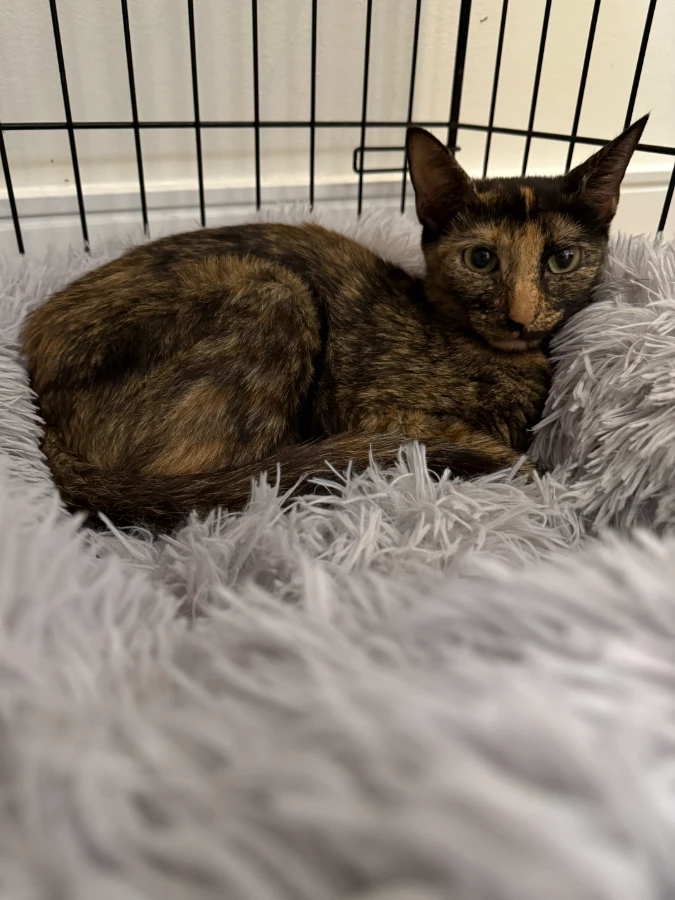
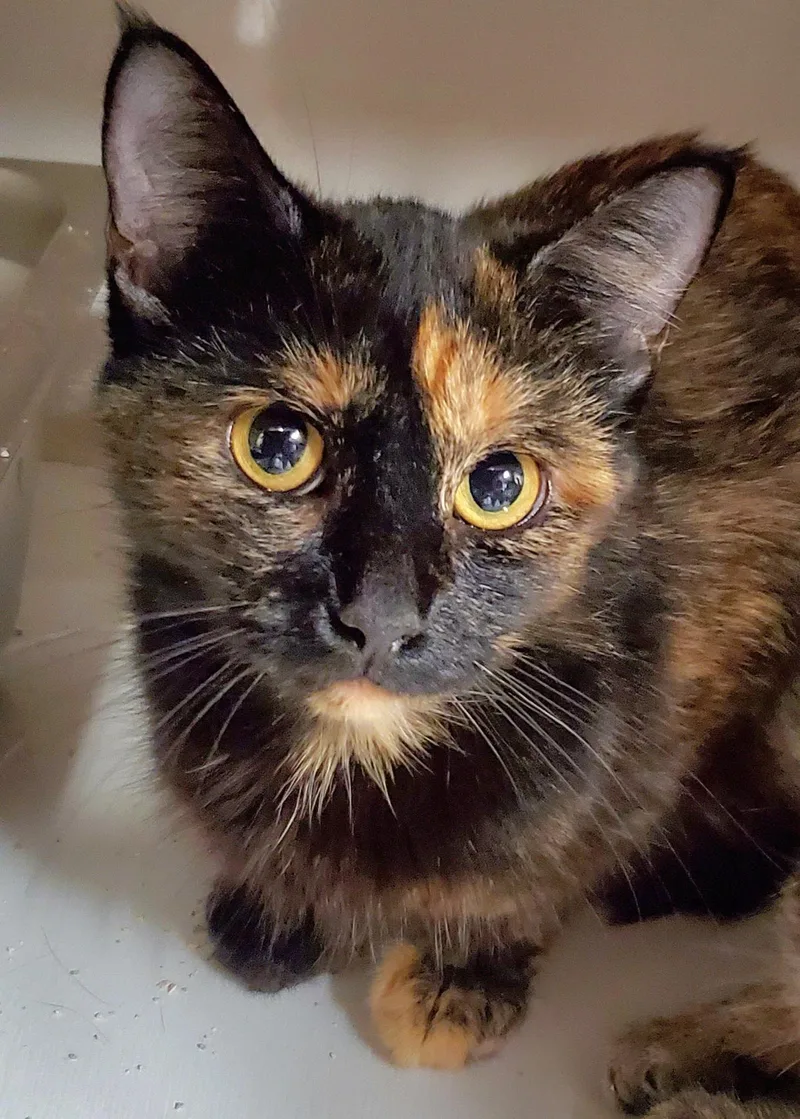
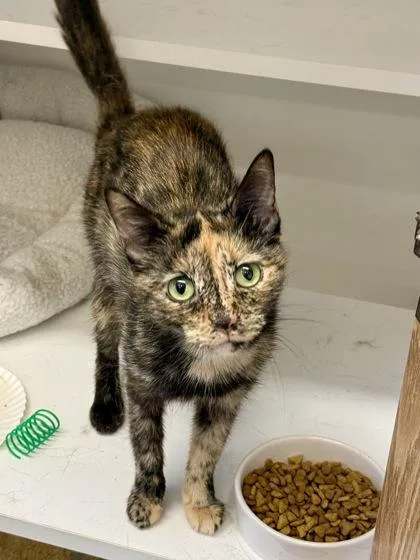
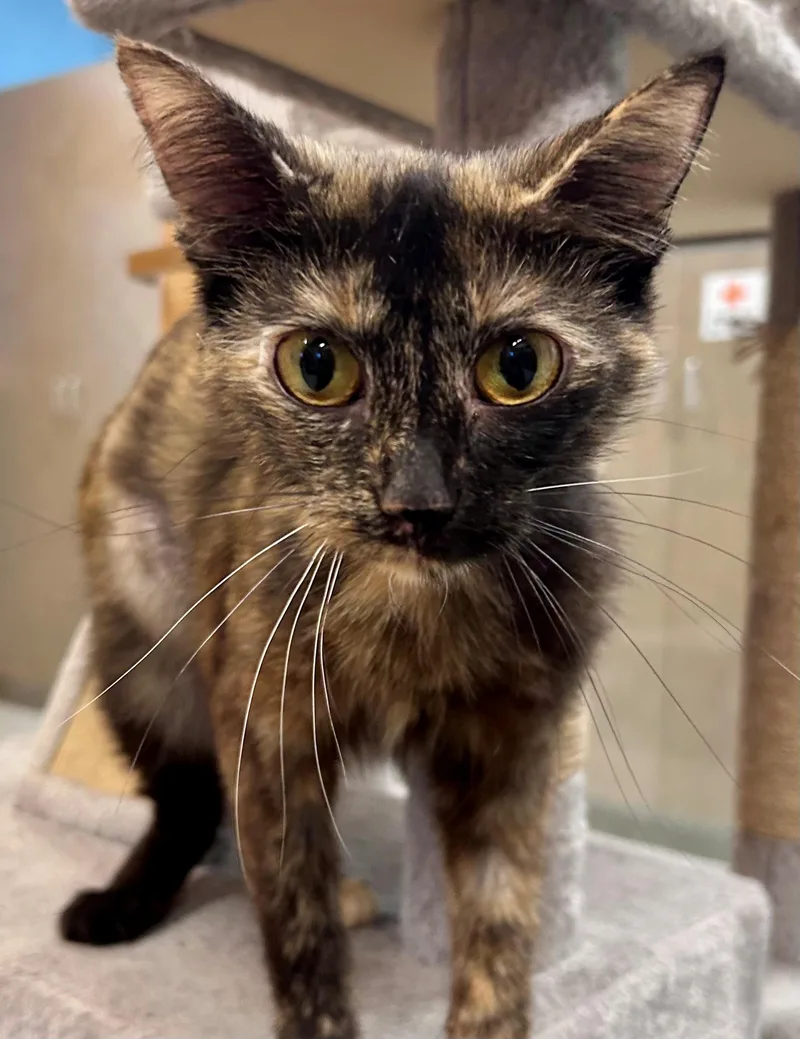
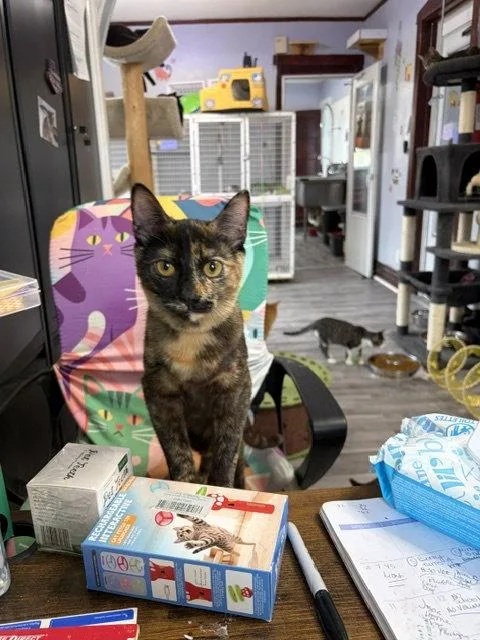
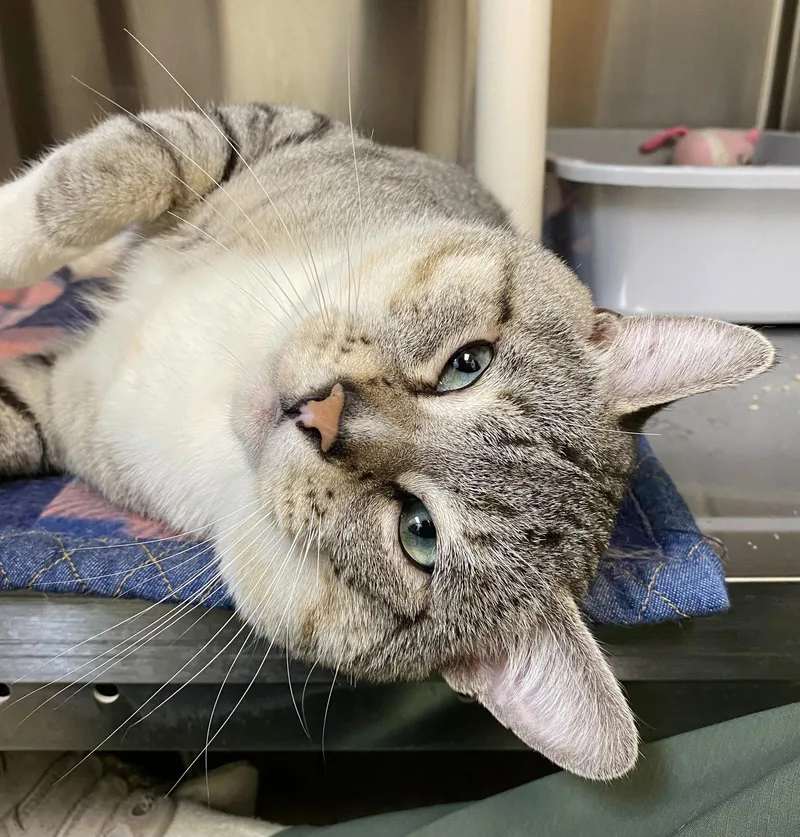
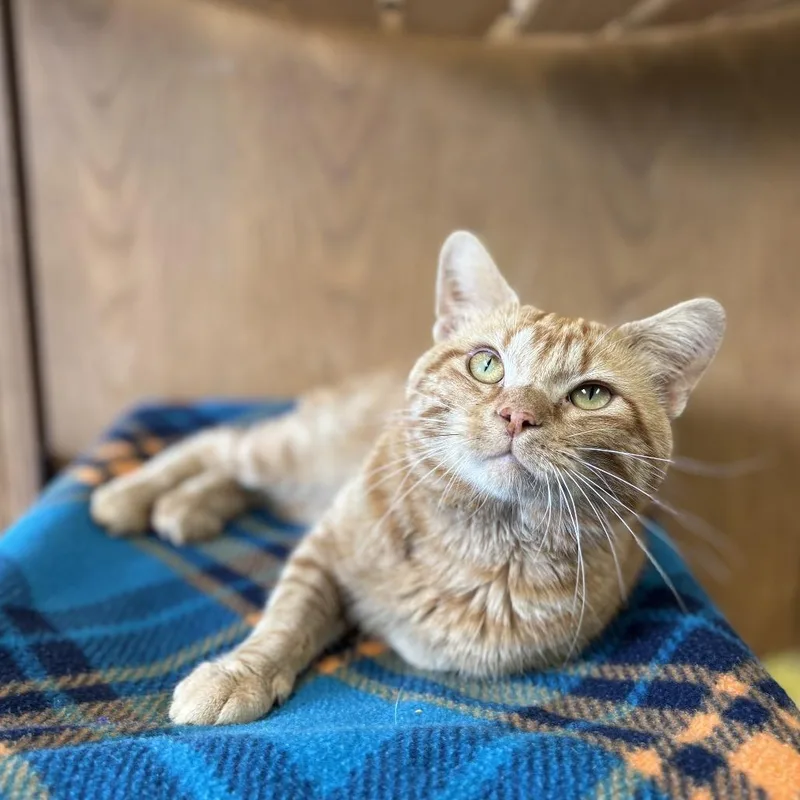
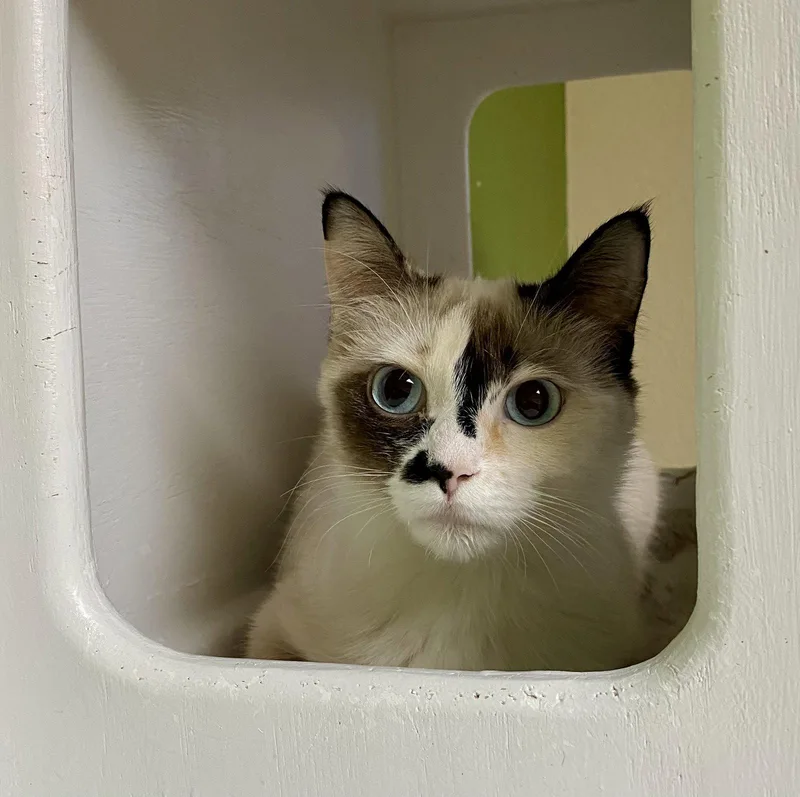
Tortoiseshell Cats for Adoption in Fargo, ND

Your guide to finding and caring for a Tortoiseshell in Fargo

A tortoiseshell cat makes an easy fit for an apartment in Roosevelt near NDSU or a townhome in Urban Plains. Tortoiseshell is a coat pattern rather than a breed, so these cats come in every personality, but most are happy to spend a Fargo winter on a window perch watching the snow. Plan on daily play, a sturdy scratching post and a warm spot away from drafty glass. A typical tortie lives 12 to 18 years.

1058 Tortoiseshells available in Fargo and nationwide

Your Tortoiseshell is waiting

While we don't have enough cats near Fargo, keep in mind that many rescues may offer transport.

Tortoiseshells Available for Adoption Near Fargo

About the Tortoiseshell breed

Tortoiseshell describes a coat, not a breed. The pattern mixes black-based and orange-based colors in patches or a fine mottle, usually with little white. A cat with large white areas is a calico. Dilute torties show soft gray and cream, and torbies add tabby stripes. Because the orange gene sits on the X chromosome, nearly all tortoiseshells are female.

Most torties you meet in Fargo are domestic shorthairs, though the pattern also appears in Maine Coons, Persians and other breeds. Personality comes from age, history and socialization more than color, and "tortitude" is a nickname rather than a proven trait. Expect a medium cat of roughly 6 to 14 pounds with moderate shedding, so weekly brushing and a good vacuum help. Choose the cat in front of you, not the coat.

Weight
6–14 lbs
Height
8–10 in
Lifespan
12–18 yrs
Temperament
Independent, Affectionate, Playful
Shedding
Moderate

Owning a Tortoiseshell in Fargo

Having a Tortoiseshell in Fargo

Coat color says little about character, so these cards cover what's typical for tortoiseshell cats, mostly domestic shorthairs, and how it plays out in Fargo's snowy, indoor-heavy winters. Age and upbringing matter far more than the pattern.

Temperament

Torties have a reputation for spirited "tortitude," but that comes mostly from owner impressions, and the research is thin. Tortoiseshells range from shy to bold and from lap-loving to independent. When you meet a cat, watch how she handles touch, new sounds and play, since those say more than her colors.

Exercise Needs

Most tortoiseshell cats do well with two or three short play sessions a day using wand toys, chase games and puzzle feeders. Fargo's long winters keep cats inside for months, so a cat tree by a window and a few new toys each month help burn energy. Kittens need more, seniors less.

Health Considerations

The tortoiseshell pattern carries no particular health risks for females. The rare males usually have an extra X chromosome and may face added issues. Otherwise health follows age and care, so schedule regular checkups, dental care and weight control, especially since indoor winters can mean less activity. A veterinarian can check a newly adopted cat from nose to tail.

Living Space

Tortoiseshell cats fit apartments and houses equally well, since space needs depend on the cat, not the coat. Vertical space matters most: cat trees, shelves and window perches. Give shy cats a quiet hideaway, and keep litter boxes and beds away from cold entryways and drafty exterior walls in older Fargo buildings.

What it costs to own a Tortoiseshell in Fargo

ExpenseTypical costPer year
Food$25 to $50 per month$300 to $600
Pet insurance$20 to $45 per month$240 to $540
Routine vet care$150 to $350 per year$150 to $350
Other*$455 to $1,155 per year$455 to $1,155
Estimated yearly total (after year one)$1,145 to $2,645

Other costs are estimates and vary with size, age and health.

* The $5 Fargo cat license, litter, flea prevention, a dental cleaning allowance, toys and supplies, and home grooming.

Adopt a Tortoiseshell in Fargo.

Now that you know more, let’s find you a new best friend. These rescues and shelters below currently have Tortoiseshells available.

Rescues in Fargo with Tortoiseshells Available

Fargo's shelters and rescues place cats of every coat, age and personality, and the ones listed below are on this page. Here are the rescues & shelters in the Fargo area where you can find Tortoiseshells and other cats available for adoption.

Frequently Asked Questions

Yes, and coat color doesn't matter to the city; no known breed rules apply. Every cat must be licensed for $5 a year with proof of rabies vaccination, even indoor cats, and an unlicensed cat can draw a $60 fine. A household can have up to six dogs and cats combined.

Yes, as long as they live indoors. Fargo's cold is too severe for cats to spend time outside, so plan on a warm bed away from drafty windows, a window perch and extra play sessions to burn off winter energy. Cover the carrier with a blanket for vet trips, and never leave a cat in a parked car.

Yes, most cats do well in apartments, and a tortie is no exception. Get the pet policy and deposit terms in writing before you sign. Add a cat tree, scratching posts and window perches, and keep in mind that persistent cat howling can draw a noise complaint under the city's barking ordinance.

Yes, in a carrier. MATBUS buses allow pets in a cage or container as long as the pet isn't a nuisance or hazard. The carrier must stay on your lap and can't block the aisle or take a seat. Fargo has no subway, so a sturdy, escape-proof carrier is all a tortie needs.

Usually very little. Tortoiseshell cats shed moderately, so a weekly brushing is typical for a shorthair, and a few times a week for a longer coat. Fargo's dry, heated winter air can add flakiness and static, so brush gently. Home grooming supplies are a small part of the yearly Other costs.

A tortoiseshell cat is a cat with a coat pattern of black-based and orange-based colors blended or patched together, usually with little or no white. It is not a breed; the pattern appears in many breeds and most often in domestic shorthairs. Nearly all tortoiseshells are female because the genes for orange and black are carried on the X chromosome.

Almost all tortoiseshell cats are female, but not all. A female has two X chromosomes and can carry both orange and black color genes, producing the mixed coat. Males normally have only one X. Rare male torties usually have an extra X chromosome or are genetic chimeras, and they are estimated at roughly 1 in 3,000 tortoiseshells.

No, tortoiseshell cats are not rare. They are common among domestic cats and are regularly found in shelters and rescues. What is rare is a male tortoiseshell, since the pattern almost always requires two X chromosomes. Certain variations, such as long-haired or dilute torties, are less common simply because they require additional recessive genes.

We have 1 rescue with Tortoiseshells available: CATS Cradle Shelter, Inc. You can see every rescue with Tortoiseshells available in the list above these questions, or scroll to the top to see the Tortoiseshells near Fargo.

A Tortoiseshell in Fargo typically costs $25 to $50 a month for food and $20 to $45 for insurance, plus $150 to $350 a year for routine vet care and $455 to $1,155 for other costs like litter and flea prevention. Together that's roughly $1,145 to $2,645 a year, before the adoption fee.