Balinese Cats for Adoption in Fargo, ND

Your guide to finding and caring for a Balinese in Fargo

A Balinese suits Fargo's long winters well, because it wants to be near its people and is happy living indoors. In an older Hawthorne house or a Roosevelt apartment near NDSU, it'll claim a window perch, watch the snow and the street, and give you a running commentary when you get home. It's chatty, though softer-voiced than a Siamese. Bring a tall cat tree and a few puzzle toys, and plan on some company during the day.

2342 cats similar to Balinese available in Fargo and nationwide

Fall for a Balinese

While we don't have enough cats near Fargo, keep in mind that many rescues may offer transport.

Balinese and Similar Breeds Available for Adoption Near Fargo

About the Balinese breed

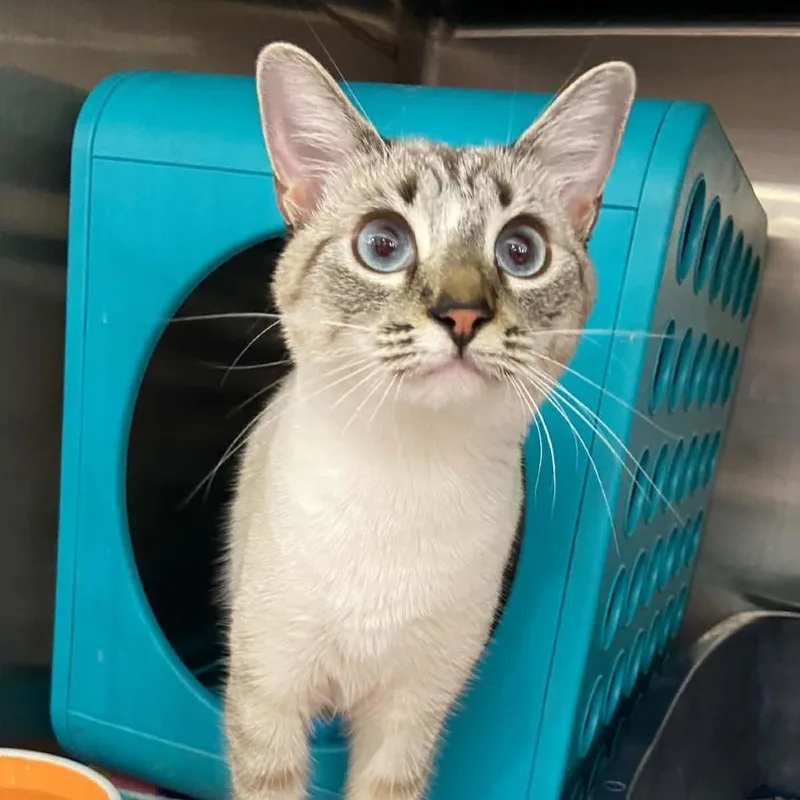
The Balinese is essentially a longhaired Siamese, developed in the United States in the 1940s and 1950s from kittens born with a recessive longhair gene. The name comes from the graceful way Balinese dancers move, not from Indonesia. It has the Siamese colorpoint pattern, vivid blue eyes and a slender build, finished with a silky coat and a plumed tail. A sturdier traditional type and a more wedge-headed modern type both exist.

Many Balinese are bright, social and playful, and they like to be part of whatever their people are doing. They're chatty, though usually a bit quieter than a Siamese. In Fargo, where winters keep everyone indoors for months, that appetite for company and games can be a plus. The single coat needs only light brushing, but the cat does need daily attention and things to climb.

Weight
5–10 lbs
Height
8–11 in
Lifespan
12–20 yrs
Temperament
Affectionate, Intelligent, Playful, Vocal
Shedding
Low to Moderate

Owning a Balinese in Fargo

Having a Balinese in Fargo

Balinese pair Siamese-style sociability with an easy-care coat. Company, conversation and climbing space shape daily life most, and inherited eye and liver concerns are worth knowing about before you adopt. Each cat's personality and health will differ.

Temperament

Many Balinese bond closely with their people, follow them from room to room and comment on the day in a soft voice. They're curious, clever and often clownish, and they tend to get along with considerate children and pets. In Fargo's long indoor season, expect a cat that wants a seat at every activity. Personalities vary, especially in adult cats.

Exercise Needs

Plan on several short play sessions a day with wand toys, fetch, puzzle feeders and a tall cat tree. Because Fargo's winters keep everyone indoors, in-home play matters even more. Rotating toys and a window perch overlooking the yard or street give a Balinese the mental stimulation it craves, and older cats still enjoy gentler games.

Health Considerations

Balinese can be prone to progressive retinal atrophy, liver amyloidosis, dental disease and crossed eyes, which is usually harmless, though many cats never develop these problems. Schedule a full veterinary exam after adopting, keep up with dental care, and watch for vision changes or weight loss. Current rabies vaccination is also required for a Fargo cat license.

Living Space

A Balinese does well in a Fargo apartment, duplex or house as long as it has vertical space: a cat tree, shelves and a sunny window perch. Having people around matters more than square footage, and a compatible feline companion can help when you're out for the day.

What it costs to own a Balinese in Fargo

ExpenseTypical costPer year
Food$25 to $50 per month$300 to $600
Pet insurance$25 to $50 per month$300 to $600
Routine vet care$150 to $350 per year$150 to $350
Other*$455 to $1,155 per year$455 to $1,155
Estimated yearly total (after year one)$1,205 to $2,705

Other costs are estimates and vary with size, age and health.

* The $5 Fargo cat license, litter, flea prevention, a dental cleaning allowance, toys, scratchers and cat trees, and minimal grooming for a single coat.

Adopt a Balinese in Fargo.

Now that you know more, let’s find you a new best friend. These rescues and shelters below have cats available in and near Fargo.

Rescues and Shelters in or near Fargo

Fargo's shelters and foster-based rescues care for cats of all kinds, and a Balinese may turn up among them. Here are the rescues & shelters in the Fargo area with cats available for adoption, worth asking whether a Balinese is coming in.

Frequently Asked Questions

Yes, a Balinese can do well in a Fargo apartment, since it needs enrichment more than square footage. Give it a tall cat tree, a window perch and daily play sessions, and plan for company, because many Balinese get bored or clingy when alone. Chatty cats can be heard through walls, so a steady routine and plenty of play help keep neighbors happy.

Yes, as an indoor cat a Balinese handles Fargo winters fine. The city sees about 93 days a year that never rise above freezing, and the breed's silky single coat has no undercoat to insulate a cat that slips outside. Keep doors closed, check for drafts around its favorite perch, and provide a warm bed and a sunny window.

A Balinese is a good fit for Fargo homes where someone is around often, since long winters mean plenty of time indoors together. It enjoys play, conversation and a warm lap, and may settle best with a feline companion if your schedule is full. It's a weaker match for households that are empty most of the day.

Very little. A Balinese has a silky single coat with no dense undercoat, so brushing a few times a month usually keeps it smooth and tangle-free. Fargo's dry heated winter air can make the coat staticky, so a quick brush helps then. Nail trims and tooth care matter more than salon visits, and the small grooming allowance is included in the Other costs.

Yes, but only in a carrier. MATBUS buses allow pets in a cage or container as long as they aren't a nuisance or hazard. The carrier has to stay on your lap, so it can't block the aisle or take a seat. At a typical 5–10 pounds, a Balinese fits comfortably in a standard carrier, which makes bus trips to the vet workable.

No, Balinese cats are not hypoallergenic. Claims that they produce less of the main cat allergen, Fel d 1, are widely repeated but not supported by solid research. Their single coat sheds less than many longhaired breeds, which some allergic people find easier. Reactions vary between people and cats, so spend time with the individual cat before adopting.

Balinese is usually pronounced BAH-lih-neez, with the stress on the first syllable, the same way people say the word for something from Bali. Some people say BAL-ih-neez instead, and both are understood. The name was chosen to evoke the grace of Balinese dancers, not because the cats come from Bali.

Balinese cats shed, but usually less than you might expect from a longhaired cat. Their fine, silky coat has no dense undercoat, so it sheds lightly year-round with modest seasonal increases. The coat rarely mats. Brushing or combing once or twice a week removes loose hair and helps reduce hairballs.

A Balinese is a longhaired version of the Siamese cat, with the same colorpoint pattern, blue eyes and slender build. It was developed in the United States from longhaired kittens born in Siamese litters. Balinese have a silky, single coat and a plumed tail. Many are intelligent, social and talkative, and they bond closely with their families.

Expect roughly $25–$50 a month for food, $25–$50 a month for optional accident-and-illness insurance, $150–$350 a year for routine vet care, and $455–$1,155 a year for other costs such as litter, flea prevention, dental care, supplies and the city license. The adoption fee shown on each listing is separate.