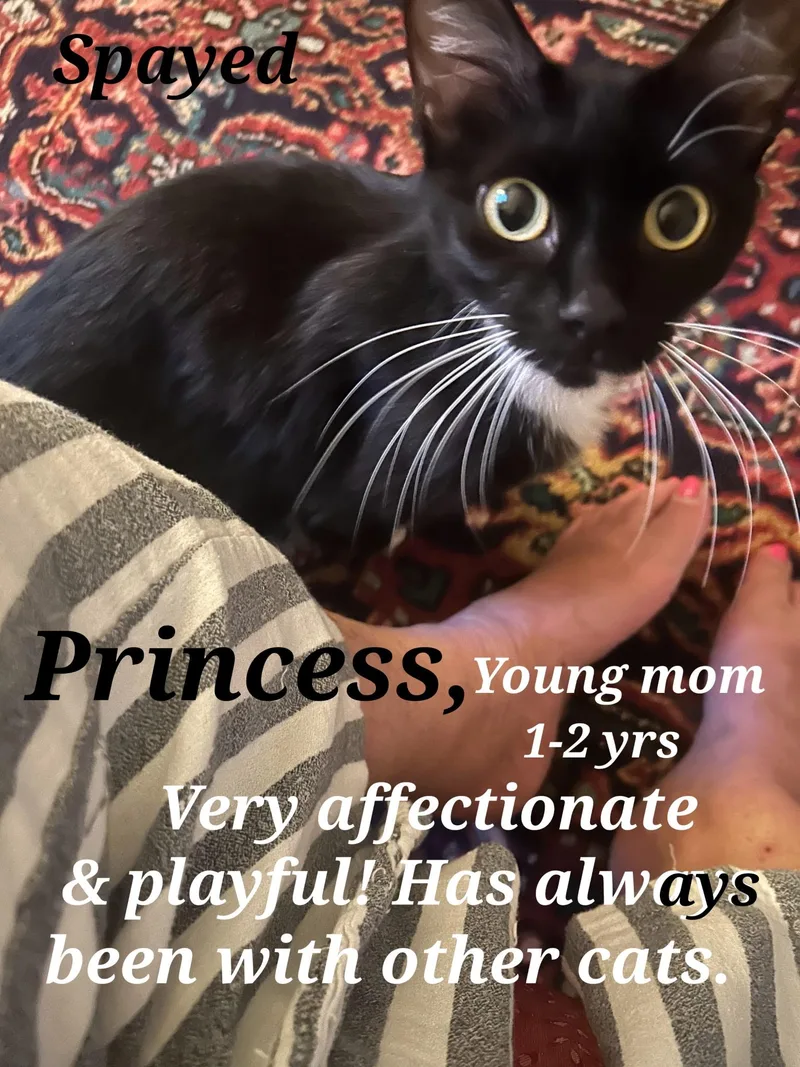
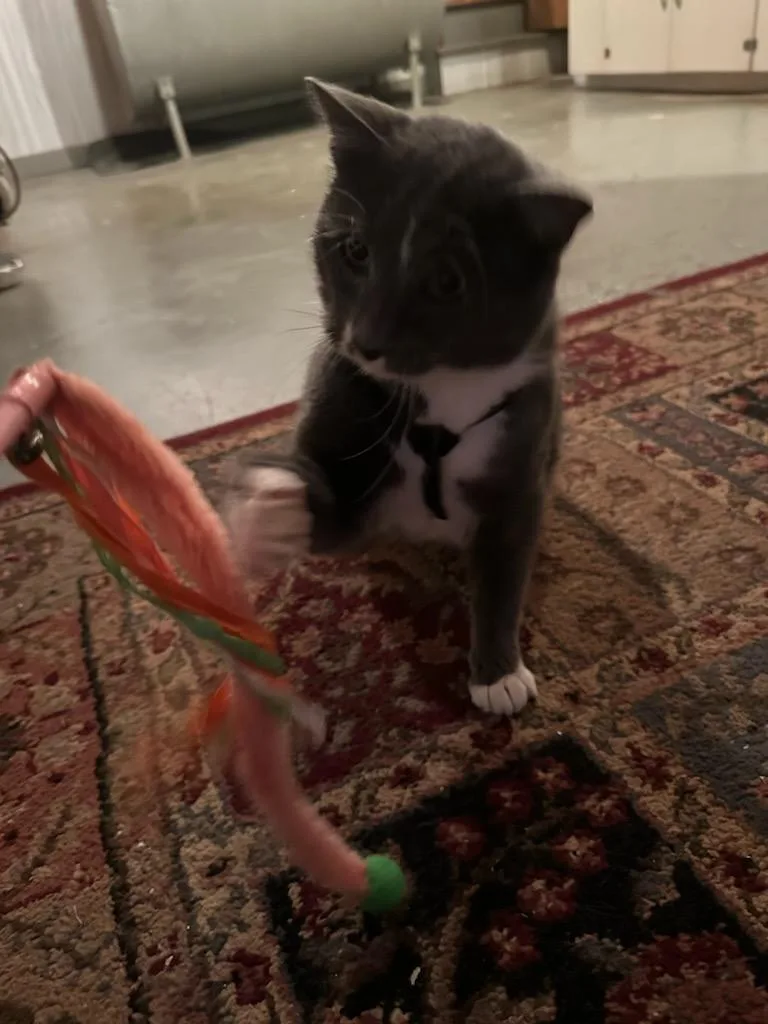
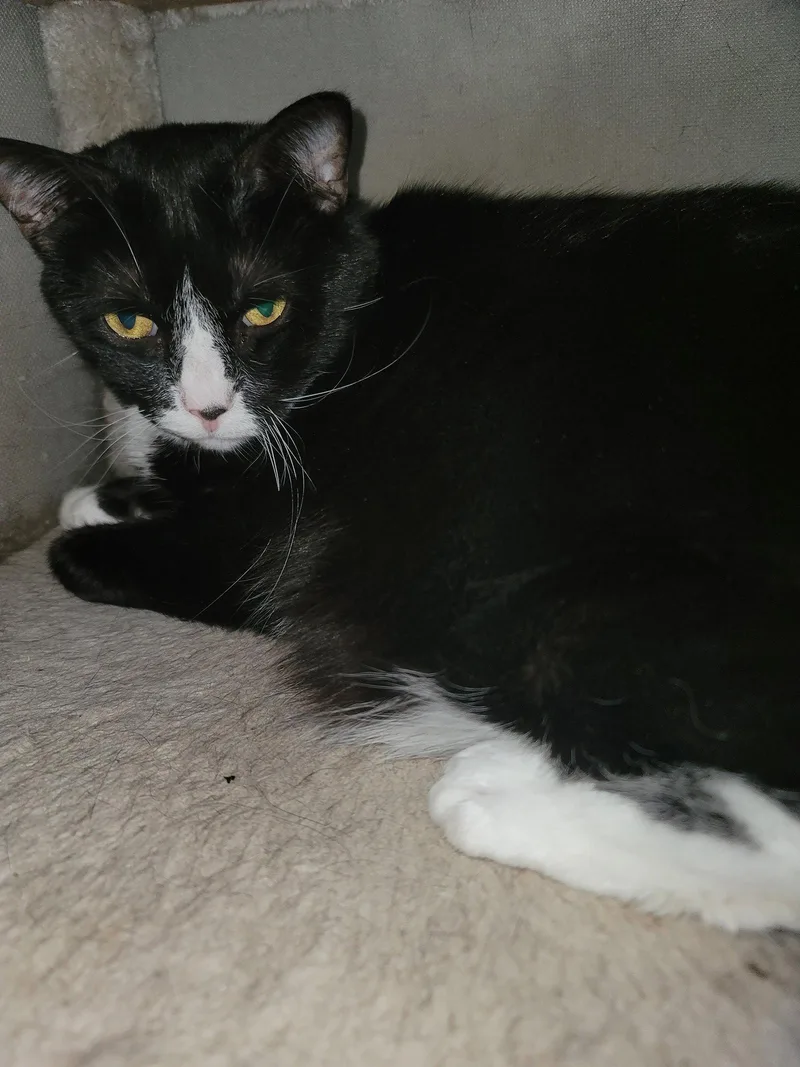
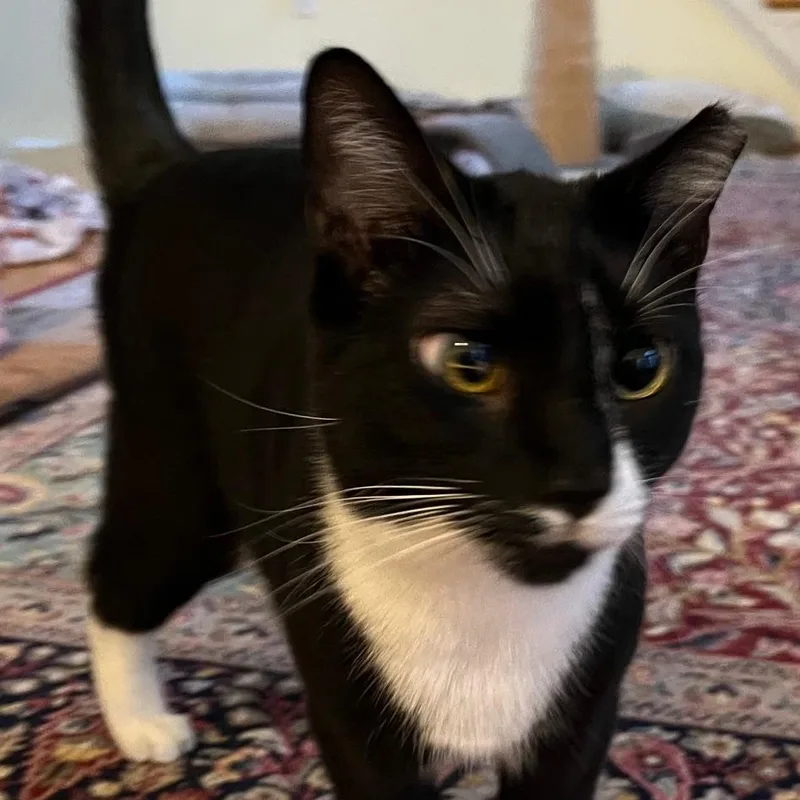
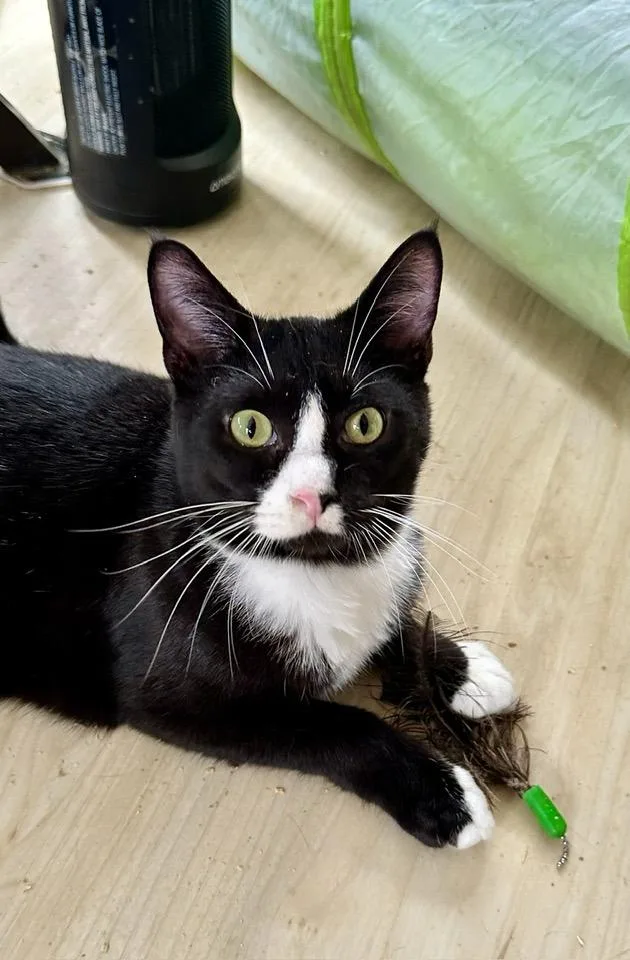
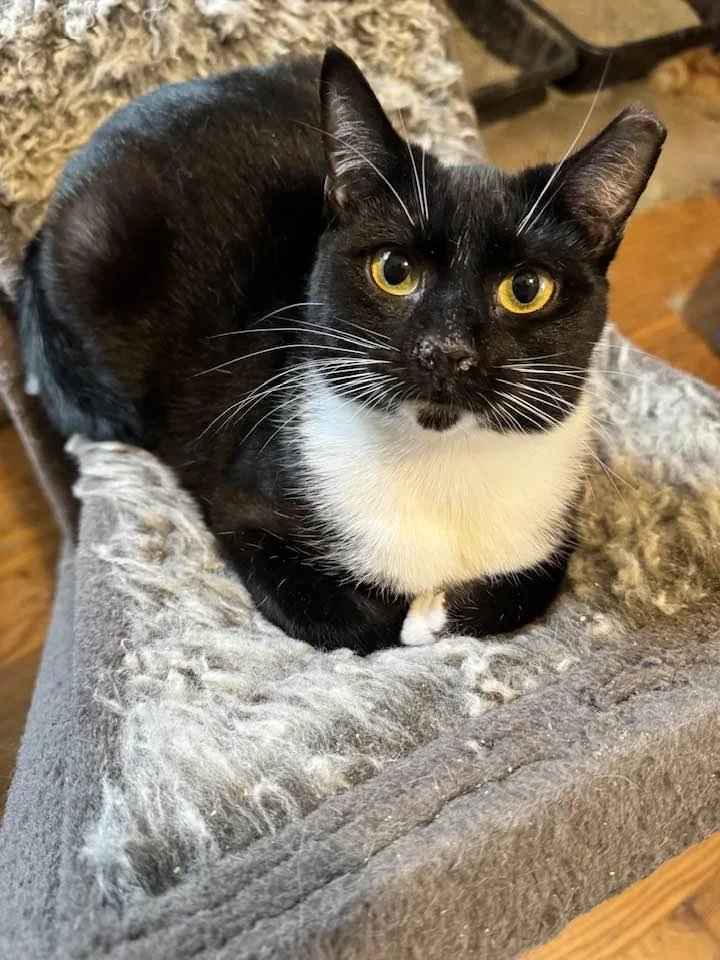
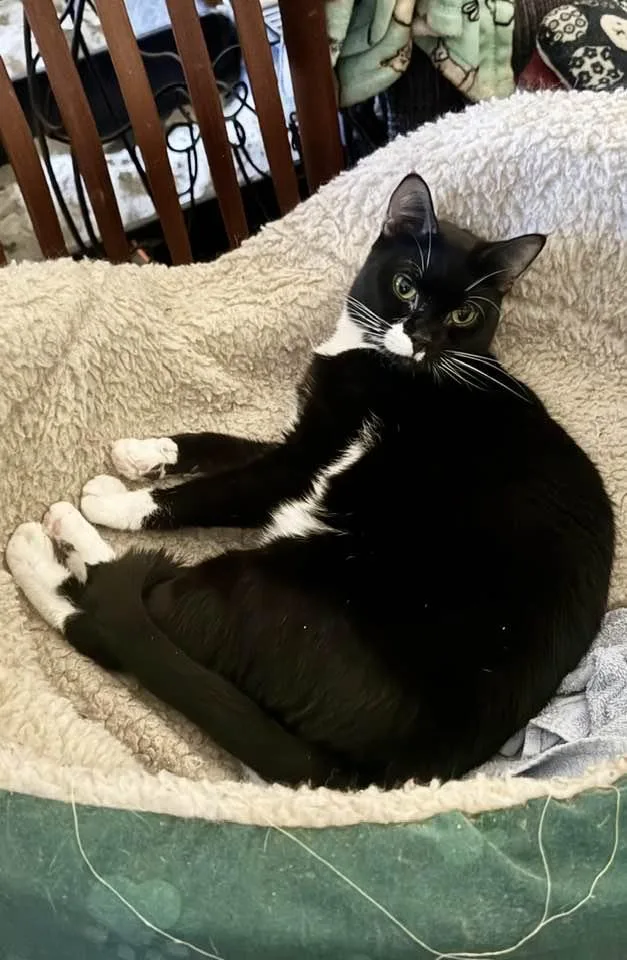
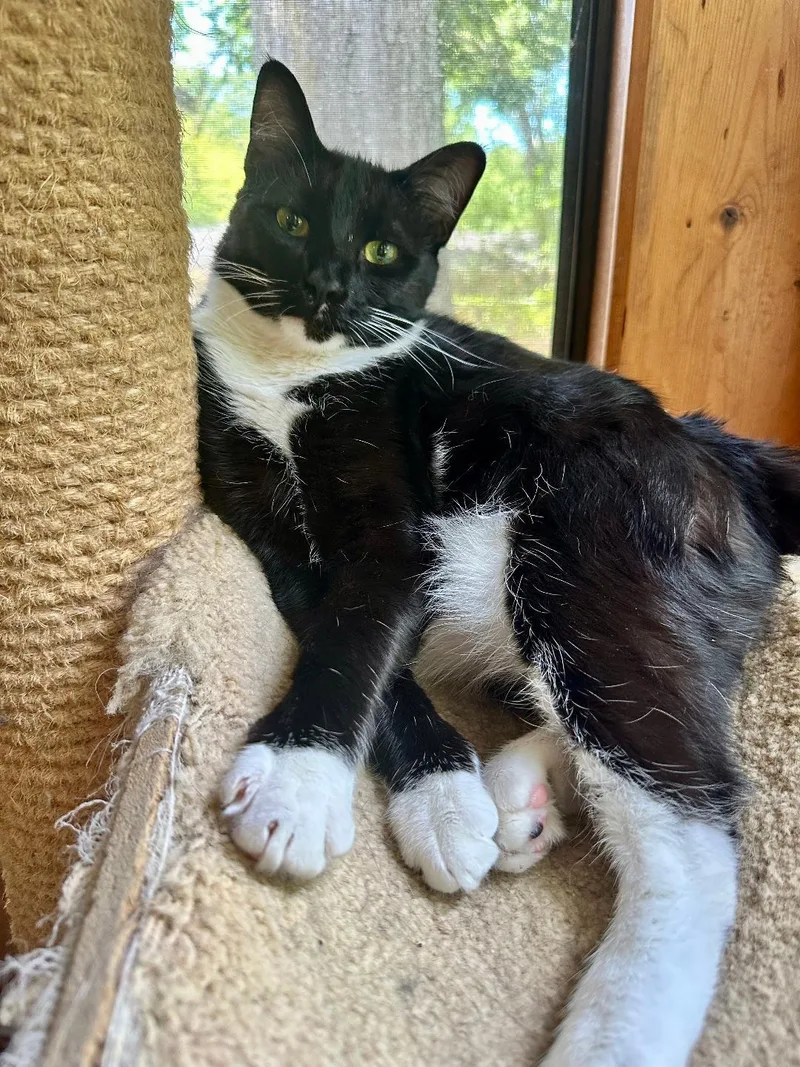
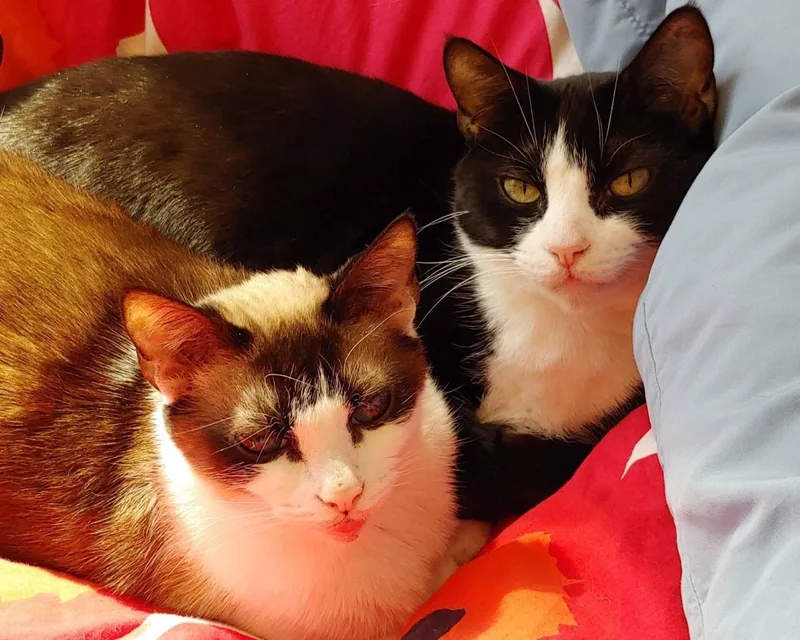
Tuxedo describes a coat pattern rather than a breed: a bicolor cat, usually black and white, with a white chest that looks like a shirtfront and often white paws, chin or a facial blaze. Grey-and-white tuxedos exist too. The pattern comes from white spotting variation in the KIT gene, and because it isn't sex-linked, males and females are about equally common.
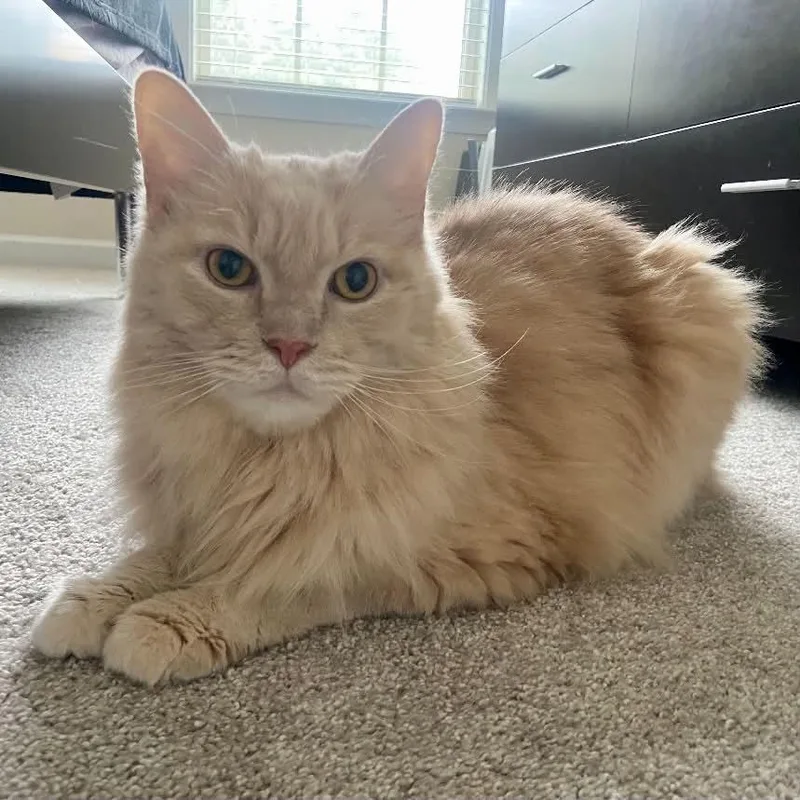
Most tuxedos are domestic shorthairs, though the pattern also appears in breeds like the Maine Coon, British Shorthair and Persian. Color doesn't set personality, so Raleigh adopters will meet quiet cats and chatty ones, lap sitters and climbers. Meeting the cat and seeing how it handles your home's noise and routine tells you more than the markings do. Longer coats need more brushing, which matters in Raleigh's humid summers.