Savannah Cats for Adoption in Lakeland, GA

Your guide to finding and caring for a Savannah in Lakeland

212 cats similar to Savannah available in Lakeland and nationwide

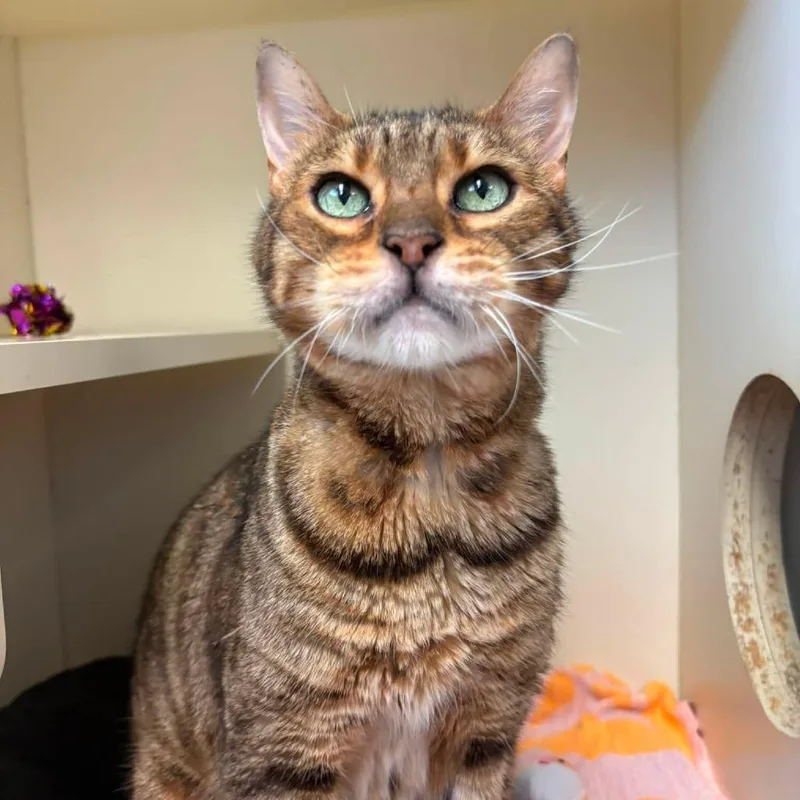
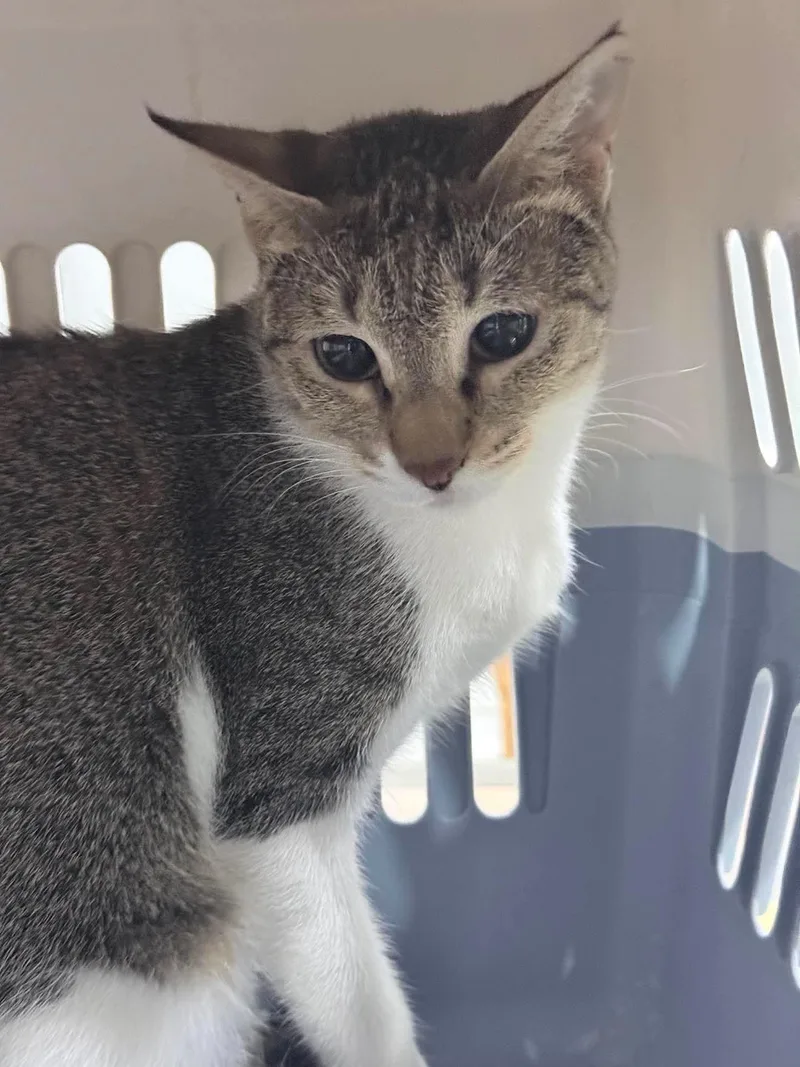
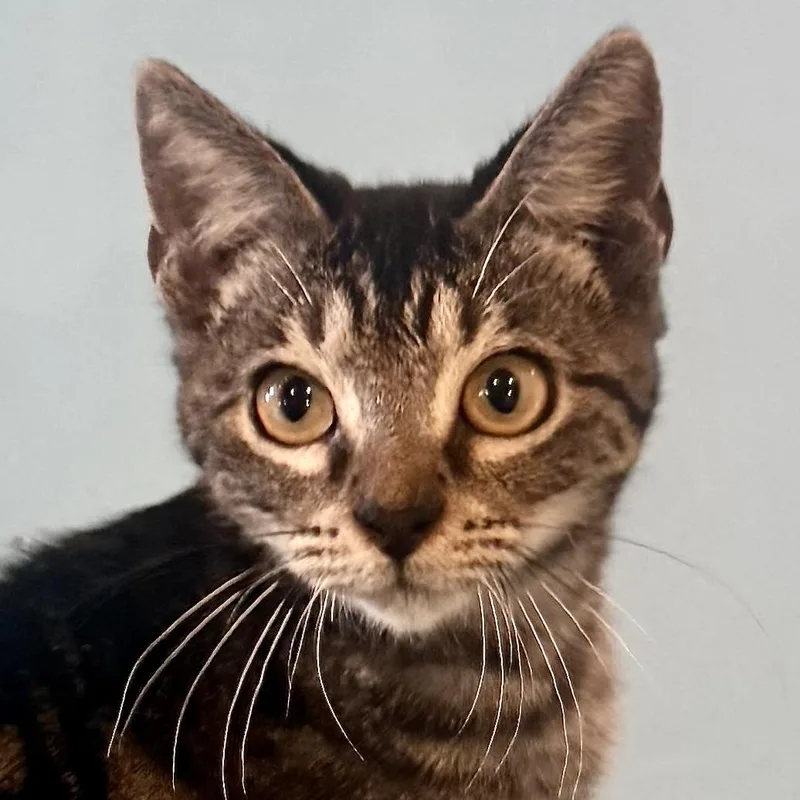
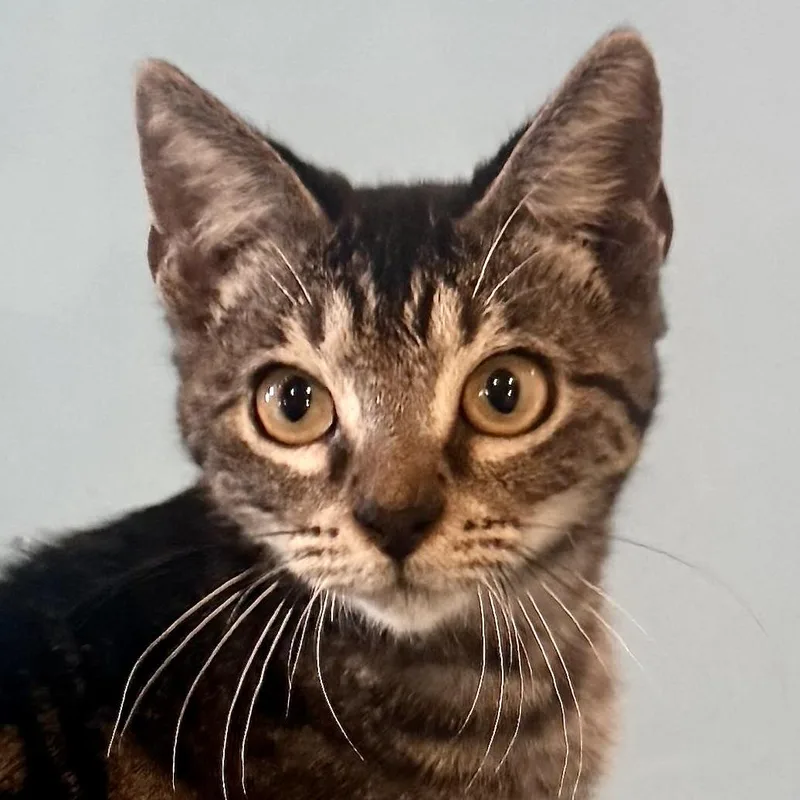
Meet your next Savannah

While we don't have enough cats near Lakeland, keep in mind that many rescues may offer transport.

Savannahs and Similar Breeds Available for Adoption Near Lakeland

About the Savannah breed

The Savannah is a hybrid breed that began in 1986, when an African serval was crossed with a Siamese in the United States. Cats are labeled by generation: an F1 has a serval parent, and each later generation, F2, F3, F4 and beyond, has less wild ancestry. TICA recognizes later-generation Savannahs as a domestic breed. They are tall, leggy cats with large ears, a long neck and a bold spotted coat, and early generations can be much larger than typical house cats.

Many Savannahs are intensely active, curious and attached to their people, often fetching, walking on a leash and enjoying water. Early generations can be territorial, mark with urine and be hard to handle, and some states and cities ban or restrict them. Adopters should confirm local law and plan for a great deal of enrichment.

Weight
10–25 lbs
Height
14–17 in
Lifespan
12–18 yrs
Temperament
Active, Curious, Loyal
Shedding
Low to Moderate

Owning a Savannah in Lakeland

Having a Savannah in Lakeland

A Savannah's striking wild look comes with high energy, a strong prey drive and needs that differ from an average house cat's. Generation, temperament, exercise, health screening and local law all matter before bringing one home.

Temperament

Savannahs tend to be bold, curious and loyal to their people, often following them like a dog and greeting them at the door. Many dislike being restrained or held for long. Early generations especially can be wary of strangers, territorial with other pets and inclined to spray. Behavior varies by generation and upbringing.

Exercise Needs

Savannahs are among the most active cats, with powerful jumping ability and a strong urge to hunt. They need several vigorous play sessions every day, plus puzzle feeders, climbing structures and training games such as fetch or leash walking. Without enough activity, many become destructive, open cabinets or escape, so plan for daily engagement rather than occasional play.

Health Considerations

Savannahs have a higher reported risk of hypertrophic cardiomyopathy, a heart muscle disease, and are screened for pyruvate kinase deficiency and progressive retinal atrophy. Early generations can respond differently to some drugs, and no rabies vaccine is licensed specifically for hybrids, though they should still be vaccinated. Choose a veterinarian comfortable with hybrid cats.

Living Space

A Savannah needs more space and enrichment than most cats: tall, sturdy cat trees, wall shelves, a secure catio and secured cabinets and windows. Apartments can work for later generations with dedicated, daily play, but early generations often struggle. Check state, county, city and lease rules first, since some places ban or require permits for early generations.

What it costs to own a Savannah

ExpenseTypical costPer year
Adoption fee$300, one time$300 in year one
Food$30 to $60 per month$360 to $720
Pet insurance$30 to $65 per month$360 to $780
Routine vet care$150 to $350 per year$150 to $350
Other*$500 to $1,350 per year$500 to $1,350
Estimated yearly total (after year one)$1,370 to $3,200
First-year total (with adoption fee)$1,670 to $3,500

Adoption fee is the fee on Savannah listings in Lakeland on GetBuddy today. Other costs are national averages for Savannahs; we don't have costs specific to Lakeland yet.

* Litter, flea prevention, a dental cleaning allowance, toys and supplies, plus heavy-duty cat trees, a harness and enclosure or catio materials for this very active cat; some insurers decline early generations.

Adopt a Savannah in Lakeland.

Now that you know more, let’s find you a new best friend. These rescues and shelters below currently have Savannahs available.

Rescues in Lakeland with Savannahs Available

Here are the rescues & shelters in the Lakeland area where you can find Savannahs and other cats available for adoption.

Frequently Asked Questions

A Savannah is a hybrid cat breed descended from the African serval, a wild cat, and domestic cats. Savannahs are tall and leggy, with large ears, a long neck and a bold spotted coat. They're intensely active, curious and often loyal to their people. Behavior and size vary a lot by generation, and some places restrict owning early generations.

Yes. Every Savannah has serval ancestry, since the breed began by crossing the African serval with domestic cats. How much serval a cat carries depends on its generation: an F1 has a serval parent and is about half serval, while later generations such as F4 and F5 have only a small fraction and behave more like domestic cats.

F1 means first filial generation: an F1 Savannah has a serval as one parent and is roughly half serval. An F2 has a serval grandparent, an F3 a great-grandparent, and so on. Each step adds more domestic ancestry. Early generations, F1 to F3, are usually larger and wilder in behavior, and they're the ones most often restricted by law.

Savannah cats are from the United States, where the first kitten was born in 1986 from a serval and a Siamese. The serval side of their ancestry comes from sub-Saharan Africa, which explains the name and the wild look. The breed was developed in the US over the following decades and is recognized by The International Cat Association.

It depends on the generation. Later-generation Savannahs, usually F4 and beyond, are considered domestic cats by TICA and most US authorities, though they keep a lot of energy and prey drive. Early generations carry more serval ancestry and wild behavior, which is why many laws treat them differently. No Savannah is a fully wild animal, but early ones come close.

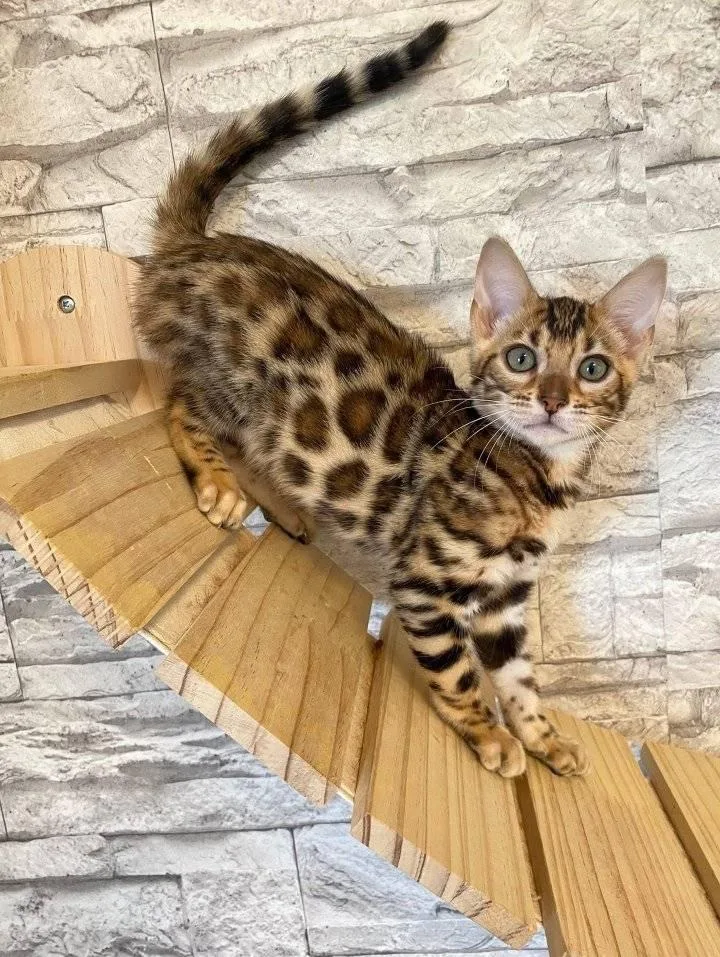
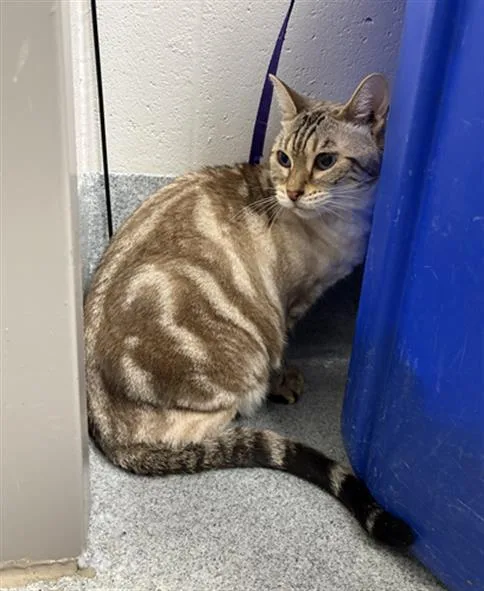
A Savannah looks like a small wild cat. Expect a tall, slender body on long legs, a long neck, very large upright ears and a short tail with dark rings. The short coat is boldly spotted, usually in brown, silver, black or smoke. Many have tear-streak markings running from the eyes, which adds to the wild appearance.

Savannahs are among the largest domestic cats. Later generations typically weigh 10 to 18 pounds, while early generations often reach 15 to 25 pounds, and some F1s grow even bigger. They stand about 14 to 17 inches tall at the shoulder, with early generations often taller. An F2 Savannah once held the record for the world's tallest domestic cat.

Most Savannahs stand about 14 to 17 inches tall at the shoulder, which is noticeably taller than an average house cat. Early generations, especially F1 and F2 cats, can be taller still, and their long legs and neck make them look even bigger. One F2 Savannah set a record for the tallest domestic cat at about 19 inches.

Savannahs usually weigh between 10 and 25 pounds, depending on generation and sex. Later generations tend to weigh about 10 to 18 pounds, while early generations are heavier, and some F1 males exceed 25 pounds. Males are generally larger than females. Because they're tall and lean, they often weigh less than their height suggests.

We have 1 rescue with Savannahs available: Lanier County Animal Control and Shelter. You can see every rescue with Savannahs available in the list above these questions.

Explore Other Breeds in Lakeland

Looking for a different breed? Browse other cats available for adoption in Lakeland.