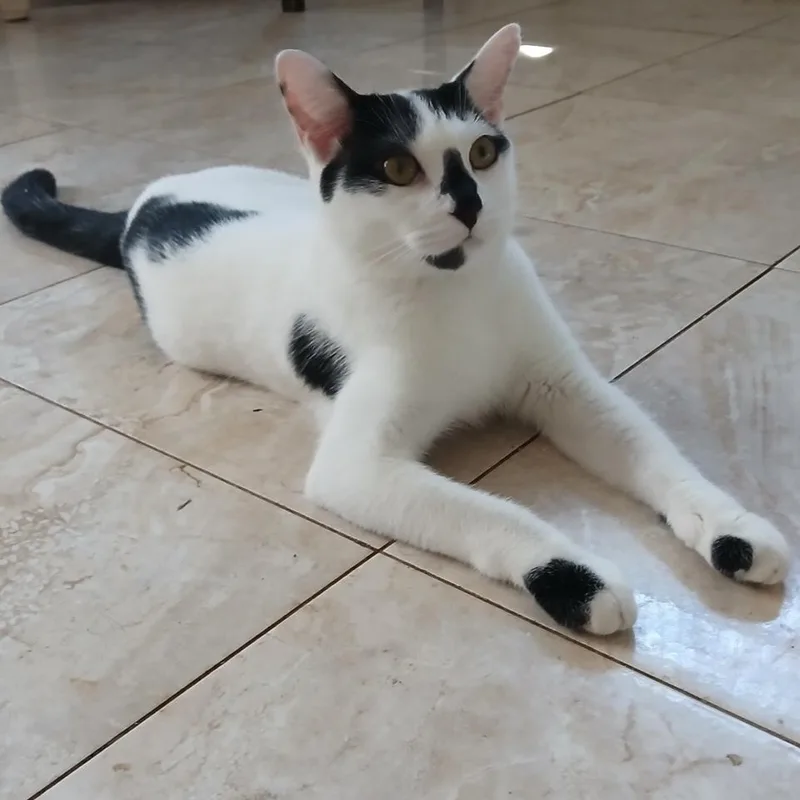
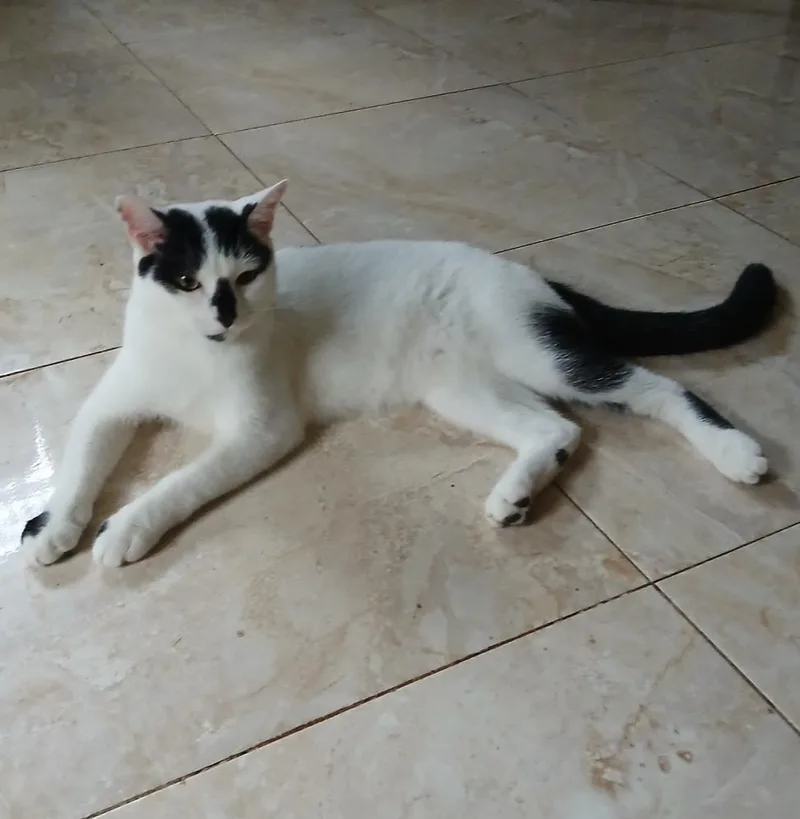
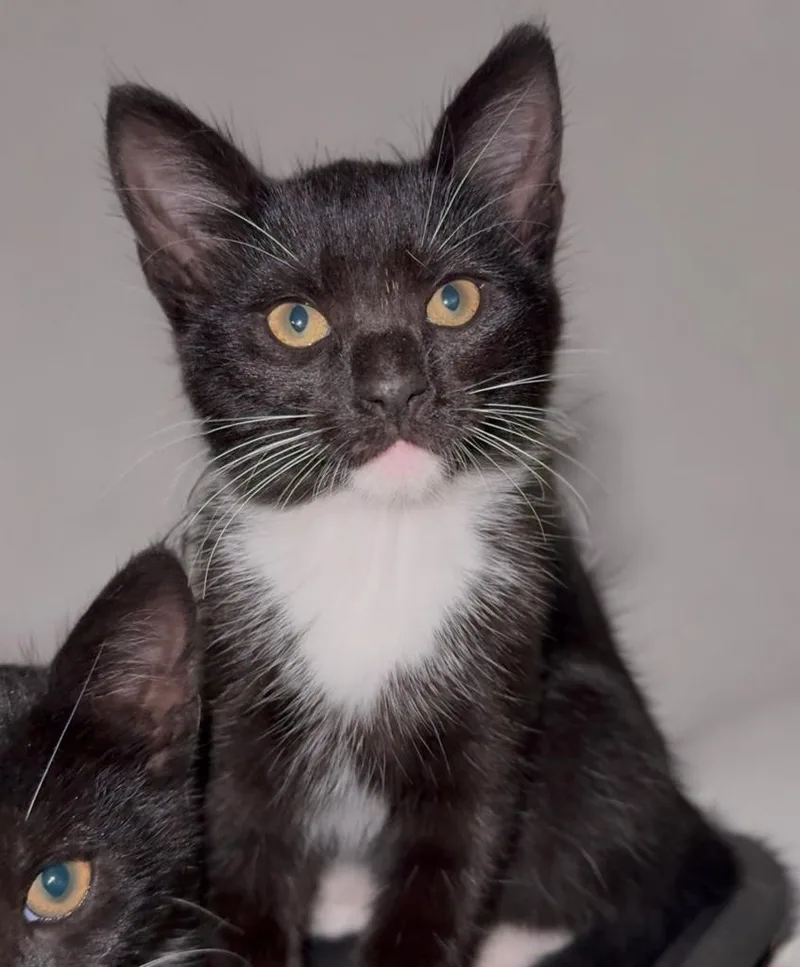
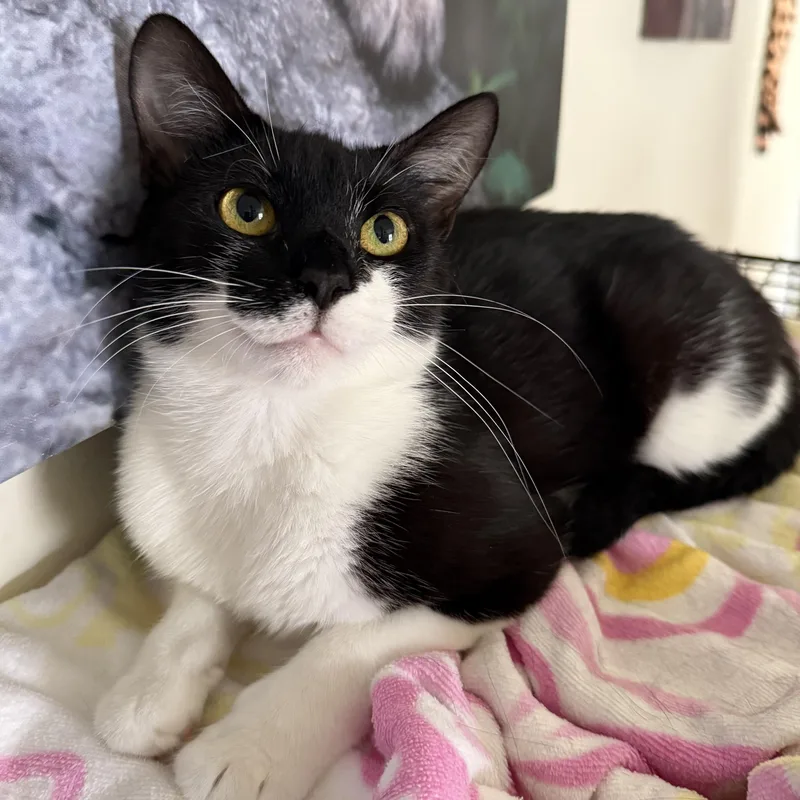
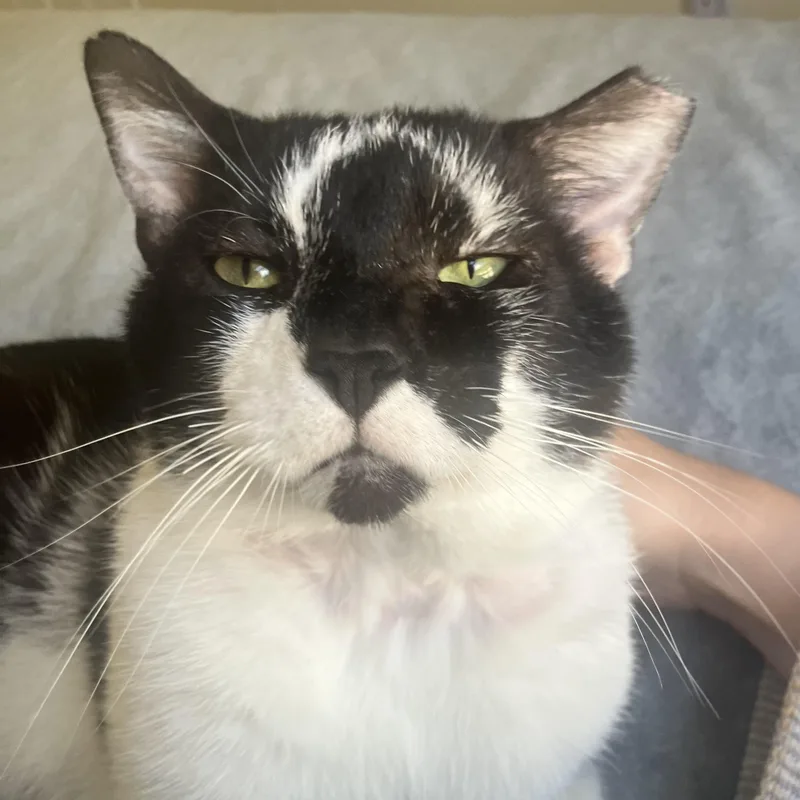
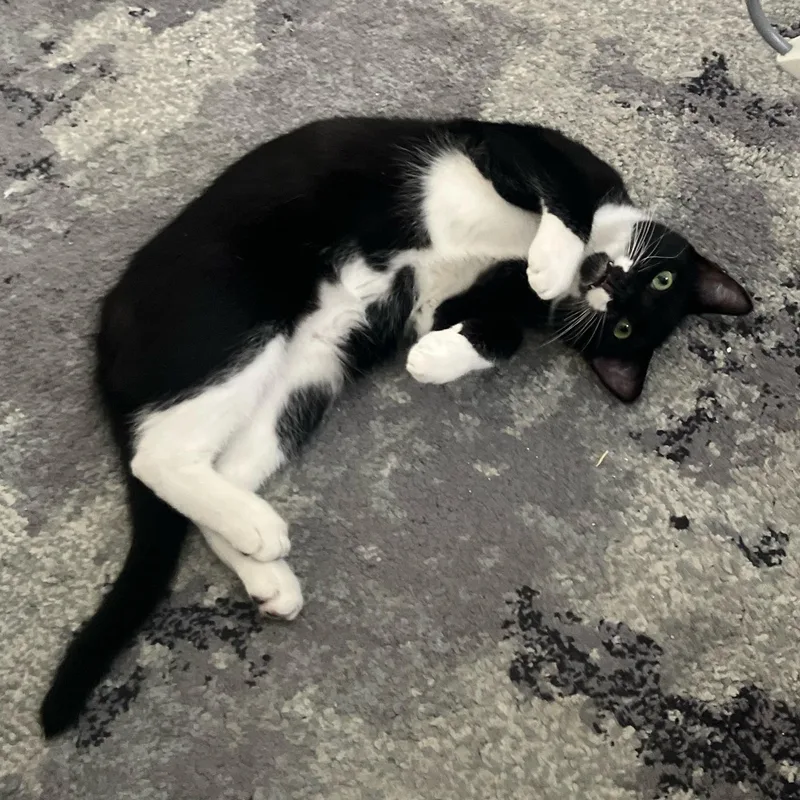
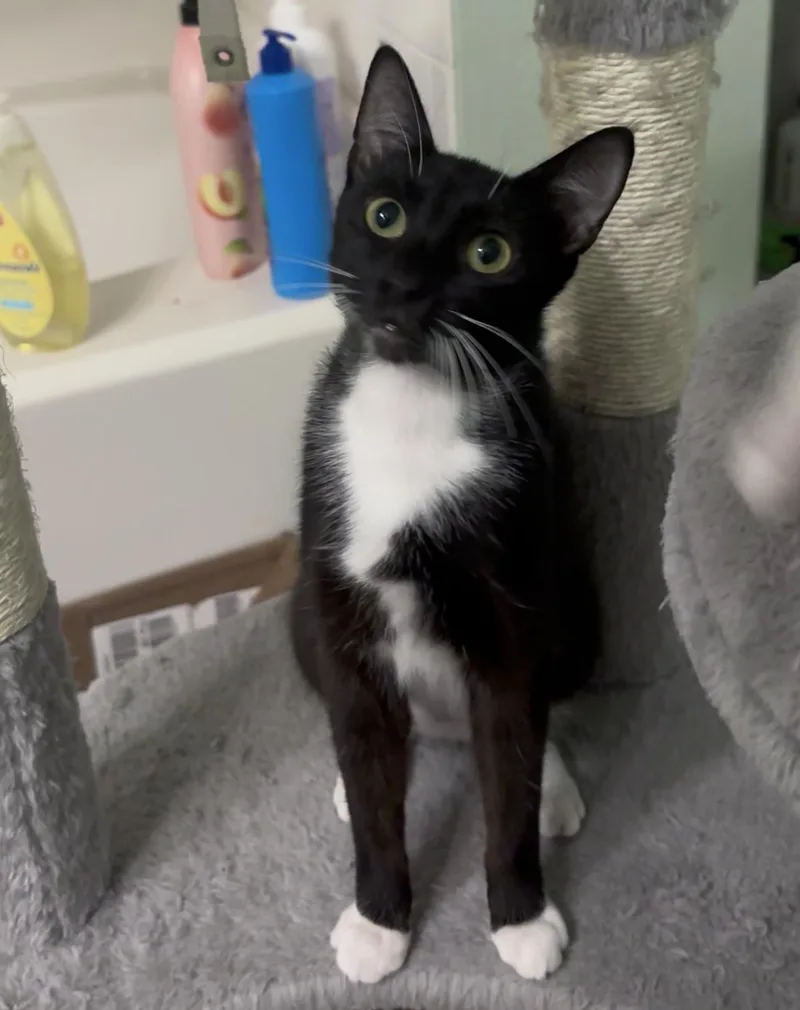
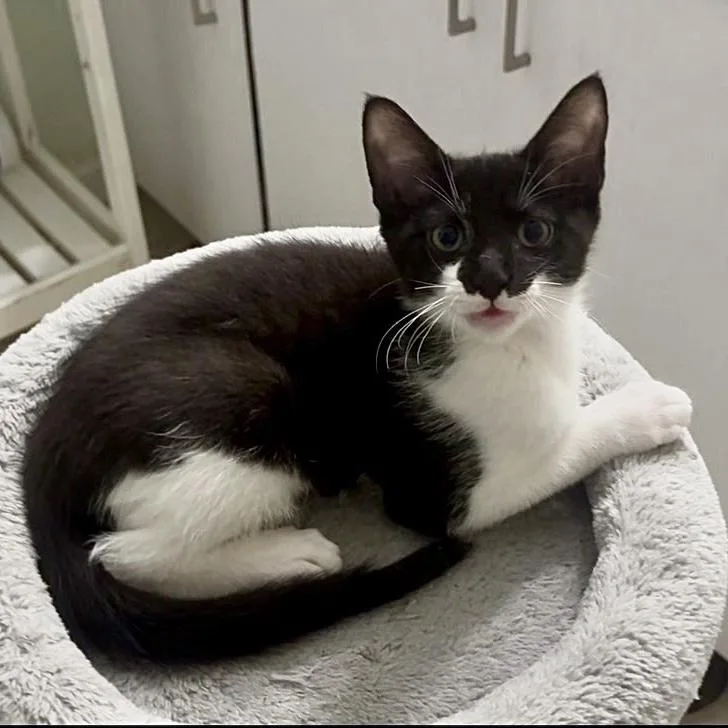
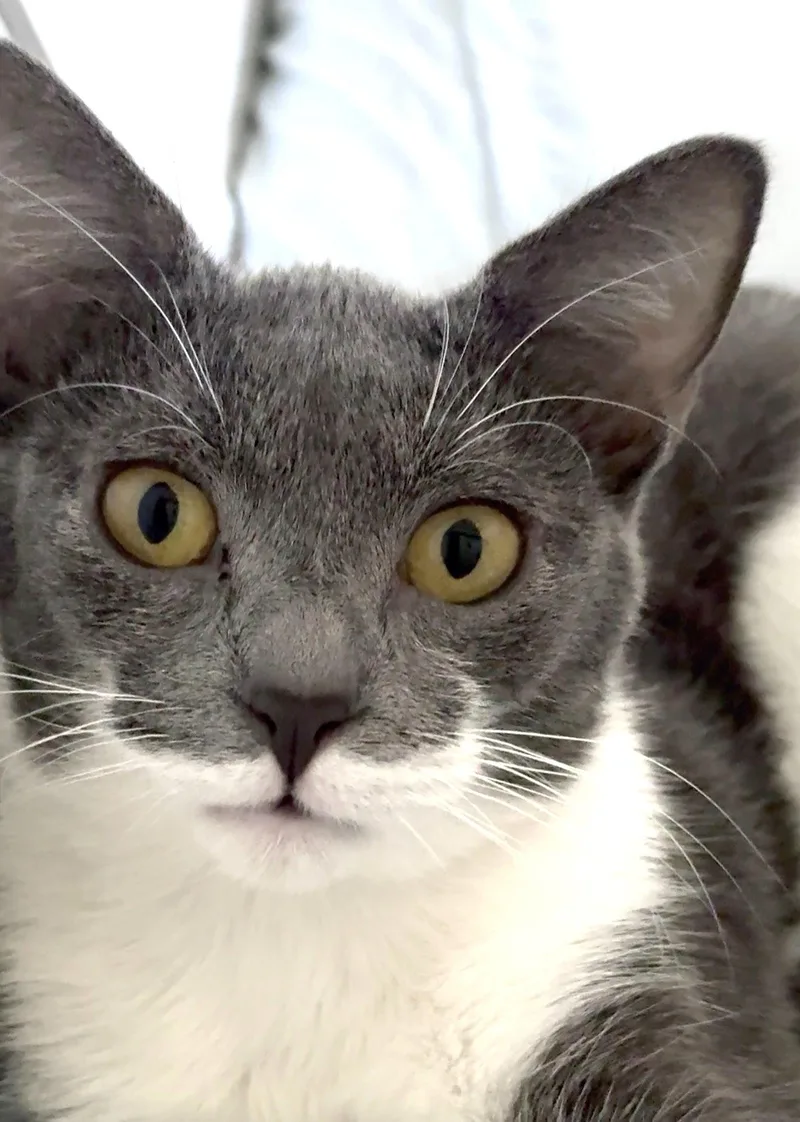
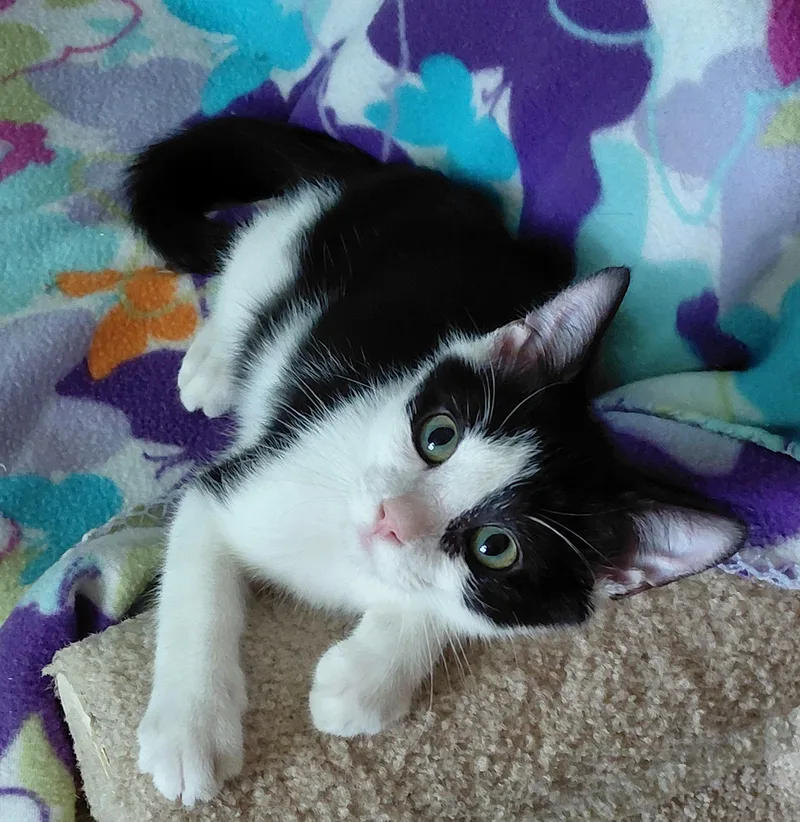
Tuxedo describes a coat, not a breed: a bicolor cat, usually black and white, with a white chest that looks like a shirtfront and often white paws, a white chin or a blaze on the face. Grey-and-white tuxedos exist too. The pattern comes from white spotting variation in the KIT gene, and because it isn't sex-linked, males and females are about equally common.
Most tuxedos are domestic shorthairs, though the pattern also turns up in breeds such as the Maine Coon and British Shorthair. Color doesn't set personality, so stories about smart or bold tuxedos are fun but unproven. In Melbourne, where heat favors indoor living, what matters most is each cat's age, energy, coat and comfort with your household, so spend time with a cat before you decide.