Tortoiseshell Cats for Adoption in Little Rock, AR

Your guide to finding and caring for a Tortoiseshell in Little Rock

Tortoiseshell cats fit Little Rock homes of nearly any size, because the coat pattern says little about what a cat needs. A tortie in a Capitol View Craftsman bungalow can claim a sunny front window, and one in a SoMa apartment may be content with a cat tree and an evening round of wand toys. Torties range from shy to bold, so personality matters more than color. Most do best indoors here, with coyotes active around West Little Rock.

960 Tortoiseshells available in Little Rock and nationwide

Your Tortoiseshell is waiting

While we don't have enough cats near Little Rock, keep in mind that many rescues may offer transport.

Tortoiseshells Available for Adoption Near Little Rock

About the Tortoiseshell breed

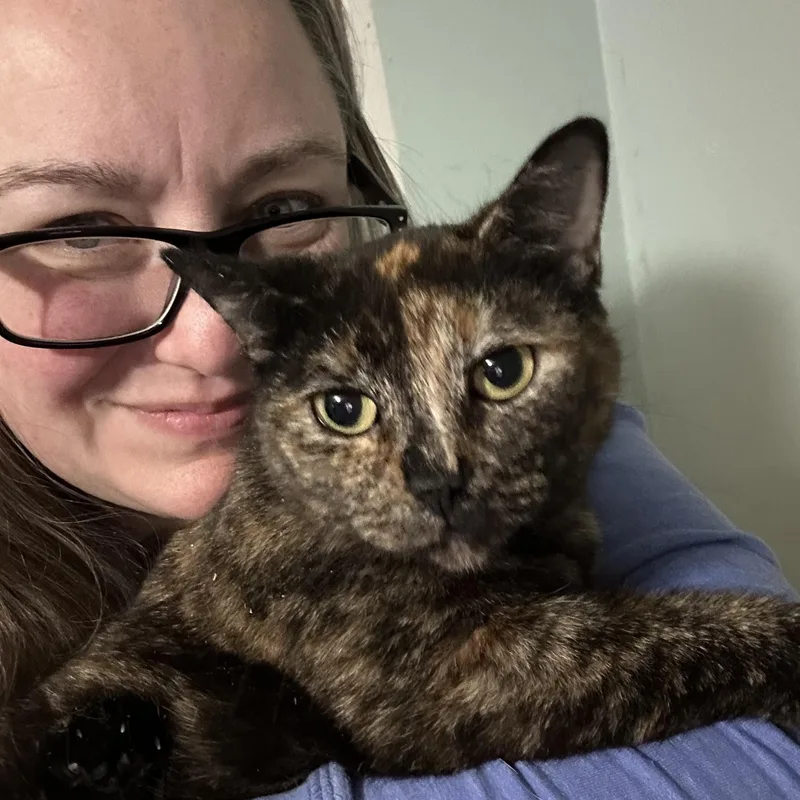
Tortoiseshell is a coat pattern, not a breed. Black-based and orange-based colors mix in patches or a fine mottled blend, usually with little or no white. Cats with large white areas are called calicos, dilute torties show soft gray and cream, and torbies add tabby stripes. Nearly all torties are female because the orange gene sits on the X chromosome.

Most torties are domestic shorthairs, though the pattern also appears in Persians, Maine Coons and British Shorthairs. The "tortitude" reputation for sass is mostly owner impression, not proven fact. A tortie's age, history and socialization will tell you more than color, and the cats on this page vary widely. They're medium-size, moderate shedders, typically 6 to 14 pounds, and often live 12 to 18 years.

Weight
6–14 lbs
Height
8–10 in
Lifespan
12–18 yrs
Temperament
Independent, Affectionate, Playful
Shedding
Moderate

Owning a Tortoiseshell in Little Rock

Having a Tortoiseshell in Little Rock

Because tortoiseshell describes a coat, a tortie's traits come mostly from ancestry, age and upbringing. These cards describe what holds for many torties, usually domestic shorthairs, with notes on what matters for a cat living in Little Rock.

Temperament

Torties are often called spirited, but evidence linking coat color to behavior is limited. A bold, social tortie may enjoy a busy Little Rock household, while a shy one may prefer a quiet bungalow. Watch how the cat reacts to handling, noise and new spaces, since spring thunderstorms and fireworks around July 4 can unsettle sensitive cats.

Exercise Needs

Plan on daily interactive play with wand toys, chase games and puzzle feeders, with more for young cats and gentler sessions for seniors. In Little Rock, indoor play covers it: window perches, cat trees and climbing shelves give a tortie enrichment without exposure to summer heat, traffic or coyotes.

Health Considerations

The tortoiseshell pattern carries no particular health risks in females; the rare males usually have an extra X chromosome and may face added issues. Otherwise health follows age and ancestry. Arkansas requires rabies vaccination at four months, and a veterinarian can check teeth, weight and parasite prevention, which matters through Little Rock's long warm season.

Living Space

Torties adapt to apartments and houses alike, since space needs depend on the cat. Little Rock's mix of Craftsman bungalows, midtown apartments and west-side suburban homes all work with scratching posts, a cat tree and a window perch. Quiet cats may prefer calmer homes, while confident torties often handle busy ones.

What it costs to own a Tortoiseshell in Little Rock

ExpenseTypical costPer year
Food$25 to $50 per month$300 to $600
Pet insurance$20 to $45 per month$240 to $540
Routine vet care$150 to $350 per year$150 to $350
Other*$450 to $1,150 per year$450 to $1,150
Estimated yearly total (after year one)$1,140 to $2,640

Other costs are estimates and vary with size, age and health.

* Litter, flea and parasite prevention, a dental cleaning allowance, toys and supplies, and light home grooming.

Adopt a Tortoiseshell in Little Rock.

Now that you know more, let’s find you a new best friend. These rescues and shelters below have cats available in and near Little Rock.

Rescues and Shelters in or near Little Rock

Little Rock's adoption community includes a city shelter, a no-kill humane society and rescues that place cats in homes. Here are the rescues & shelters in the Little Rock area with cats available for adoption, worth asking whether a Tortoiseshell is coming in.

Frequently Asked Questions

Yes. Tortoiseshell is a coat pattern, so you're looking for a tortie cat of any age rather than a particular breed. The steps are the same as for any cat: adopt, get the city license and rabies vaccine, and set up a safe indoor home. Browse the torties listed on this page, and save a search to hear about new ones.

Yes, most tortoiseshell cats adjust well to apartments, since space needs follow a cat's age and personality rather than coat color. Provide a cat tree, scratching post, window perch and daily play. Before signing a lease, get any pet deposit, pet rent and limit on the number of cats in writing, and keep a pet-safe screen on open windows.

Mostly yes, for indoor torties. Winters are cool and summers are long, hot and humid, so air conditioning and fresh water matter most. Spring storms call for a tornado plan with a carrier ready. Coat color doesn't change heat tolerance, but a longhaired tortie may need extra brushing and a cool resting spot in summer.

No. Rock Region METRO buses, the streetcar and paratransit allow service animals only, and there's no exception for pets in carriers. For vet visits, use a secure carrier in a car or arrange a ride. Never leave a cat in a parked car, since a vehicle heats up fast during Little Rock summers.

Often, if you can offer an indoor home with daily play. Torties run from shy to bold, so match the cat's behavior to your routine rather than the color. Cats left alone on long workdays do better with puzzle feeders and perches, and a home-based cat stays safer from coyotes, traffic and summer heat.

Generally no. State food rules keep pets out of restaurant interiors, and patio policies are up to each venue. Most patio-friendly spots are aimed at dogs, and a cat is usually happier at home, away from noise, heat and unfamiliar dogs. If a venue does allow cats, keep yours in a carrier.

Most torties shed moderately. A shorthair does well with a weekly brushing, while a longhaired tortie needs several sessions a week to prevent mats, especially when shedding picks up as seasons change. Home grooming is the norm, so costs stay small and fall within the Other line in the cost table.

A tortoiseshell cat is a cat with a coat pattern of black-based and orange-based colors blended or patched together, usually with little or no white. It is not a breed; the pattern appears in many breeds and most often in domestic shorthairs. Nearly all tortoiseshells are female because the genes for orange and black are carried on the X chromosome.

Almost all tortoiseshell cats are female, but not all. A female has two X chromosomes and can carry both orange and black color genes, producing the mixed coat. Males normally have only one X. Rare male torties usually have an extra X chromosome or are genetic chimeras, and they are estimated at roughly 1 in 3,000 tortoiseshells.

Plan on roughly $25 to $50 a month for food, $20 to $45 a month for insurance, $150 to $350 a year for routine vet care, and $450 to $1,150 a year for other costs such as litter, parasite prevention and dental care. That comes to about $1,140 to $2,640 in a typical year, before emergencies.

Find Tortoiseshells in Nearby Cities

Expand your search to find Tortoiseshells available for adoption near Little Rock.

Explore Other Breeds in Little Rock

Looking for a different breed? Browse other cats available for adoption in Little Rock.